A music archive holds more than scores
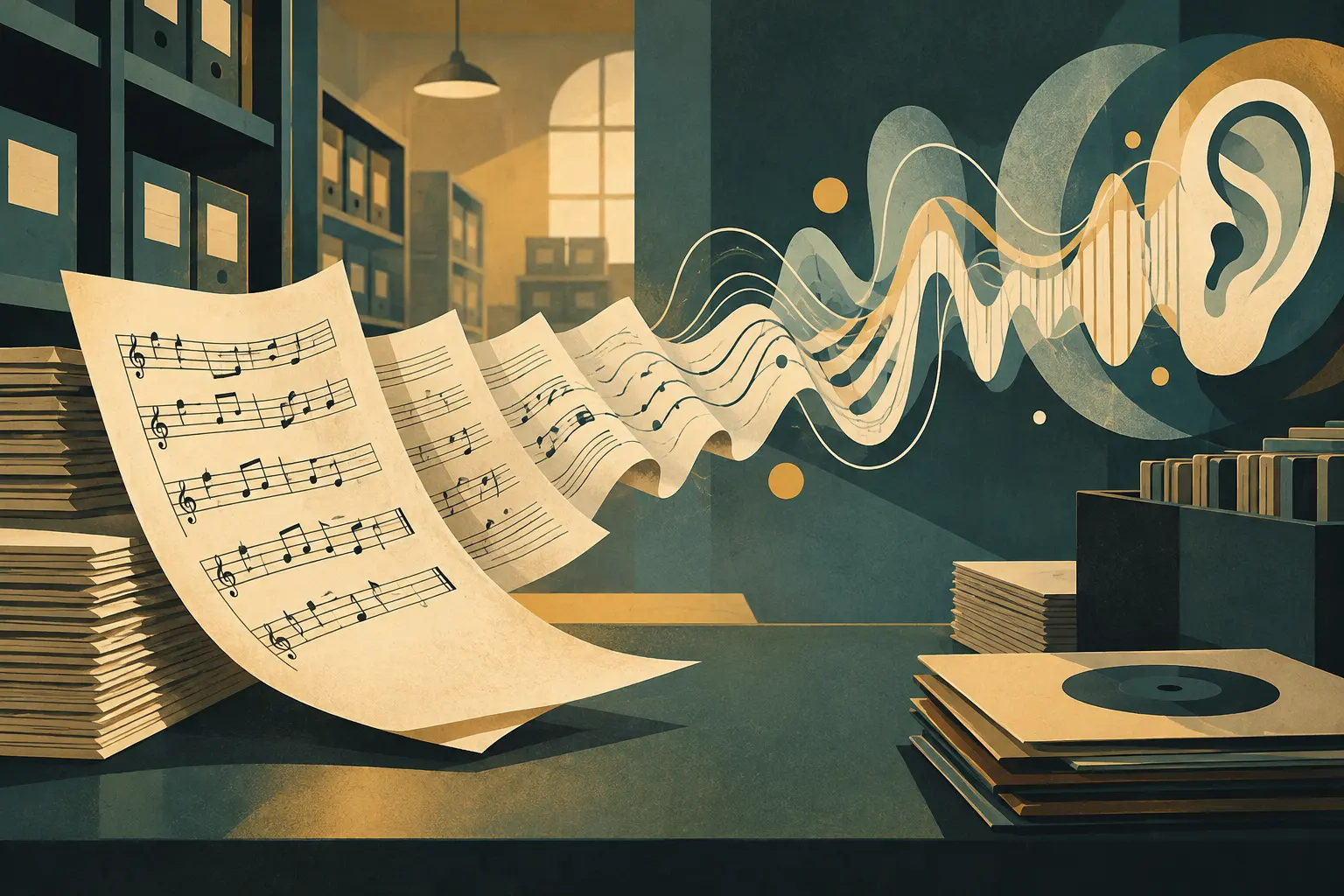
A score is not the music itself. It is a material object that conveys signs capable of guiding a performance and, at the same time, a document made and used under particular circumstances. It can bear witness to practices, decisions and ways of transmitting music; the work, by contrast, becomes audible through performance. Presenting both dimensions together helps bring an archive to the public without reducing music to its pages or turning documents into mere illustrations.
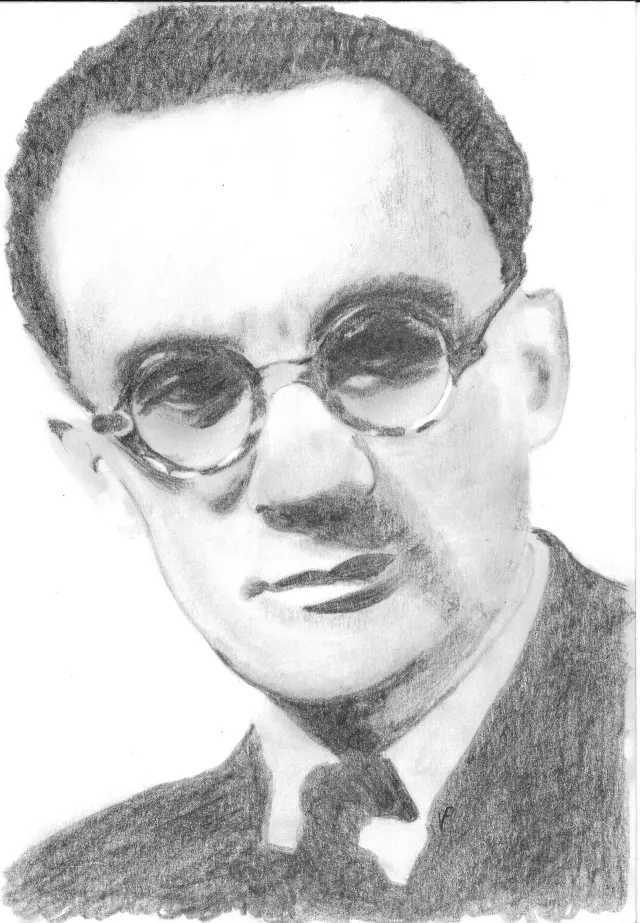
That is one challenge of cultural interpretation: a manuscript can seem opaque to visitors who cannot read notation, even when it has much to say about a work and its period. A study published in the Journal on Computing and Cultural Heritage explored ways to connect audiences with the archive of Greek composer Nikos Skalkottas. The project combined two approaches: digital storytelling about the composer’s life and context, and an immersive listening experience inviting people to express their responses to his compositions.
The research included a survey of 198 participants and examined their responses to two pieces, one tonal and one atonal. Responses differed, and questions about the composer’s life and the relationship between music and society attracted interest. These findings informed the design of an archival experience; they do not establish a definitive interpretation of the works or make the recorded emotions a universal judgment about them.
Listening is an experience, not historical proof
The Skalkottas research distinguishes between perceiving an emotion that music appears to express and feeling an emotion while listening. The difference matters because the two do not always coincide: a piece may sound sad yet still be pleasurable or meaningful to a listener. Familiarity with a musical style, individual expectations and the listening environment can also shape the associations people make.
Audience response can therefore start a conversation, but it cannot replace documentation or musical analysis. An exhibition might invite visitors to record what they imagine, feel or remember, provided those responses are presented as situated experiences. In this way, listening can broaden an interpretation of the archive without erasing the distinction between personal experience and historical evidence.
The project tested collaborative digital storytelling and virtual-reality listening. In the design trials described by its authors, highly detailed visual settings competed with attention to the music; participants preferred a simpler space with clearly defined visual boundaries. The researchers also found that drawing, choosing colours or navigating menus could distract from listening. The design consequently moved towards more direct forms of expression.
Technology does not resolve the challenges of cultural interpretation on its own. Virtual reality can reduce some distractions, but it also requires controls, design decisions and assistance for visitors. The authors describe their work as formative design research, not as a conclusive evaluation of learning outcomes. Its value lies in raising specific questions: what helps people listen, what distracts them, and how can interpretations be shared without prescribing an emotional response?
Musical documents also tell a social history
The relationship between object and context comes into view from another angle in Ángela Cristina Casas Rodríguez’s research on the score archive of Colombian composer Luis Antonio Escobar. Her study considers how to assess a collection by taking account of its documents, the circumstances in which they were created and the people who recognize their significance. A score is the material support for an intangible creation, but it can also reveal how music was produced, organized and transmitted.
The archive brought together scores and related materials, including photographs, programmes, press clippings and personal documents. By connecting them, the researcher could place the works within a career and a musical scene rather than treating them as isolated sheets. The assessment considered such factors as testimonial value, local connections and relationships among the works. It showed that the components of a collection may depend on one another: separating related documents can weaken the information preserved by the group.
This perspective also changes what preservation means. Preventing physical damage is essential, but it is not enough if order is lost or connections between documents disappear. An inventory and contextual description help keep those relationships visible and inform decisions about managing the collection. Cultural assessment, moreover, is not the same as putting a price on an archive: it seeks to understand what makes a collection significant and how it relates to its history and communities.
In Escobar’s case, the research organized and examined 279 scores and proposed criteria for assessing the collection, including relationships among documents, testimonial value and connections to local contexts. The author found that more than half of the works met the criterion of correspondence, an indication of the importance of keeping linked pieces together. The analysis also proposed levels of relevance to help prioritize the archive’s management—not a universal hierarchy for all collections.
Connecting what is tangible with what can be heard
The two studies address different but complementary dimensions. The work on Skalkottas asks how listening and contextual storytelling can help audiences encounter an archive. The Escobar study focuses on describing and assessing documents, their relationships and their contexts to support management and preservation. In both, music is neither separate from the objects nor something those objects can explain on their own.
A score can document a work and a practice; related materials help reconstruct the conditions of production and circulation; performance makes notation audible; and listeners’ responses show how music is received in a particular moment and setting. Distinguishing these kinds of information makes it possible to tell music history rigorously while offering visitors more than an opportunity to look at documents.
Opening an archive, then, means more than displaying its contents. It also means explaining the relationships that hold them together, placing them in history and creating opportunities to listen and ask questions. Music can thereby be presented as living heritage, while the documents that preserve it are treated as material sources with histories of their own.
- Decade
- 2000s
- Region
- Global
- Level
- Enthusiast
- Entities
- Nikos Skalkottas
Sources and references
- La valoración de colecciones como herramienta para la ...revistas.javeriana.edu.co · 2026-10-31
- Conservación y Restauración del Patrimonio Cultural en soporte Papel - Museo Jesuítico Nacional de Jesús Maríadoi.org · 2026-10-31
- Archivo del Museo de Música de Mariana, siglos XVIII-XIXwww.unesco.org · 2026-10-31
- Diseño de una experiencia aumentada para un archivo ...translate.google.com · 2026-10-31
- CDM? Si eres profesional de la música, este portafolio de ...www.facebook.com · 2026-10-31