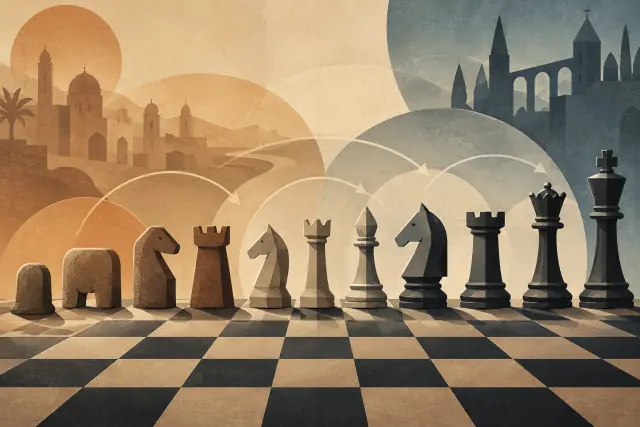
The widespread perception that ancient board games are isolated relics obscures a more coherent underlying structure. The 20-square board, popularized in popular culture by the Royal Game of Ur, is not a unique anomaly but the central node of a family of games spanning prehistory and the ancient era. This article examines the available documentary evidence to trace the lines of continuity between these ludic forms, distinguishing between what is confirmed by primary sources and what remains in the realm of speculative reconstruction.
Defining a Ludic Family
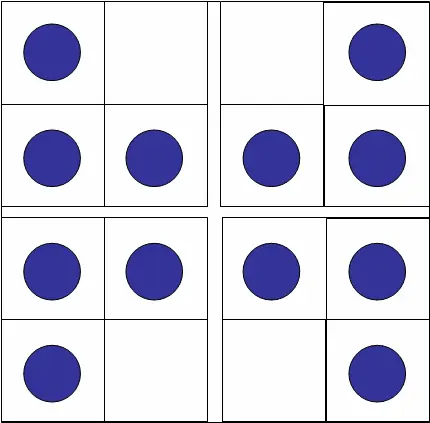
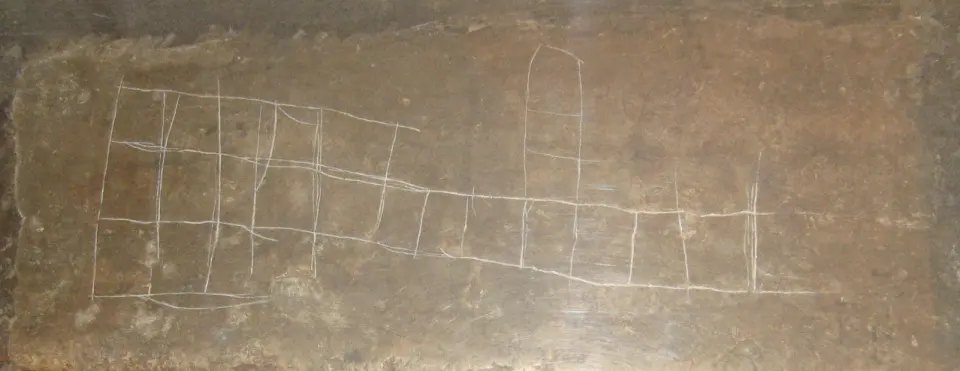
The term 'game family' is not a poetic metaphor but an analytical category used in the historiography of games. It refers to a set of variants that share an identical or very similar board structure, although specific rules of movement, chance, or victory may vary according to local culture. In the case of the 20 squares, evidence suggests that this geometric configuration was robust enough to survive significant changes in game rules. Academic sources indicate that these structures are not unique but part of a Western ludic tradition spanning from prehistory to the ancient era, showing notable persistence over time.
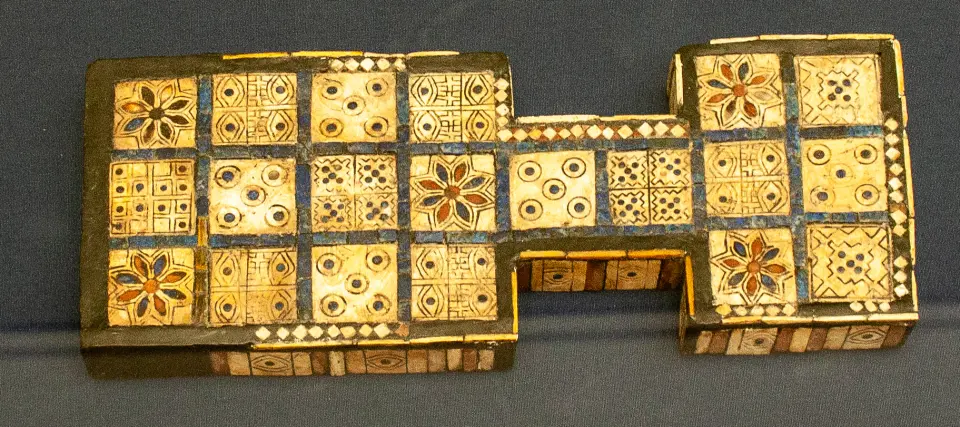
The Case of the Royal Game of Ur
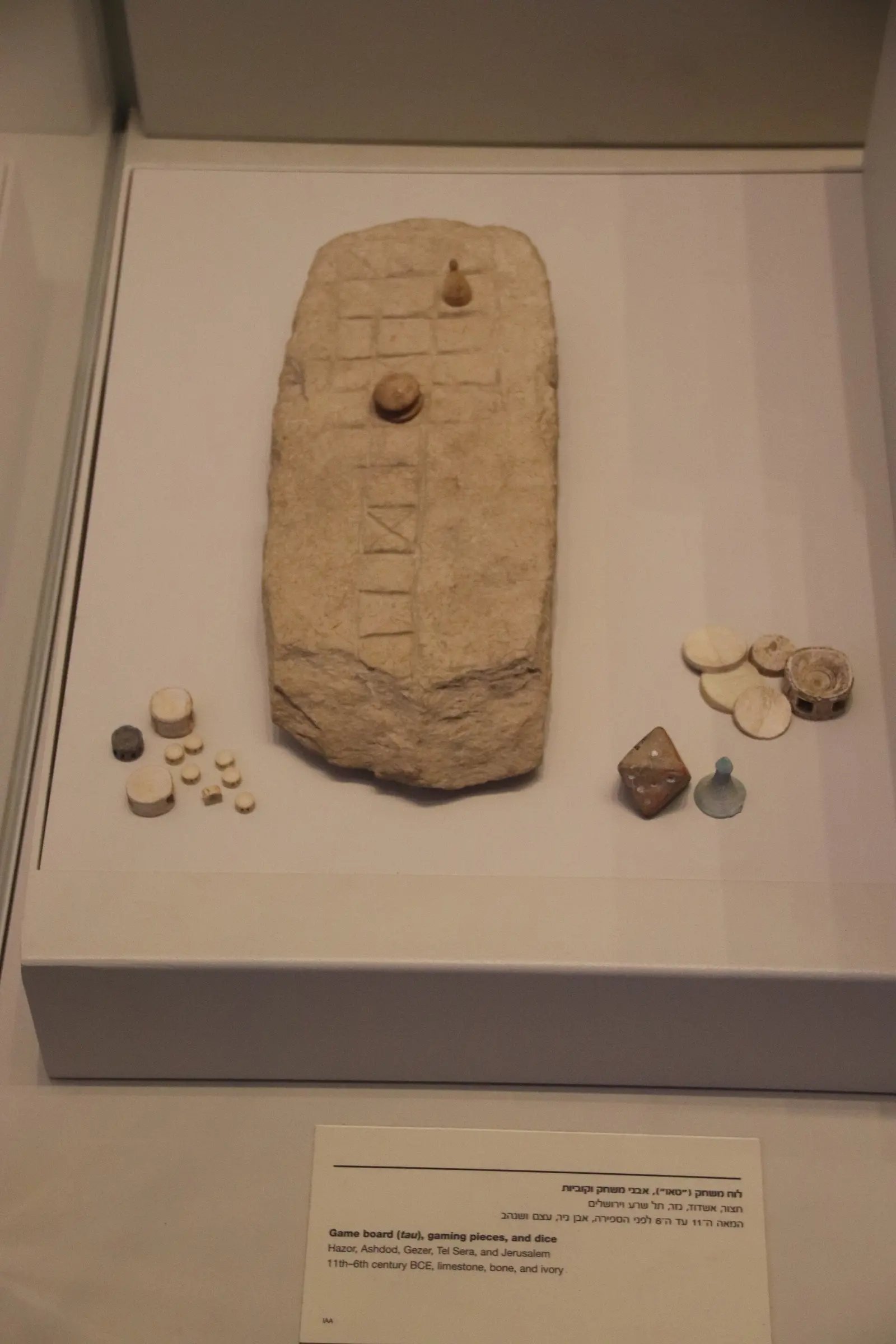
The Royal Game of Ur is the most famous example of this family, but its fame often eclipses its relatives. Excavated in the royal tombs of Ur, this 20-square board has been the subject of multiple interpretations. However, the physical evidence of the board itself does not dictate the rules; these must be inferred from contemporary texts or comparisons with later games. Specialized literature points out that, due to local variations, it is not a single game but a family of games. This implies that the 'Royal Game' is, in fact, a representative of a broader tradition that includes Egyptian and Nordic variants.
Connections to Egyptian Senet
Although Senet is often classified separately due to its association with the afterlife mythology, it shares with the Royal Game of Ur the basis of a linear board with a limited number of squares. Available evidence suggests that these structures shared basic mechanics of movement and chance, adapting to local norms. The comparison between Senet and the 20-square variants allows historians to identify common patterns in how ancient civilizations encoded competition and fate in a defined physical space. It is not a proven direct influence, but a structural convergence reflecting similar ludic needs.
Nordic Variants and Geographic Dispersion
The ludic tradition did not stop in the Mediterranean. Secondary sources mention Nordic variants, such as Hnefatafl or Tawl-bwrdd, which, although often associated with 8x8 boards, show in some of their variants or precursors structures that dialogue with the logic of 20-square linear boards. The mention of these variants in studies on the evolution of board games underscores the complexity of cultural transmission. It cannot be asserted with certainty that Hnefatafl is a direct descendant of the Royal Game of Ur, but the coexistence of these families in the same geographic and temporal space suggests an exchange of ideas about the mechanics of chance and movement.
Modern Recovery and Edition
In the contemporary era, these ancient forms have been recovered by publishers and collectors. The publication of modern editions of the Royal Game of Ur and its variants allows players to experiment with reconstructed rules. However, this recovery involves challenges. Original rules are often not fully documented, forcing editors to make interpretive decisions. This article focuses on documenting this continuity, avoiding speculation about unverified rules and focusing on what primary and secondary sources confirm about the structure and spread of these boards. The existence of multiple modern editions reflects sustained interest in these forms, but also the inherent uncertainty of their reconstruction.
Limitations of Documentary Evidence
It is crucial to recognize the limits of what can be verified. Archaeology provides the boards, but rarely the complete rules. Ancient texts are often fragmentary or ambiguous. Therefore, any claim about how these variants were exactly played must be treated with caution. Current historiography is based on a combination of material, textual, and comparative evidence, but a margin of uncertainty always remains. This article does not aim to resolve all questions about these game families, but to offer a framework for understanding their complexity and their place in the history of board games.
Conclusion
The family of 20 squares represents a fascinating chapter in the history of board games. Far from being an isolated curiosity, it is a network of influences connecting cultures separated by thousands of years and kilometers. Documentary evidence, though sometimes fragmentary, allows tracing the lines of this continuity. By studying these forms, we learn not only about the past but also about the human nature of seeking structure and chance in play. The persistence of these boards in Western culture is a testament to their resilience and their ability to adapt to new contexts, keeping their geometric essence intact.
Documentary gallery
- Decade
- Before 1950
- Region
- Global
- Level
- Introduction
- Entities
- Juego Real de Ur
Sources and references
- (PDF) Estudio sobre la evolución del juego de mesa y su ...www.academia.edu · 2026-10-22
- ¿Qué historia jugamos? Una aproximación al estudio de los juegos de mesa de simulación históricadoi.org · 2026-10-22
- La aplicación de los juegos de mesa en la enseñanza de la Historiadoi.org · 2026-10-22
- Breve Historia de los Juegos de Mesa, nueva ediciónludotecapampala.wordpress.com · 2026-10-22
- La historia de los juegos de mesa | SCANDAL.LOSscandallos.wordpress.com · 2026-10-22