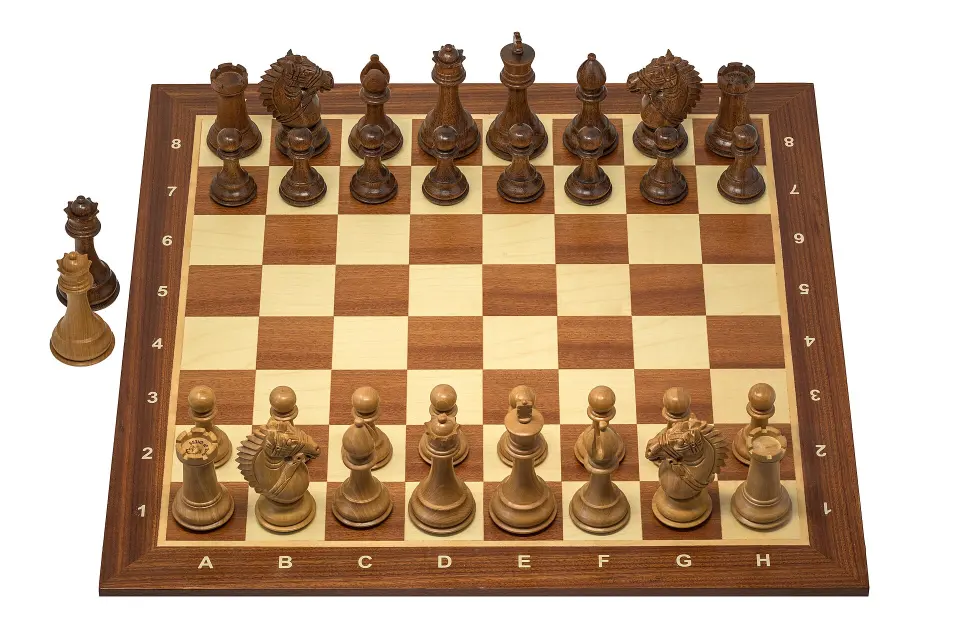
The chess and checkers board is not merely a container for pieces, but a structure that defines the possibilities of the game. Divided into eight rows and eight columns, it generates sixty-four identical squares known as escaques. This geometric configuration is the foundation upon which strategy is built, simultaneously limiting and enabling the movements of the opponents. In this analysis, the board is examined as a technical and cultural component that supports complex game systems, beyond its aesthetic or nostalgic function.
The basic structure of the grid
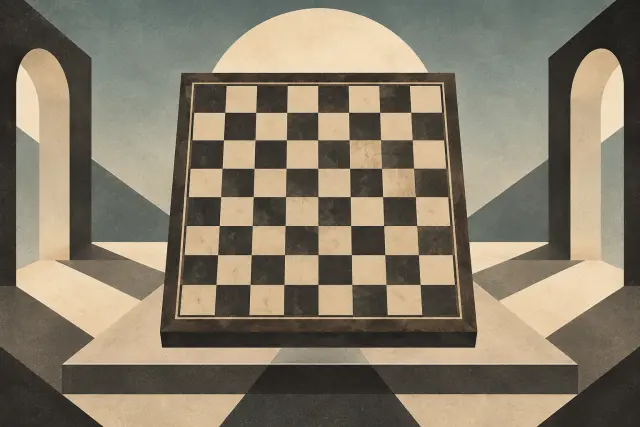
The standard definition of the chess and checkers board establishes a subdivision into 8 rows and 8 columns. The result is a grid of 64 equal squares, called escaques. This uniformity is crucial: each square has the same spatial value, allowing for perfect symmetry between the two players. The alternation of colors, typically white and black, facilitates the identification of positions, although the provided evidence focuses on the numerical and dimensional structure rather than the specific visual attributes of commercial editions.
The board as a decision system
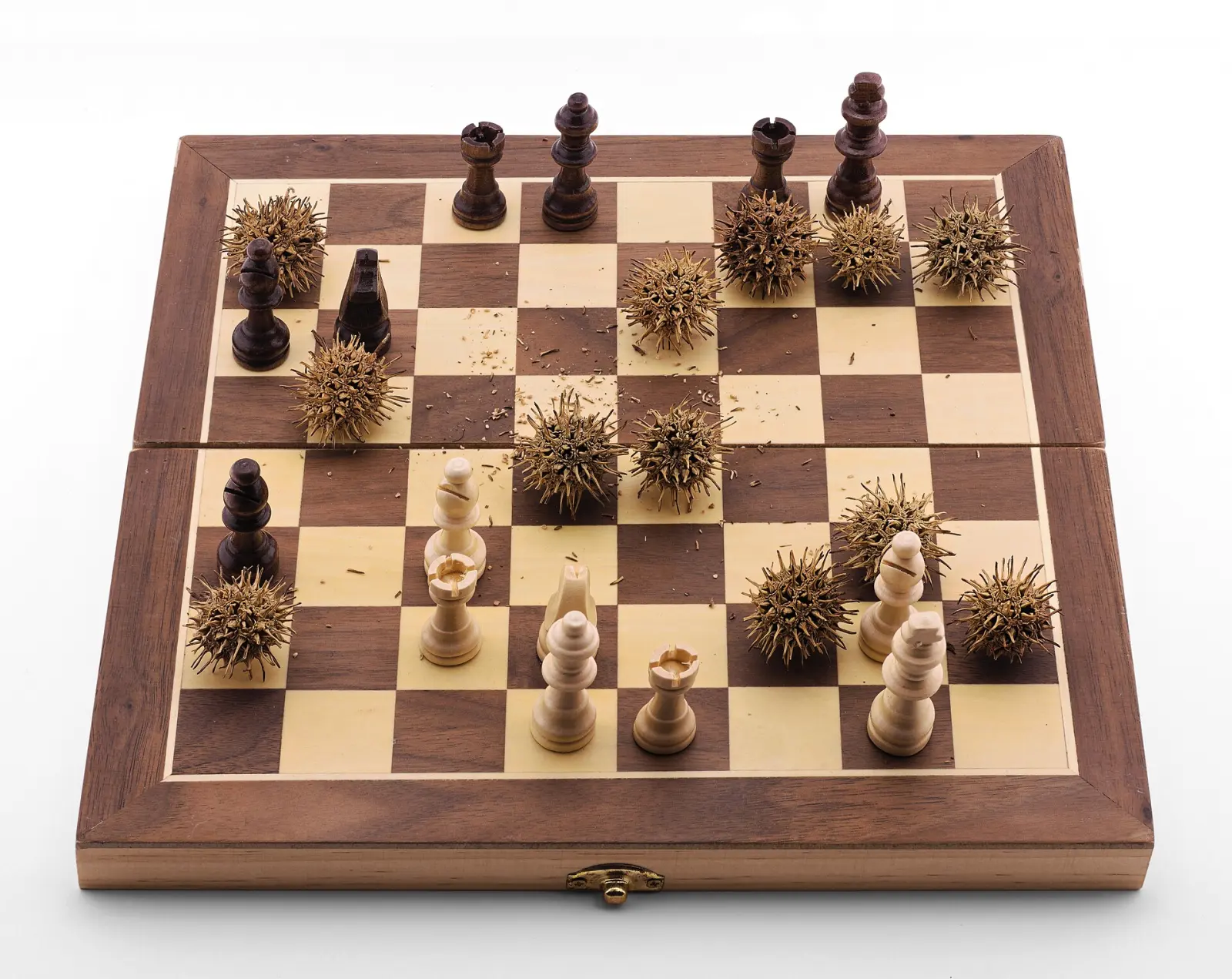
In chess, the board organizes the possible positions of the pieces. Each player begins with sixteen mobile pieces, unequal in importance and value. These pieces move across the grid capturing the opponent's pieces according to specific rules. The final objective is to threaten the opposing king until checkmate is produced. The geometry of the board is not passive; it determines attack and defense routes, turning the surface into a central component of the strategic decision system.
Historical origin and evolution
The current version of chess emerged in Europe during the fifteenth century. This form evolved from Persian shatranj, which in turn derived from chaturanga, a game practiced in India in the sixth century. Records indicate that board games have been known since antiquity, although the available sources do not detail a precise chronology of the board's transformations over the centuries. This genealogical line places the 8×8 board as an element with a millennial history, adapted to different cultural contexts and rules.
Function in checkers
Although the article focuses on chess, the 8×8 board is shared with the game of checkers. The same surface of sixty-four squares serves both game systems. However, the provided sources do not allow for a detailed comparative analysis of the specific rules of checkers or regional variants. The interest lies in recognizing that a single physical structure can support multiple logical systems, demonstrating the versatility of the board design.
The board as a material document
For RetroPause, the board is read as a document. It is not just an entertainment object, but a material piece that has accompanied different rules, editions, and uses over time. Its structure has remained relatively stable, making it a cultural artifact with its own identity. The ability to support different games without changing its physical form is a testament to its robust and functional design.
Limits of available evidence
It is important to note that the provided sources do not allow for the comparison of specific commercial editions, manufacturing materials, or detailed regional variants. It cannot be asserted with certainty how the board varied in different periods or cultures beyond the general line of chess evolution. The analysis is therefore limited to what is verifiable: the standard structure, its function in chess, and its role as a material support for a game system.
Conclusion
The 64-square board is much more than a game surface; it is a tool of spatial organization that defines the rules of chess and checkers. Its 8×8 geometry is a historical legacy that has withstood the passage of time, adapting to new rules and contexts. Understanding the board as a structural component and not just as a decorative object allows for an appreciation of its importance in the history of strategy games and its continuous cultural relevance.
Documentary gallery
- Decade
- Before 1950
- Region
- Global
- Level
- Introduction
- Entities
- Tablero de damas y ajedrez, Cuatro, Ajedrez, Chaturanga
Sources and references
- El tablero de ajedrez de Walter Benjamin: una interpretación de la tesis I sobre el concepto de la historiadoi.org · 2026-10-21
- Tablero de damas y ajedrez - Wikipedia, la enciclopedia librees.wikipedia.org · 2026-10-21
- Tablero de damas y ajedrez Origen y evolución Los juegos ...www.facebook.com · 2026-10-21
- Ajedrezes.hispanopedia.com · 2026-10-21
- Características del tablero de ajedrez | PDFes.scribd.com · 2026-10-21
- Ajedrez como Estrategia Educativa | PDFes.scribd.com · 2026-10-21
- Ajedrezes.wikipedia.org · 2026-10-21