The discovery of decorated boards in the royal tombs of Ur has allowed historians to glimpse a facet of Sumerian daily life that textual archaeology barely hinted at. Approximately 4,600 years ago, in southern Mesopotamia, a board game was played that we now know as the Royal Game of Ur. This object is not simply an entertainment relic; it is a material document that reveals how Sumerian society structured leisure, competition, and social interaction. By examining its components and context, it becomes clear that the game transcended mere fun to become a status marker and a tool for cultural cohesion.
The anatomy of the board
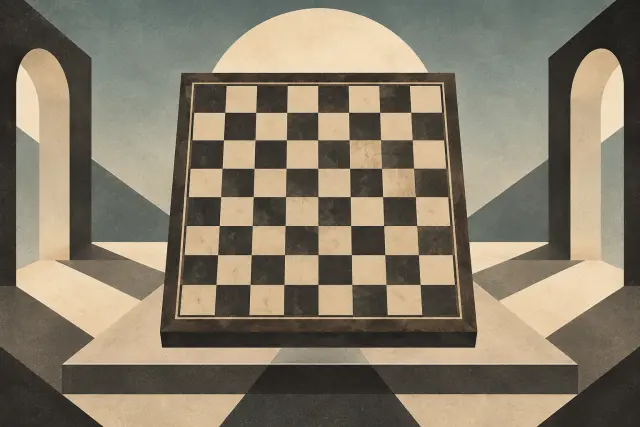
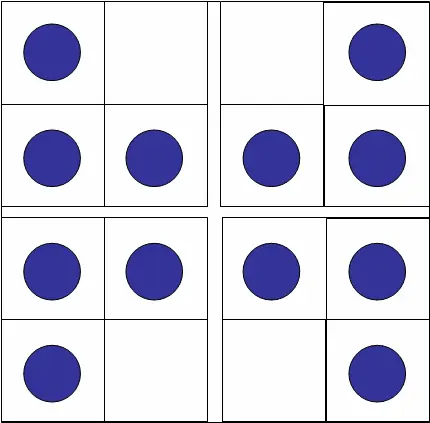
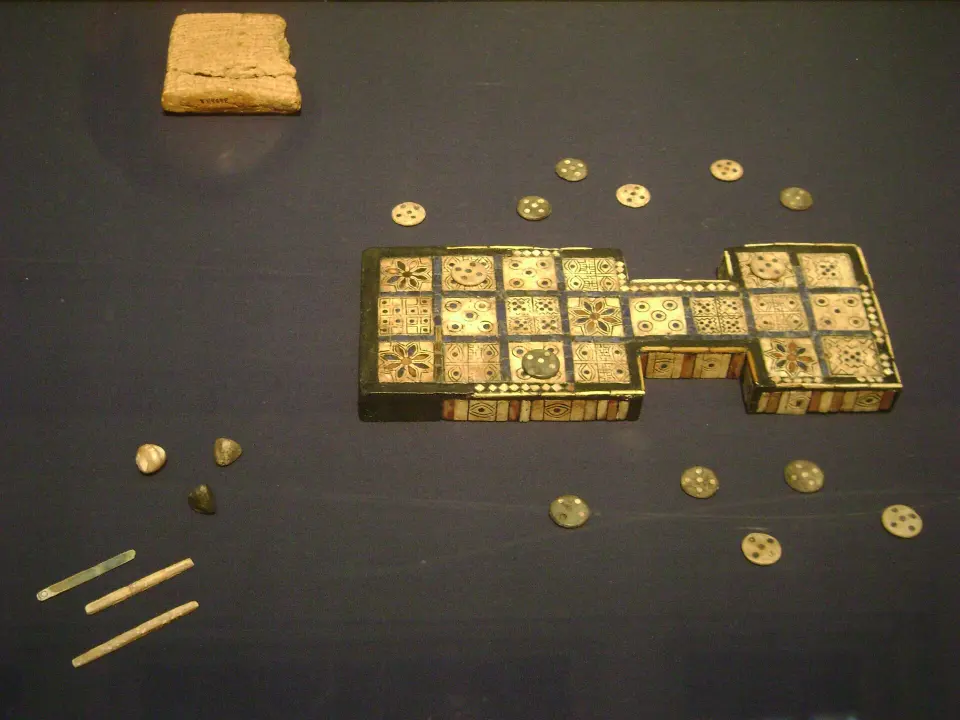
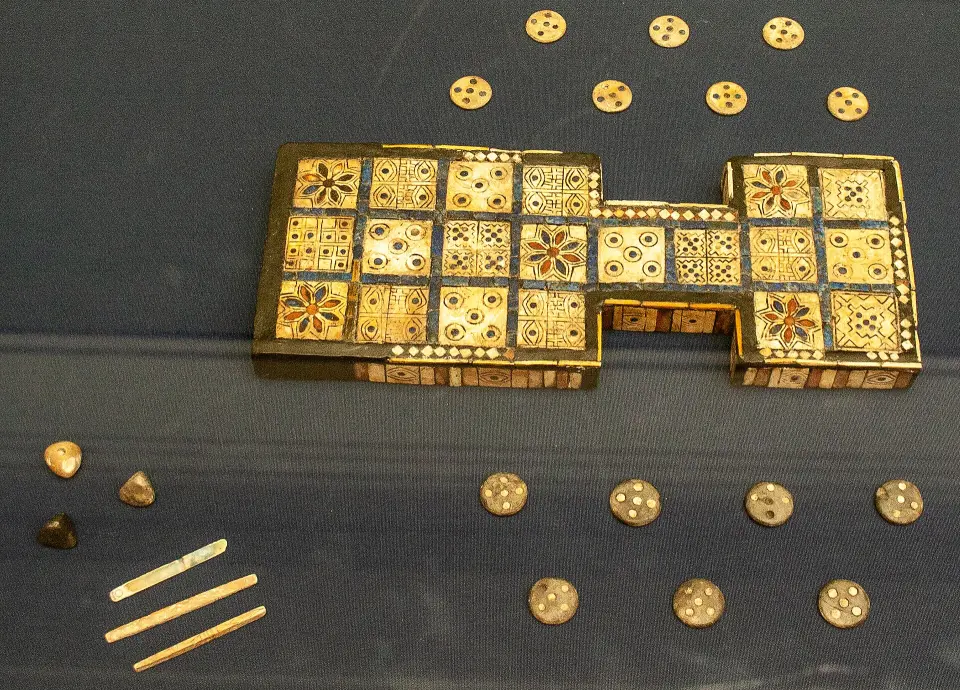
The board design is consistent across the examples found. It consists of 20 squares arranged in three rows. A distinctive feature is the three triangles that mark key positions within the path. This geometry is not arbitrary; it suggests a system of movement and blocking that requires planning. The materials used for its manufacture vary, but the most elaborate include lapis lazuli, ivory, and inlaid shells. This choice of materials indicates that the board was a valuable object, likely reserved for the elite or for specific ritual contexts. The presence of these precious materials in royal tombs reinforces the idea that the game had a symbolic dimension beyond the ludic.
The pyramidal chance
A fascinating aspect of the Royal Game of Ur is the type of die used. Unlike the cubic dice that would become popular later, the Ur dice were pyramid-shaped. This shape is exclusive to Mesopotamia and has not been found in other contemporary regions. This singularity raises an open question about the origin of the game. Some researchers suggest that the game may have been of local origin, developed specifically for Sumerian culture. Others, however, argue that the exclusivity of these dice could indicate that the game or its rules came from outside, adapting to local materials. This ambiguity does not diminish the value of the find, but enriches it, showing the complexity of cultural exchanges in the ancient Near East.
Social context and status
In Sumerian Mesopotamia, the game was not an isolated activity. The history of social games begins about 5,000 years ago, and these games were an integral part of all cultures. In Ur, the game served as a social status marker. The finely decorated boards found in royal tombs indicate that playing was a privilege or a practice associated with the upper classes. It was not just about passing time, but about demonstrating refinement and access to scarce resources. Moreover, these objects were offered as gifts to the royalty and elite, suggesting that the game had a diplomatic and social value. The ability to participate in these games was, in itself, a sign of belonging to a specific social circle.
Ritual and educational dimension
Beyond entertainment, ancient games were often imbued with religious, mythical, and ritual significance. Although there is no absolute certainty about the specific meaning of the Royal Game of Ur, it is likely that it shared these characteristics with other games of the time, such as Senet in Egypt. These games were not just a way to pass time, but also teaching tools. They may have been used to teach spiritual, ethical, or strategic lessons. The uncertainty of the outcome, the consensual rules, and the competition are common features of games that allow people to go beyond immediate imagination. In this sense, the Royal Game of Ur may have been a way to develop strategic thinking and mental skill, skills valued in administration and war.
Comparison with other ancient games
To better understand the place of the Royal Game of Ur, it is useful to compare it with other ancient games. Senet, for example, was an Egyptian board game that also had a strong ritual dimension, associated with the soul's journey to the afterlife. The Mesoamerican ball game, on the other hand, had a deep religious significance and was linked to sacrifice rituals. Although the Royal Game of Ur does not have a clearly documented ritual association, its presence in funerary contexts suggests that it had symbolic importance. The comparison with these games shows that play was a universal phenomenon in ancient civilizations, adapting to the worldviews and social structures of each culture.
Limitations of the evidence
It is important to recognize the limitations of what can be asserted about the Royal Game of Ur. No written rules have been found that precisely describe how it was played. Current reconstructions are based on the logic of the board and comparisons with other games. This means that the exact rules remain a subject of debate among experts. Additionally, the interpretation of the game's cultural meaning is speculative, based on analogies with other cultures. However, the material evidence is solid: the boards, the dice, and the find contexts are real and datable. The uncertainty about the rules does not invalidate the importance of the find, but invites continuous research.
Legacy and contemporary relevance
The Royal Game of Ur has a legacy that transcends its time. It has influenced the way we understand the history of board games and Sumerian culture. Today, there are modern editions of the game that allow players to experiment with the reconstructed rules. This contemporary relevance shows that the game remains a form of connection with the past. By playing the Royal Game of Ur, players not only practice a ludic activity, but participate in a tradition that dates back 4,600 years. This legacy is a reminder that play is a fundamental part of the human experience, capable of transcending the barriers of time and culture.
Conclusion
The Royal Game of Ur is much more than an ancient board. It is a window into the complexity of Sumerian society, revealing how play intertwined with status, religion, and education. Its study allows us to better understand the social dynamics of ancient Mesopotamia and the universality of play as a cultural phenomenon. Although open questions remain about its exact rules and meaning, its historical importance is undeniable. The Royal Game of Ur reminds us that leisure and competition are fundamental aspects of the human condition, present since the dawn of civilization.
Documentary gallery
- Decade
- Before 1950
- Region
- Other regions
- Level
- Introduction
- Entities
- Juego Real de Ur
Sources and references
- Descifrando los patrones del juego real de Ur Board - Parte 1translate.google.com · 2026-10-20
- 15 tablillas de Ur mencionan lugares desconocidos, la ...www.facebook.com · 2026-10-20
- Juegos de mesa de en la Historia: perros y chacales ...www.instagram.com · 2026-10-20
- Mesopotamiaes.wikipedia.org · 2026-10-20
- Historia del juegoes.wikipedia.org · 2026-10-20