A domestic transformation with uneven rhythms
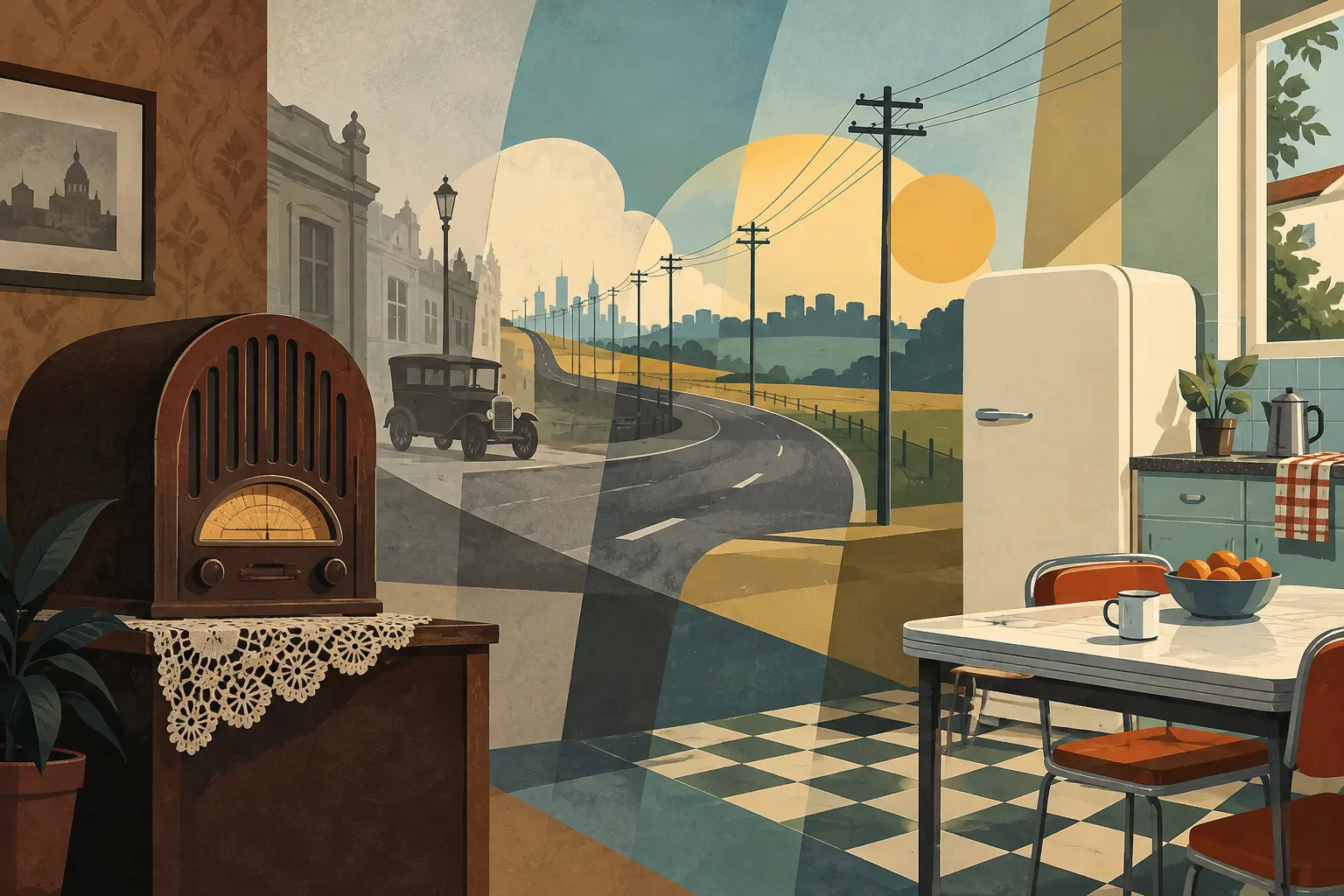
Between 1920 and 1970, cars, radios, electric refrigerators and gas stoves changed aspects of everyday life in Argentina, but they did not reach the same homes at the same time. Fernando Rocchi examines this history through the relationship between production, supply and demand. He distinguishes between goods that occupied leisure time, such as the radio, and appliances that could save time on domestic tasks. The automobile sat between these categories: it could shorten some journeys while also making new excursions possible.
That distinction matters because modernization was not simply a matter of replacing old objects with new ones. It also required changes in habits, infrastructure and ideas about what made a home comfortable. The expansion of consumption was closely associated with the middle classes, a diverse category whose boundaries with working-class groups were porous. Income, credit, domestic manufacturing and lower energy costs widened access, but not equally across households or regions.
Radios and cars: an early culture of leisure
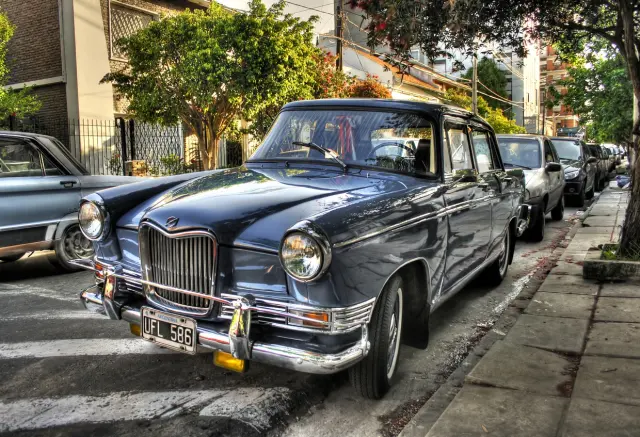
In the 1920s, Argentina imported many cars and radios, while electric refrigerators found few buyers. In 1928, 259,120 cars were in circulation in the country, according to figures compiled by Rocchi. For their owners, cars could represent mobility, recreation and social distinction. Their growth stalled with the crisis that began in 1929: falling incomes, currency restrictions and import controls sharply reduced the arrival of vehicles during the 1930s.
Radio followed a different course. Receivers were initially imported, but from 1930 domestic manufacturing supplied much of the market. Production could expand even during the crisis, partly because locally made sets relied increasingly less on imported components. Radio also became a shared form of entertainment: family members, friends and neighbors gathered to listen to programmes and radio dramas. Advertising and sponsorship connected listening with consumer goods and with the image of women as household purchasers.
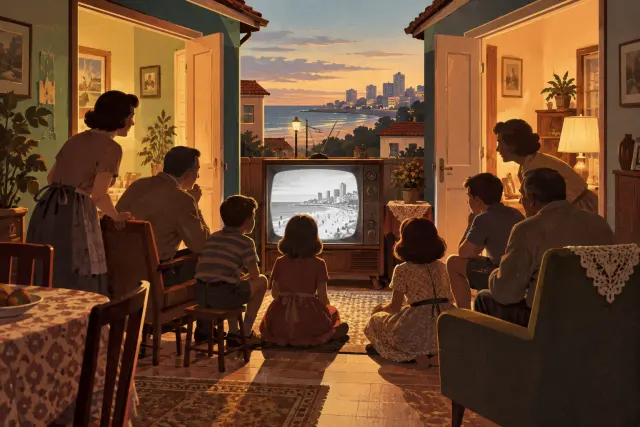
Radio reached both urban and rural areas, while car ownership depended on different levels of purchasing power and transport conditions. The 1947 census recorded almost three million radio sets. Official figures may have understated actual ownership of consumer goods, a caution that also applies to later data. In 1960, the census counted more than half a million television sets; estimates cited by Rocchi suggest the real number was higher. Television then began competing with radio for leisure time.
From ice to the electric refrigerator
The electric refrigerator took time to catch on because it had to compete with established habits and a familiar alternative: the wooden icebox cooled by blocks of ice. In the 1920s, daily food shopping, the availability of ice and domestic service reduced the perceived need to store food for longer. Even inventories from two affluent households cited by Rocchi show that wealth did not necessarily mean owning an electric refrigerator.
Urban growth and rising ice prices encouraged interest in other forms of refrigeration. The Argentine company Siam began making household electric refrigerators in 1935. The challenge was not only to manufacture them, but to persuade consumers that storing food in an electric appliance was practical and would not affect its quality. Advertising depicted modern homes and appetizing meals; the company also held demonstrations to teach people how to use the product. At first, some customers used their refrigerators mainly to chill drinks: adopting a technology also meant learning to incorporate it into daily routines.
Production and access grew during the first Peronist period. The 1947 census indicated that 3.4% of households had an electric refrigerator and 20.4% had an icebox. Domestic manufacturing accelerated over the following decade: output rose from 6,967 units in 1946 to 151,200 in 1955, and installment payments enabled some workers to buy an appliance that cost several months’ wages. Even so, the refrigerator did not become a widely consumed mass-market item until the 1960s. By 1970, the number of units exceeded 1.3 million, equivalent to 80% of electrified homes, according to figures cited by the author.
National totals reveal the scale of expansion, but cannot by themselves show who could afford an appliance, how it was distributed across regions or which tasks changed in each home. Access depended on the purchase price, the availability of an electricity connection and each household’s shopping habits.
Cooking with gas: infrastructure matters
The spread of gas stoves, in turn, depended on the expansion of the network and the cost of fuel. Construction of the gas pipeline from Comodoro Rivadavia to Buenos Aires began in 1947 and was completed in 1949. It helped lower supply costs and widen consumption, while bottled gas served places without a network connection. Access remained different in connected urban homes and in communities supplied with cylinders.
Wood-, kerosene- and gas-powered stoves coexisted for decades. Argentine companies such as Orbis, Volcán and Longvie adapted their production to new energy sources and consumer preferences. Longvie had been making gas stoves since 1949; its output and that of other firms grew particularly in the 1960s and 1970s. The transition was therefore not just a change in kitchen design: it depended on energy prices and availability, as well as manufacturers’ ability to make and distribute appliances.
Electricity, too, spread gradually. National output doubled between 1931 and 1945, but networks took time to reach some working-class neighborhoods in Buenos Aires and towns in the interior. Electricity cooperatives and supply companies contributed to a process that continued after the war and accelerated in the 1960s. Access to household appliances was shaped by this uneven geography of energy.
Domestic work, gender and the middle classes
The transformation of the home also changed the meaning of domestic labor. From the 1940s, an idea of the modern home equipped with technologies promising hygiene and efficiency became more widespread, assigning women a central role in household management. Advertising presented them as the purchasers and budget managers of the home, although that image does not describe every woman’s experience in the same way.
Domestic service adds another qualification. American traders cited by Rocchi attributed the initially low demand for appliances to the availability of domestic workers, who could shop daily and carry out household tasks. The author treats that explanation as partial: electricity and gas prices, shopping habits, expectations of comfort, and changes in the employment and legal status of domestic workers also mattered. In 1947, domestic service remained an important occupation for economically active women, although its status and conditions were changing.
The middle classes were central to sustaining demand for durable goods and encouraging local manufacturing. But rising consumption was not confined to them: during Peronism, working-class households also gained access to appliances, and installment buying widened purchasing opportunities. Several products spread more broadly in the 1960s, amid rising incomes and industrial expansion.
The home as a place of consumption and sociability
These products followed different paths. The automobile boomed in the 1920s and expanded again in the 1960s, when domestic production grew with the arrival of foreign manufacturers. Radio spread during the 1930s through local manufacturing and shared listening. Electric refrigerators and gas stoves, by contrast, required manufacturing, energy networks, prices and everyday habits to converge before they became widely available.
Together, these changes made consumption an increasingly visible part of everyday life in Argentina. Ownership of durable goods became associated with well-being and comfort, but not automatically or equally. An appliance could save time or open up new forms of leisure; its meaning depended on who used it, what work was already being done in the home and what material conditions made it function. The modernization of the home was thus both a technological transformation and an unequal social process.
- Decade
- 1960s
- Region
- Latin America
- Level
- Introduction
- Entities
- Televisión, Buenos Aires, Heladera eléctrica, Argentina
Sources and references 5
- la evolución de los bienes durables en Argentina, 1920-1970journals.openedition.org · 2026-11-15
- Historia de los Estados Unidos (1945–1964)translate.google.com · 2026-11-15
- la evolución de los bienes durables en Argentina, 1920-1970www.scielo.org.co · 2026-11-15
- De la historia de las mentalidades a la historia culturalwww.scielo.org.mx · 2026-11-15
- Historia del País Vascoes.wikipedia.org · 2026-11-15