Photography is a physical object whose existence depends on the interaction between a material support and a chemical or digital process. In the realm of museums and archives, preservation does not begin with the image itself, but with the precise identification of these components. This distinction is fundamental because it determines the longevity of the object and the appropriate treatment strategies. Recent evidence, including specialized courses in the conservation of photographic techniques and projects for digitizing old funds, underscores the need to understand the materiality of photography to avoid irreversible damage. This article explores how technical documentation and cultural context intertwine to ensure the preservation of photography as a historical and artistic source, without attributing to it meanings it cannot demonstrate.
The material basis of the image
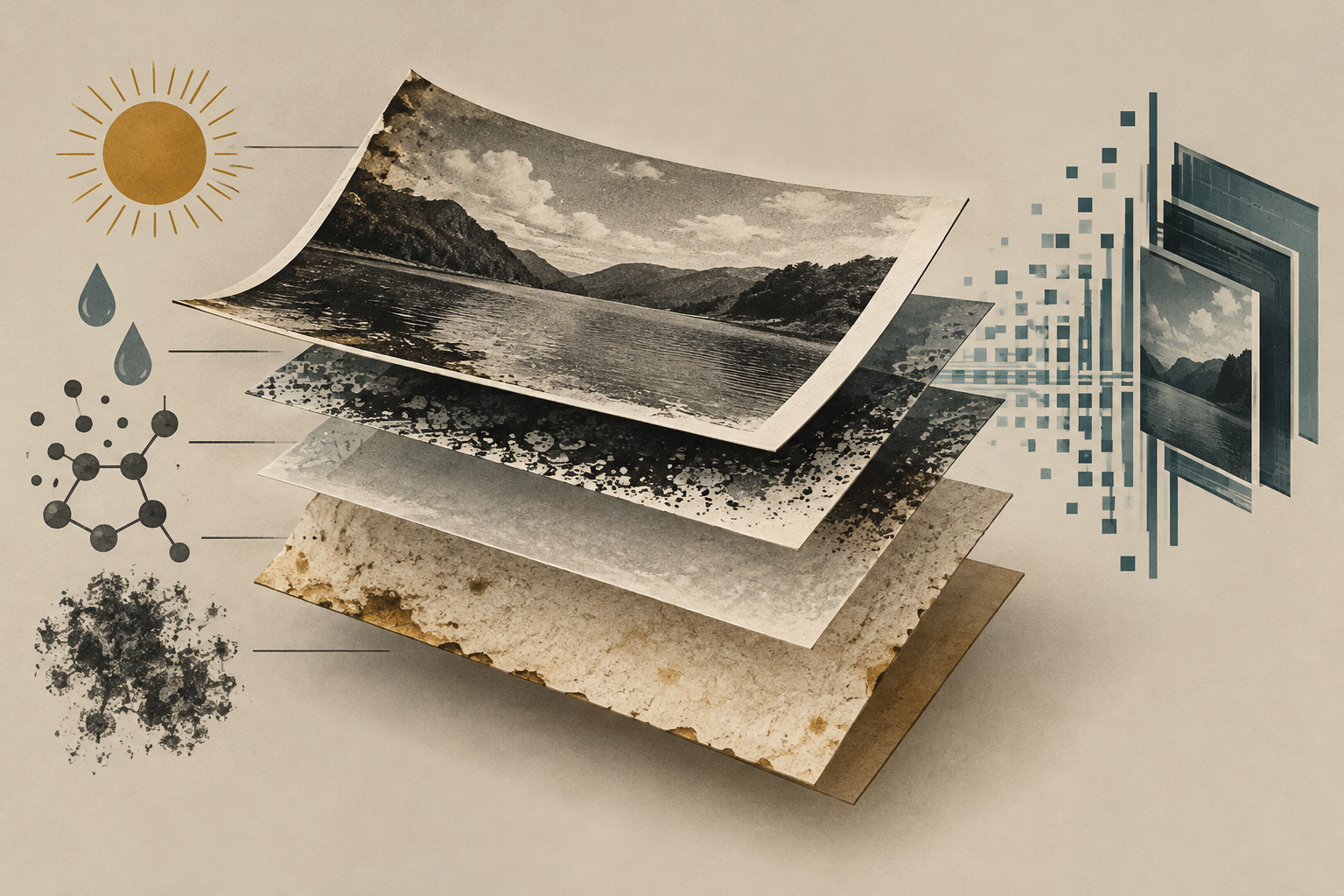
Each photograph has a support that can be paper, glass, plastic, or a digital medium. This support is not a simple container, but an active element that influences the stability of the image. Deterioration processes vary depending on the material and the fixing method. Therefore, identifying the photographic process is the first step in any conservation intervention. Without this knowledge, any treatment can be counterproductive. The materiality of photography requires a rigorous analysis that considers the chemistry of the emulsion and the physics of the support.
The role of technical documentation
Rigorous documentation allows understanding the possibilities of the image without attributing to it what it does not demonstrate. In archives, this documentation includes metadata about the creation process, the state of conservation, and previous interventions. This approach is crucial for preserving individual and collective memory, as the deterioration of the support can irreversibly alter historical information. Documentation acts as a witness that records the evolution of the object over time, providing a context for future research.
Preventive conservation and collection handling
Sector professionals emphasize the importance of preventive conservation and the proper handling of collections. This involves controlling environmental conditions, such as temperature and humidity, to slow down degradation processes. Handling collections requires strict protocols to minimize human contact and avoid mechanical damage. Preventive conservation is not an active intervention, but a management strategy that seeks to maintain the current state of the object.
Digitization and restoration
Digitization offers a way to preserve the image without relying exclusively on the physical support. Recent projects have used technologies that stabilize the image and erase the damage of the original support. However, digitization does not replace the conservation of the physical object. It is a complementary tool that allows public access without exposing the original to risks. Digital restoration must be carried out with caution, respecting the authenticity of the image and documenting each step of the process.
The balance between access and protection
The integration of photography into cultural heritage requires management that balances public access with the protection of the object. Museums and archives face the challenge of making their collections accessible without compromising their integrity. This is achieved by creating high-quality digital copies and limiting access to the originals. Public access is a right, but the protection of the object is a responsibility. This balance requires careful planning and clear communication with the public.
Cultural context and historical relevance
Photography is not only a technical object, but also a cultural document. Its historical relevance depends on the context in which it was created and the meaning it has for the community. The preservation of photography must consider not only its physical state, but also its cultural value. This involves researching the history of the image, its author, and its reception by the public. The cultural context enriches the understanding of the image and gives it a deeper dimension.
Limitations of available evidence
Although the available evidence supports the importance of identifying the support and the process, there are limitations in the available information. Not all technical specifications of each object can be verified, and some sources are of moderate trust. Therefore, it is important to maintain a critical attitude and not generalize the conclusions. The preservation of photography is a constantly evolving field, and strategies must adapt to new knowledge and technologies.
Conclusion
The preservation of photography in museums and archives is a complex process that requires a multidisciplinary approach. The identification of the support and the technical process is the starting point, but not the only factor. Documentation, preventive conservation, digitization, and cultural context are essential elements that must be integrated into a coherent strategy. This approach ensures that photography is preserved as a historical and artistic source, respecting its materiality and its cultural meaning.
- Decade
- Contemporary
- Region
- Global
- Level
- Enthusiast
- Entities
- No linked entities
Sources and references
- Fotografía y archivodoi.org · 2026-10-17
- Fotografía amateur en España: conceptos, historiografía y métodosopenalex.org · 2026-10-17
- Curso Conservación de Técnicas Fotográficaswww.tiktok.com · 2026-10-17
- Manejo y conservación preventiva en coleccioneswww.youtube.com · 2026-10-17
- 🎞️Desentrañar los secretos de un archivo requiere ...www.instagram.com · 2026-10-17
- 00-CONSERVACION FOTOGRAFIAwww.memoriachilena.gob.cl · 2026-10-17