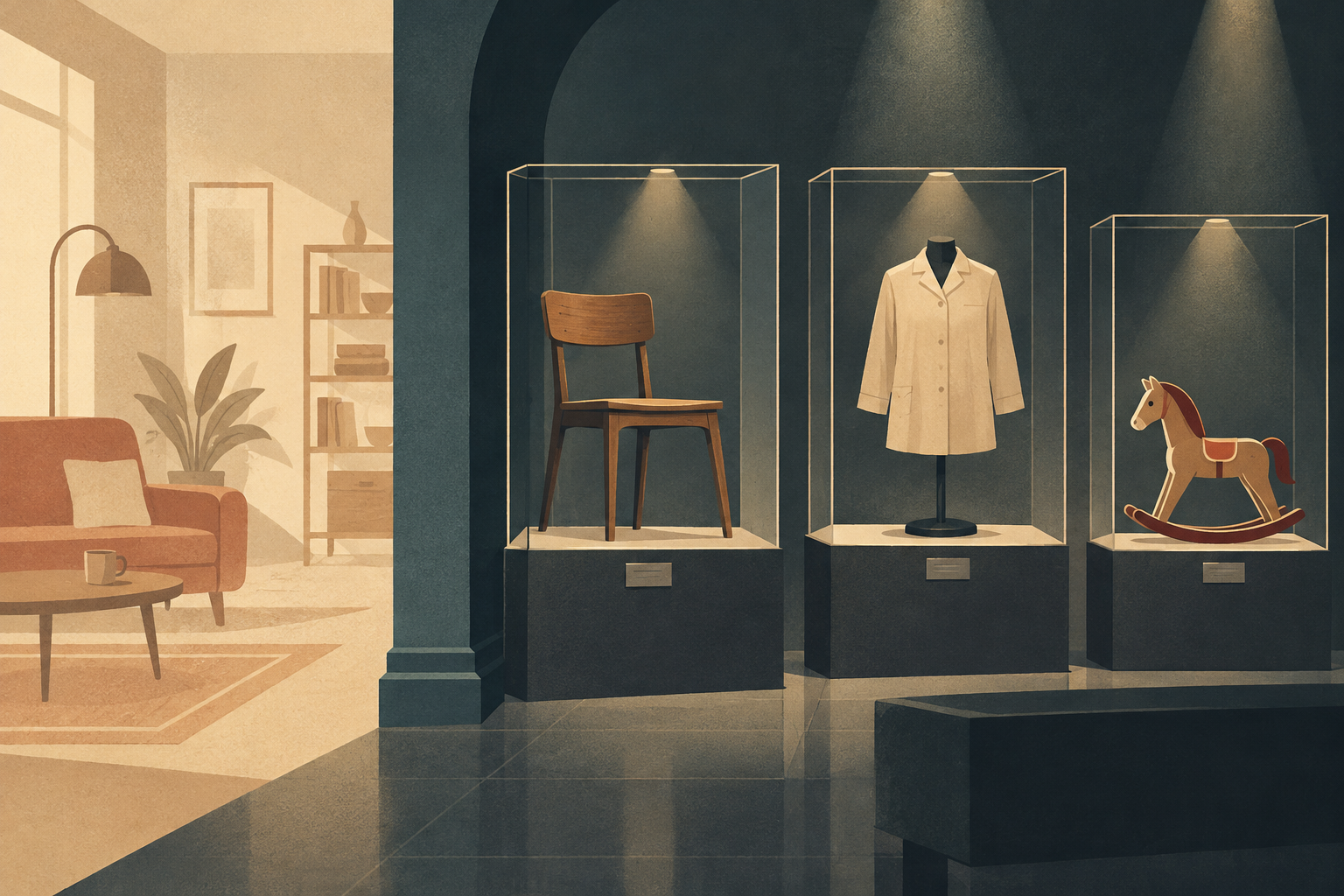
The preservation of interiors and decorative objects has evolved from mere material stabilization to a practice that requires understanding the life that inhabited those spaces. In the contemporary museum field, preventive conservation is not limited to protecting matter, but seeks to rescue the function and social meaning of the pieces. This paradigm shift relies on rigorous documentation and risk management, elements that allow museums to offer a comprehensive view of the everyday life of their historical occupants.
Identification as the basis of context
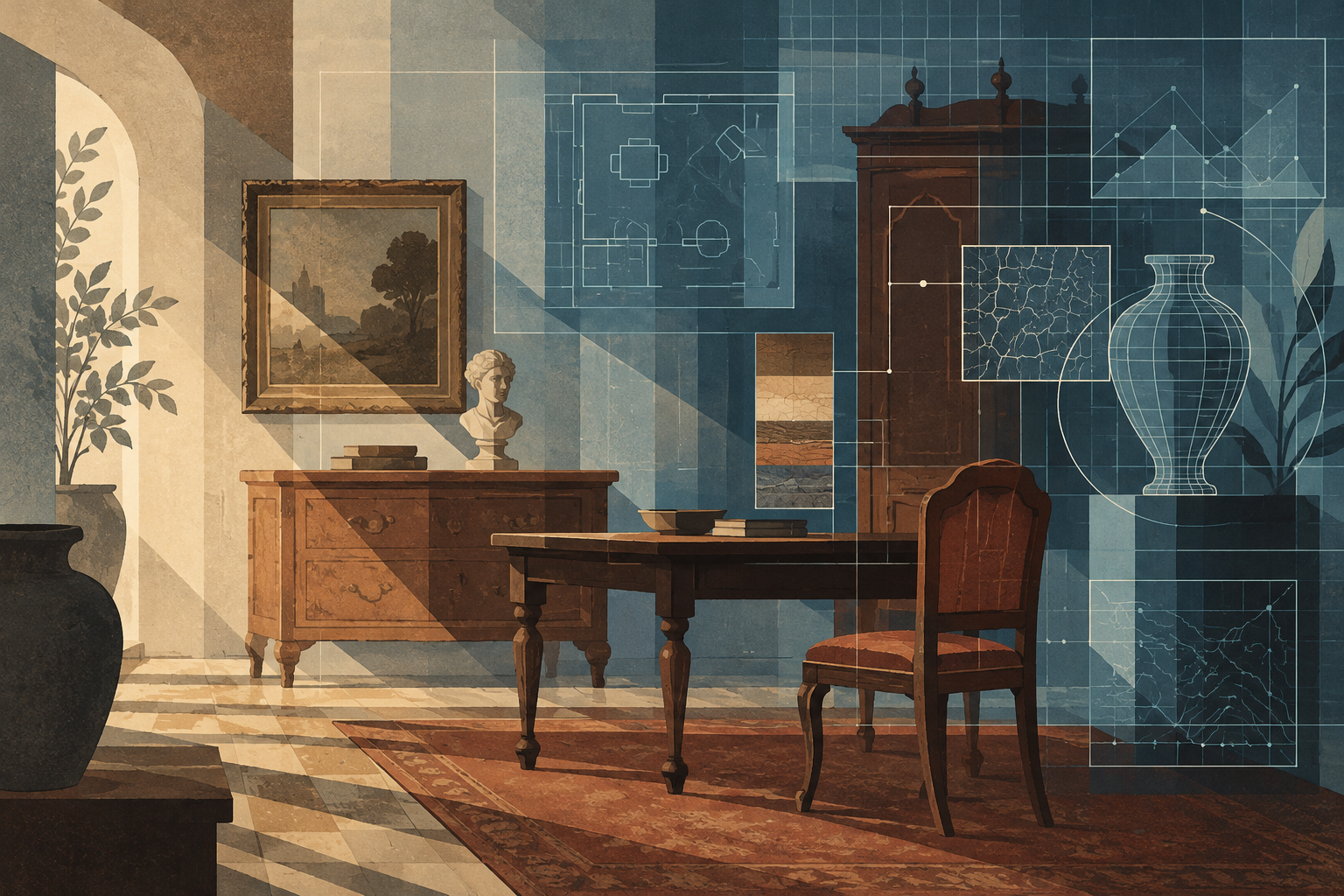
For an object to retain its historical value, it must be identified with precision. The Preventive Conservation Plan of the Sephardi Museum establishes that it is fundamental to pay special attention to descriptions, measurements, dates, and reasoned classifications. This technical requirement is not bureaucratic, but interpretive. By detailing the cultural context alongside physical data, conservators ensure that the piece does not become an isolated artifact, but a testimony of a specific era and community.
Registration and vocabulary normalization
The documentation of heritage collections requires a coherent system for the information to be useful in the long term. The CDBP manual describes an approach that integrates two well-defined areas of work: collection registration and vocabulary normalization. This duality is crucial. Registration captures the specific data of each piece, while vocabulary normalization ensures that the terms used are consistent and understandable within the professional community. Without this structure, contextual information would be lost in the heterogeneity of local descriptions.
Risk as a contextual factor
Conservation does not occur in a vacuum. The ICCROM risk management guide details how the environment influences the state of objects. Factors such as pollution, mold growth, or the dissociation of documents are risks that must be evaluated based on the context of exposure and handling. By considering these factors, museums not only protect the physical integrity of the pieces but also preserve the conditions that allowed their original use. Risk management thus becomes a tool to keep alive the relationship between the object and its environment.
Aesthetics and practical need
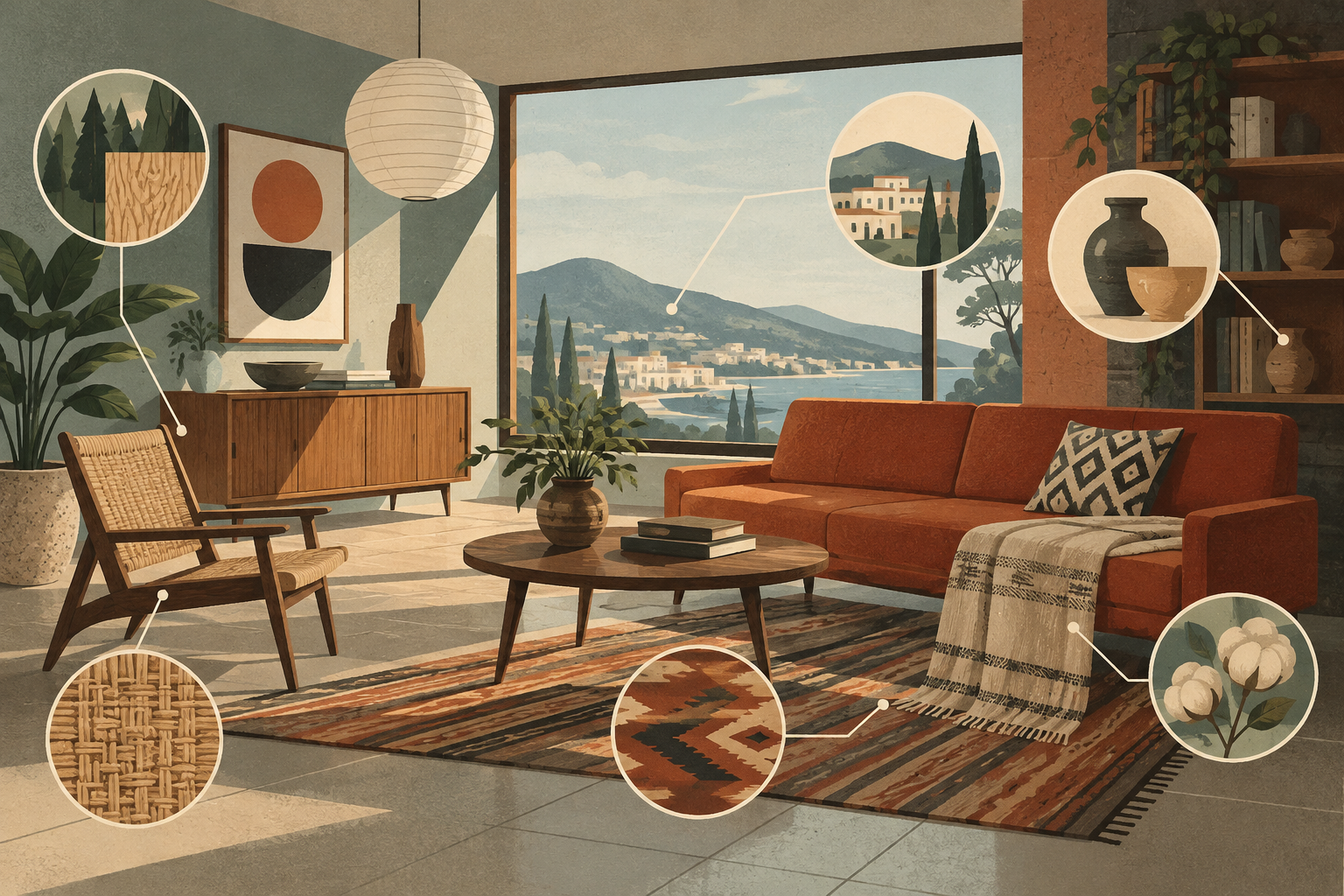
Historical interior design was not just a matter of beauty, but of functionality. Linking aesthetics with practical needs allows museums to show how design reflected the social practices and identities of its occupants. A piece of furniture was not just a decorative object, but a tool for daily life. This perspective helps visitors understand how design decisions were conditioned by social norms, cultural beliefs, and the technological limitations of the time.
The museum as a space of interpretation
Some architects and designers see museums as a means to highlight objects, but this vision is limited. Museum creation must go beyond physical exhibition to become a space of interpretation. By integrating contextual documentation and risk management, museums can offer a richer and more meaningful experience. The visitor does not just see an object, but understands its place in history and its relevance to the society that created it.
Limits of verification
Although documentation and risk management are powerful tools, there are limits to what can be verified. Not all aspects of the everyday use of an object are recorded or accessible. Interpretation must be based on solid evidence, avoiding unfounded conjectures. Conservators must be transparent about what is known and what is inferred, maintaining a critical stance towards sources. This intellectual honesty is essential to maintain the credibility of the museum practice.
Conclusion
The conservation of interiors and decorative objects is a discipline that combines the science of materials with social history. By prioritizing the documentation of cultural context and risk management, museums can offer a more complete view of everyday life. This approach not only preserves the past but makes it accessible and understandable for present and future generations. The key is to understand that the object is only the surface of a deeper history, which requires a sustained effort of research and care to be revealed.
- Decade
- Contemporary
- Region
- Global
- Level
- Introduction
- Entities
- Museum, Museo Sefardí
Sources and references
- Manual de Documentación - de Colecciones Patrimonialeswww.cdbp.gob.cl · 2026-10-17
- PLAN CONSERVACIÓN PREVENTIVA MUSEO SEFARDÍwww.cultura.gob.es · 2026-10-17
- Guía de Gestión de Riesgos para el Patrimonio Museológicowww.iccrom.org · 2026-10-17
- La Conservación: el porvenir del pasadounesdoc.unesco.org · 2026-10-17
- Diseño y patrimonio cultural: cómo asegurar la conservación ...turia.uv.es · 2026-10-17