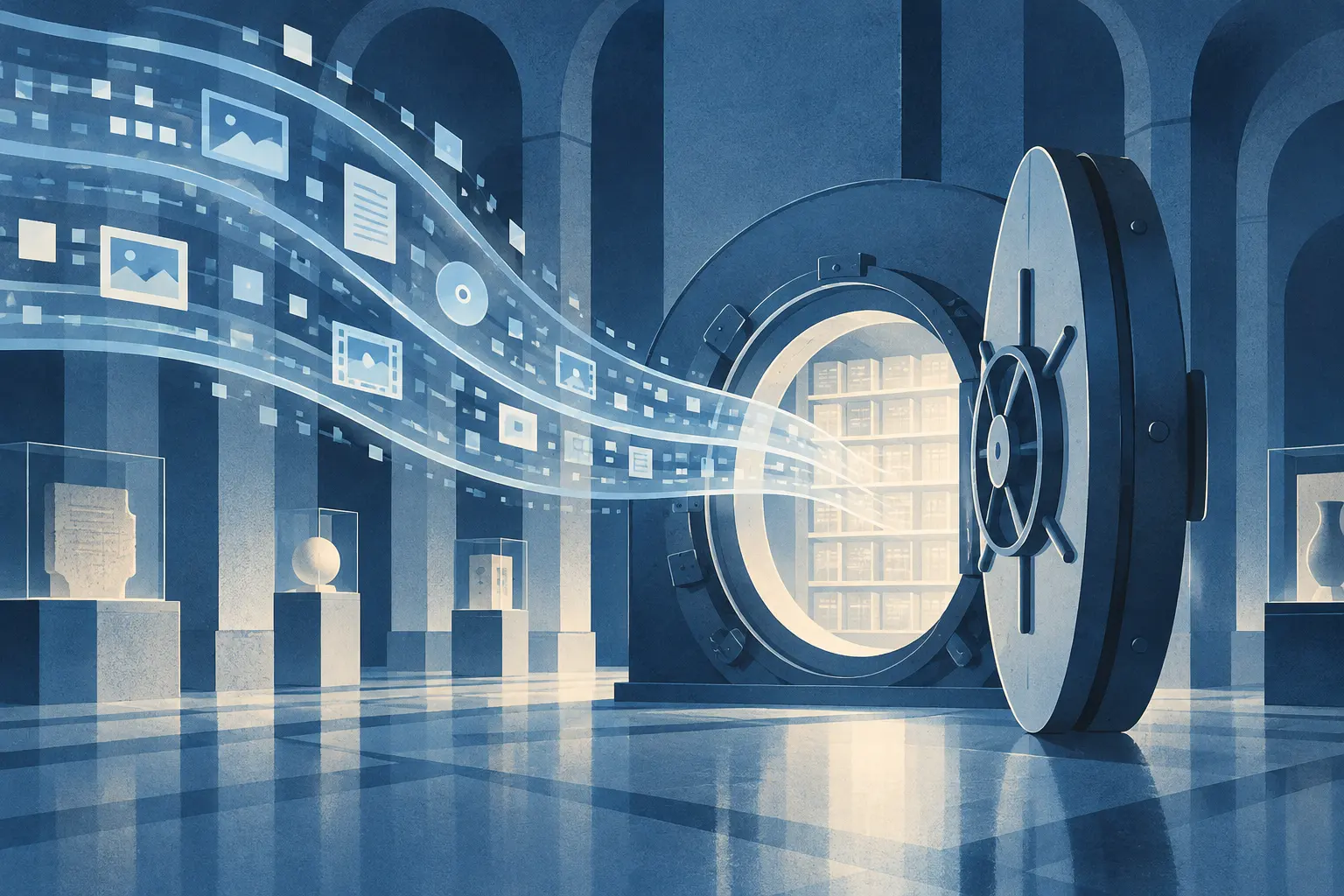
The preservation of digital heritage faces a fundamental paradox: the objects we attempt to conserve are, by nature, ephemeral. Unlike a marble sculpture or a parchment manuscript, a computer program depends on a support chain that includes specific hardware, operating systems, and software libraries that can cease to exist within years. This reality forces museums and archives to rethink their traditional conservation methods, transforming preservation into an active and continuous process of managing obsolescence.
The Changing Nature of Digital Support
Available evidence indicates that digital preservation is not a static state, but a set of methods and techniques aimed at ensuring that information remains readable and functional. According to academic and technical definitions, the goal is to maintain the integrity, authenticity, and reliability of digital documents, regardless of technological changes that alter the original creation environment. This definition underscores that the challenge is not only technical but ontological: software is an instruction that only makes sense when executed in a specific context. When that context disappears, the cultural object becomes inert.
The Collection Trust Case and SKIN-ARCHIVES
In the United Kingdom, the Collection Trust has addressed this complexity by developing specific tools for managing digital collections. A notable example is SKIN-ARCHIVES, a web software designed to provide the necessary tools for archive management. This system represents an attempt to institutionalize the management of digital heritage, recognizing that generic database management solutions are not sufficient for the specific needs of museums. The existence of tools like S-MUSEUM, an initial product developed by SKINsoft, shows the evolution towards next-generation platforms that allow cultural heritage management professionals to work with greater precision and control over their digital assets.
The Role of the Digital Conservation Plan
To structure these interventions, institutions rely on strategic documents known as Digital Conservation Plans. These plans are fundamental for any digital support preservation activity in a museum. They do not merely list files, but establish protocols for data migration, emulation of execution environments, and documentation of usage contexts. An effective plan must anticipate future failures and define what actions will be taken when a format or platform is no longer supported. Without this planning, preservation becomes a late reaction to the loss of access.
Beyond Data Migration
One of the most common strategies is migration, which involves transferring data from one format to another to keep them up to date. However, this technique has limits when it comes to interactive software. The emulation of execution environments is presented as a crucial alternative, allowing old programs to run on modern hardware by recreating the original operating system. Conservation plans must address both paths, as migration can alter the original experience, while emulation can be costly and technical. The combination of digitization, emulation, and exhaustive documentation allows museums to balance accessibility with the integrity of the originals.
Software as a Historical Document
Digital preservation has a profound cultural dimension. Software is not just a tool, but a document that records forms of interaction with technology that define historical periods. Each line of code, each user interface, and each algorithm reflects the limitations and aspirations of its time. By preserving these elements, museums do not just store files, but preserve the memory of how societies have understood and used technology. This perspective elevates preservation from a technical task to an act of cultural curation, where the value of the object lies in its ability to narrate a story of change and adaptation.
Challenges of Verification and Integrity
Despite advances, there are limits to what can be verified in the long term. Rapid technological obsolescence means that even the best strategies can become outdated. The integrity of the originals is a constant challenge, as any intervention, from digitization to emulation, carries the risk of altering the original experience. Museums must exhaustively document each step of the process to ensure transparency and trust in the authenticity of the preserved objects. This documentation is as important as the software itself, as it allows future researchers to understand how and why certain conservation decisions were made.
Conclusion: A Continuous Responsibility
The preservation of old software is not a project with an end date, but a continuous responsibility that requires monitoring, adaptation, and sustained resources. Institutions like the Collection Trust demonstrate that it is possible to develop robust frameworks to manage this complexity, but success depends on the collaboration between technicians, curators, and heritage managers. By recognizing software as a fragile cultural document, museums can ensure that digital memory is not lost in the noise of obsolescence, but remains a vital testament to our technological history.
- Decade
- 2000s
- Region
- Global
- Level
- Enthusiast
- Entities
- Museum, S-MUSEUM
Sources and references
- MANUAL DEL SISTEMA INTEGRADO DE ...idpc.gov.co · 2026-10-21
- Conservación del patrimonio cultural digitalopenalex.org · 2026-10-21
- Museo S - Fondo de Coleccionestranslate.google.com · 2026-10-21
- Plan de Conservación Digital para Museosevemuseografia.com · 2026-10-21
- Preservación digitales.wikipedia.org · 2026-10-21