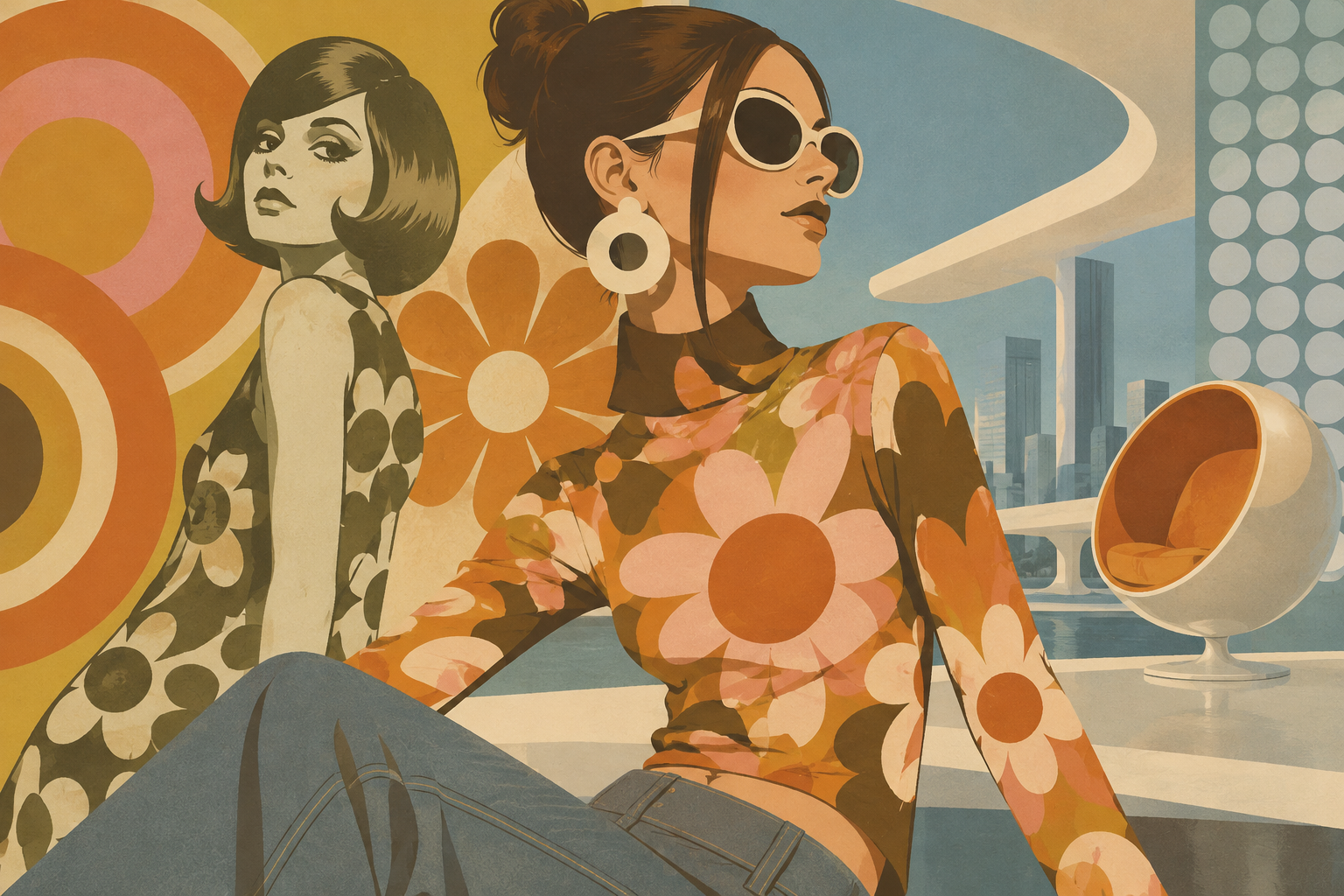
Mid-2000s fashion did not function as a simple mirror of the past, but as a mechanism of selective reinterpretation. According to FIT's fashion history chronology, mid-decade retro styles inspired by the 1960s emerged, influenced by British indie pop groups. This musical and aesthetic connection demonstrates that contemporary retro is not a faithful copy, but an adaptation that preserves certain visual codes while transforming its cultural context. The article explores which elements of the 1960s were preserved in this new reading and how they were transformed to fit the identity of the 2000s. It examines the relationship between nostalgia and innovation, highlighting that reinterpretation allows us to value historical connections without erasing the differences between both eras. Evidence suggests that fashion design acted as a bridge between aesthetic memory and current expression, creating a dialogue between old and new. This analysis focuses on the cultural dimension of retro, avoiding mere cataloging of garments and focusing on the meaning of aesthetic reappropriation in global culture.
Retro as cultural adaptation
2000s fashion did not operate as a mere repetition of the past, but as a process of selective reinterpretation. According to FIT's fashion history chronology, mid-decade retro styles inspired by the 1960s emerged, influenced by British indie pop groups. This musical and aesthetic connection demonstrates that contemporary retro is not a faithful copy, but an adaptation that preserves certain visual codes while transforming its cultural context. The article explores which elements of the 1960s were preserved in this new reading and how they were transformed to fit the identity of the 2000s. It examines the relationship between nostalgia and innovation, highlighting that reinterpretation allows us to value historical connections without erasing the differences between both eras. Evidence suggests that fashion design acted as a bridge between aesthetic memory and current expression, creating a dialogue between old and new. This analysis focuses on the cultural dimension of retro, avoiding mere cataloging of garments and focusing on the meaning of aesthetic reappropriation in global culture.
The influence of British indie pop
The connection between fashion and music in the 2000s was a determining factor in how 1960s styles were perceived. British indie pop groups did not only provide a musical aesthetic, but also influenced how the visual codes of the 1960s were interpreted. This influence manifested in an adaptation that preserved certain visual elements but transformed them to fit the identity of the 2000s. The relationship between music and fashion in this era was an example of how pop culture could influence how historical styles were perceived. The reinterpretation of the 1960s in the 2000s was a process that did not limit itself to fashion, but also involved music, cinema, and pop culture in general.
Nostalgia and innovation in fashion
The relationship between nostalgia and innovation in 2000s fashion was a central theme in how 1960s styles were interpreted. Nostalgia was not a simple return to the past, but a way of reinterpreting the visual codes of the 1960s to fit the identity of the 2000s. Innovation, on the other hand, manifested in how visual elements were transformed to create a new aesthetic. The reinterpretation of the 1960s in the 2000s was a process that allowed us to value historical connections without erasing the differences between both eras. Nostalgia and innovation were not opposites, but complementary, and together they created a new way of understanding fashion.
Design as a bridge between eras
Fashion design acted as a bridge between aesthetic memory and current expression, creating a dialogue between old and new. This bridge was not a simple copy, but an adaptation that preserved certain visual codes while transforming its cultural context. The reinterpretation of the 1960s in the 2000s was a process that allowed us to value historical connections without erasing the differences between both eras. Fashion design in the 2000s was an example of how pop culture could influence how historical styles were perceived. The reinterpretation of the 1960s in the 2000s was a process that did not limit itself to fashion, but also involved music, cinema, and pop culture in general.
Aesthetic reappropriation in global culture
Aesthetic reappropriation in global culture was a central theme in how 1960s styles were interpreted in the 2000s. Reappropriation was not a simple copy, but an adaptation that preserved certain visual codes while transforming its cultural context. The reinterpretation of the 1960s in the 2000s was a process that allowed us to value historical connections without erasing the differences between both eras. Aesthetic reappropriation in global culture was an example of how pop culture could influence how historical styles were perceived. The reinterpretation of the 1960s in the 2000s was a process that did not limit itself to fashion, but also involved music, cinema, and pop culture in general.
Limits of historical verification
The historical verification of the reinterpretation of the 1960s in the 2000s is limited due to the lack of primary sources documenting the adaptation process. FIT's fashion history chronology is a secondary source that provides an overview of the process, but does not offer specific details on how visual elements were transformed. The lack of primary sources limits the ability to verify the accuracy of the reinterpretation. However, the connection between fashion and music in the 2000s is a documented fact, and the influence of British indie pop groups on 1960s fashion is a widely discussed topic in cultural literature.
Conclusion
Mid-2000s fashion was not a simple repetition of the past, but a process of selective reinterpretation that transformed 1960s visual codes to fit the identity of the 2000s. The connection between fashion and music in this era was a determining factor in how historical styles were perceived. The reinterpretation of the 1960s in the 2000s was a process that allowed us to value historical connections without erasing the differences between both eras. Aesthetic reappropriation in global culture was an example of how pop culture could influence how historical styles were perceived. 2000s fashion was an example of how nostalgia and innovation could coexist and create a new way of understanding visual culture.
- Decade
- Contemporary
- Region
- Global
- Level
- Enthusiast
- Entities
- No linked entities
Sources and references
- 2000-2009 | Cronología de la historia de la modatranslate.google.com · 2026-10-19
- 60Sriunet.upv.es · 2026-10-19
- Versión (música)es.wikipedia.org · 2026-10-19
- The Famees.wikipedia.org · 2026-10-19
- Girl groupes.wikipedia.org · 2026-10-19