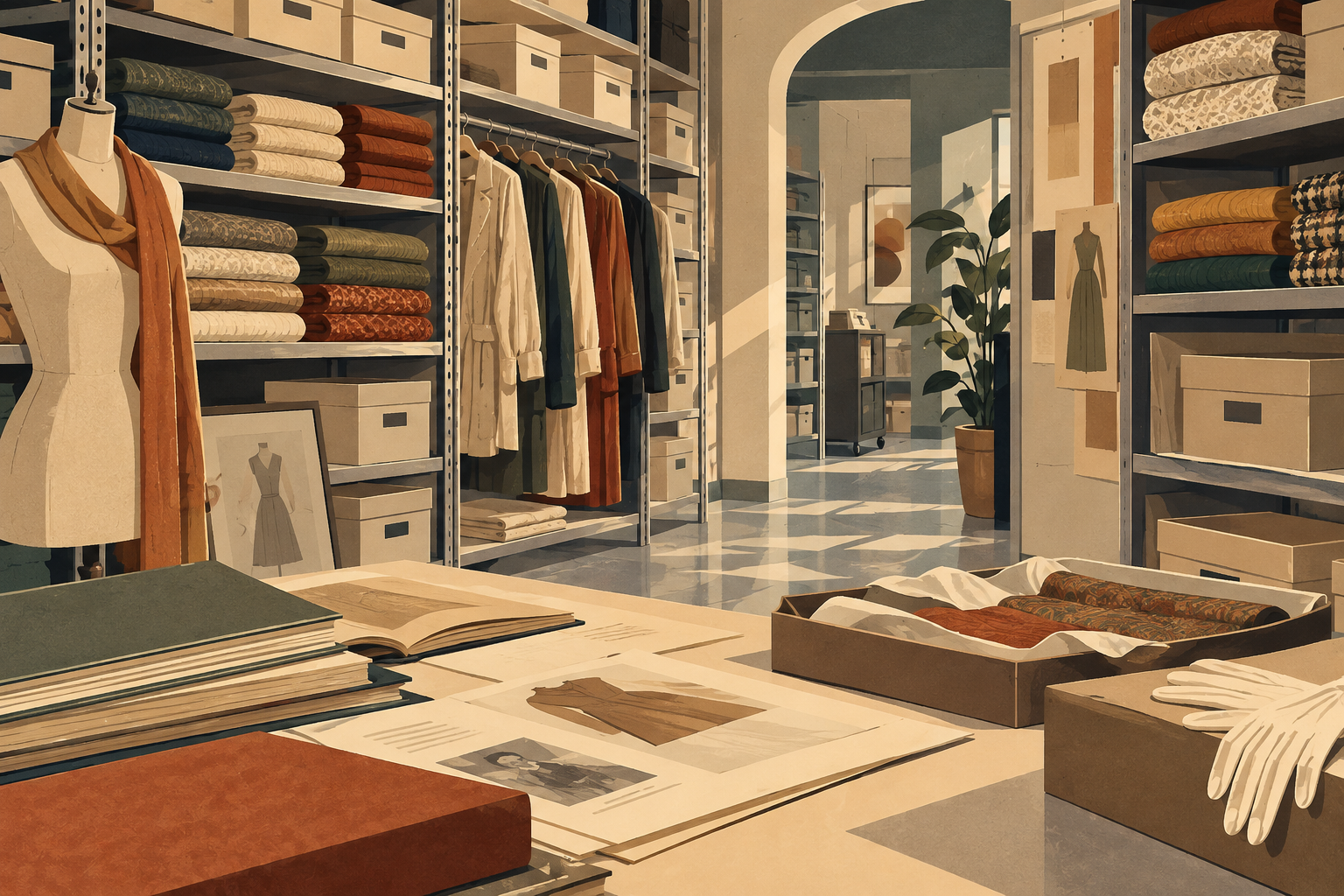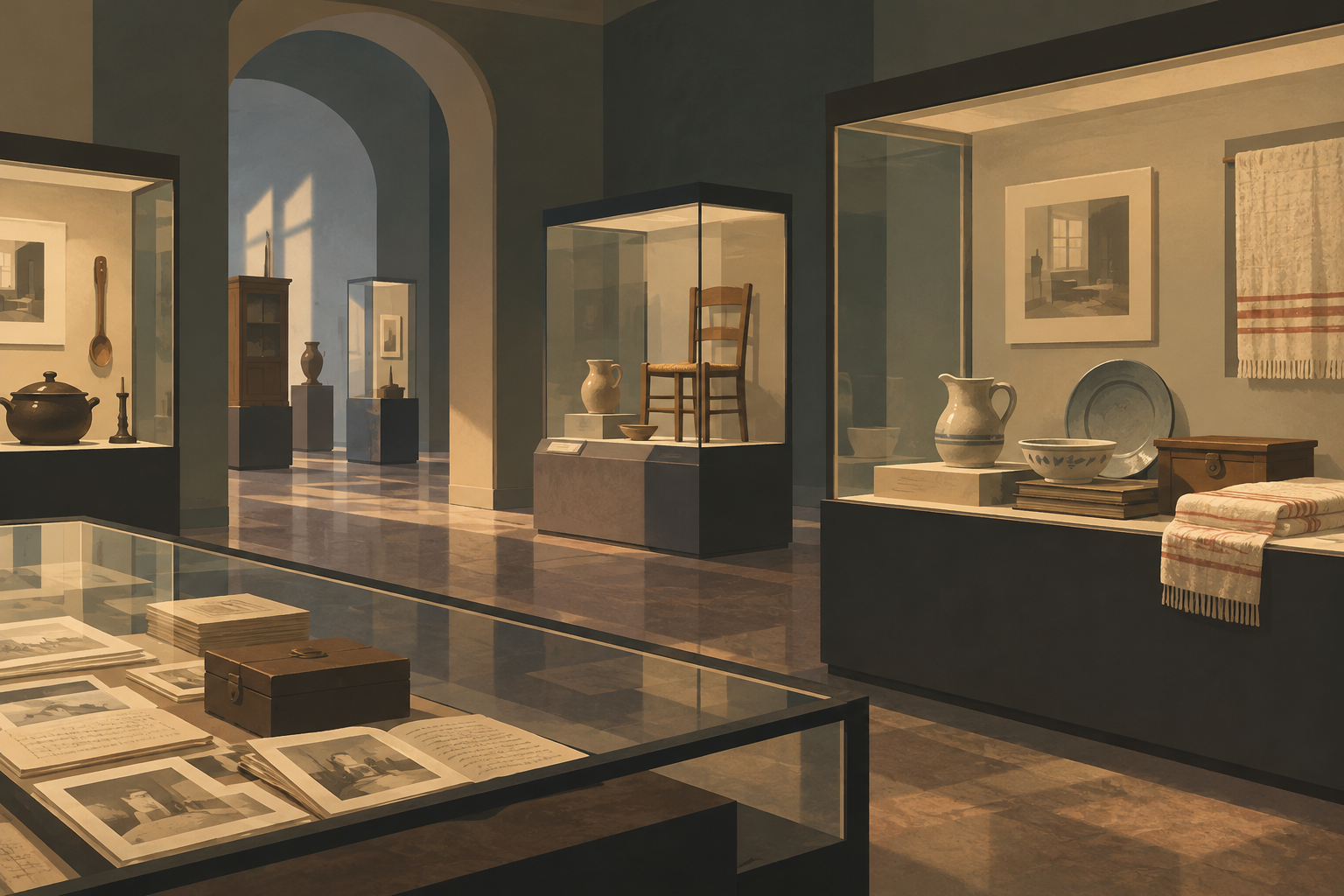
The preservation of domestic life in contemporary museums has evolved from mere material custody to a complex task of historical documentation. This paradigm shift centers on the ability of institutions to transform everyday objects into documents that reveal social practices. The process is not only technical but interpretive, requiring a deep integration between physical conservation and the cultural context surrounding each piece. This approach allows the interior of the home to cease being a decorative background and become a subject of rigorous study.
Precision as an identification tool
The starting point of this methodology lies in the accuracy of the record. According to the Preventive Conservation Plan of the Sephardic Museum, the correct identification of pieces depends on paying special attention to descriptions, measurements, dates, and reasoned classifications. This level of detail is fundamental to avoid the loss of contextual information. Without precise identification, the object is stripped of its ability to narrate the history of its users. Documentation thus becomes the first act of conservation, as it defines what is being preserved and why.
Standardization and normative vocabulary
For documentation to be useful in the long term, it must follow standardized guidelines. The Manual of Documentation of Patrimonial Collections from the Directorate of Libraries, Archives, and Museums of Chile highlights the importance of integrating registration with vocabulary standardization. This duality allows data to be understandable and comparable between different institutions. Standardization is not a mere bureaucratic procedure, but a tool that facilitates academic research and public accessibility. By unifying descriptive language, museums create a coherent database that supports the interpretation of domestic life over time.
Context as a conservation factor
Preventive conservation is not limited to controlling temperature or humidity, but includes the analysis of the context that influences the state of cultural assets. The guide for the elaboration of conservation plans from IberoMUSEOS points out that documentation must include the analysis of the cultural asset and its environment. This approach recognizes that risks are not only physical but also contextual. Understanding the environment allows anticipating threats and designing more effective preservation strategies. Context, therefore, is not a secondary element, but an active component in heritage management.
Mechanical risks and contamination
Despite the importance of context, physical risks remain a central concern. The ICCROM Guide to Risk Management for Museum Heritage identifies mechanical damage, contamination, and mold growth as constant threats. These risks are particularly relevant for domestic objects, which are often made of organic or delicate materials. The management of these risks requires a balance between public exposure and material protection. Museums must implement preventive measures that minimize the impact of these factors without sacrificing the accessibility of the collections.
Design as a shaper of reality
The relationship between design and cultural heritage is a growing field of study. Articles published in the Arxiu journal of the University of Valencia explore how design has shaped the world in which we live. This perspective is crucial for understanding domestic life, as objects do not exist in a vacuum, but are the result of design decisions that respond to social and cultural needs. By studying design, museums can offer a deeper interpretation of how spaces were organized and used. This approach connects aesthetics with functionality, revealing the internal logic of domestic life.
Photography and catalogs as narratives
Visual and written documentation plays a key role in the reconstruction of domestic life. Photography and catalogs are not just recording tools, but narratives that connect objects with everyday life. By linking these sources with the historical context, museums can offer a comprehensive view of domestic history. This narrative does not limit itself to describing objects, but explores the social practices that gave them meaning. Documentation, therefore, becomes a means to preserve not only the form, but also the function and meaning of objects.
Limitations of historical verification
Although documentation is a powerful tool, it has its limitations. Not all aspects of domestic life can be verified or reconstructed with precision. The absence of records, the loss of contexts, and the subjectivity of interpretations are constant challenges. Museums must be transparent about these limitations, avoiding presenting reconstructions as absolute facts. Intellectual honesty is key to maintaining the credibility of institutions and the trust of the public. Recognizing uncertainties allows for a more nuanced and respectful interpretation of domestic history.
Conclusion: Documentation as legacy
The documentation of collections and risk management are fundamental pillars for the interpretation of domestic life in museums. By integrating the precision of the record, the standardization of vocabulary, and the analysis of context, institutions can offer a rich and nuanced view of everyday history. This approach not only preserves objects, but also documents the social practices that gave them meaning. Documentation, therefore, is not an end in itself, but a means to ensure that domestic life is understood and valued as an integral part of cultural heritage.
- Decade
- Contemporary
- Region
- Global
- Level
- Introduction
- Entities
- Museum, Museo Sefardí
Sources and references
- PLAN CONSERVACIÓN PREVENTIVA MUSEO SEFARDÍwww.cultura.gob.es · 2026-10-19
- Manual de Documentación - de Colecciones Patrimonialeswww.cdbp.gob.cl · 2026-10-19
- Guía para la Elaboración e Implantación de Planes de ...www.ibermuseos.org · 2026-10-19
- Guía de Gestión de Riesgos para el Patrimonio Museológicowww.iccrom.org · 2026-10-19
- La Conservación: el porvenir del pasadounesdoc.unesco.org · 2026-10-19
- Diseño y patrimonio cultural: cómo asegurar la conservación ...turia.uv.es · 2026-10-19