The return of an old object or a familiar aesthetic does not, by itself, prove that the past has come back intact. What reappears in the market usually does so from the present: as an updated product, a visual reference or a promise of distinction. The available sources let us examine this process from three angles—business, consumption and culture—but they do not measure its full reach or show that every relaunch works in the same way.
Nostalgia as a business tool
A PuroMarketing article describes companies looking through their archives to launch new products. Its account suggests a familiar cycle in commercial design: models that once enjoyed visibility lose relevance as tastes change and new releases arrive, yet can later serve as raw material. The corporate archive is not presented as a neutral storehouse; it is a resource that can inform decisions in the present.
That does not prove that every brand literally reproduces its earlier products. Nor does the evidence identify which companies, items or results underpin the trend. The supported claim is narrower: the past can become material for new products, and businesses may draw on their own product or visual repertoires.
Standing out through familiar references
The UOC article offers an interpretation focused on consumers. Sociologist Francesc Núñez connects the appeal of recovering fragments of the past with present-day needs, including the desire to stand out. Català, also quoted in the article, links vintage or retro products with differentiation. These are explanations attributed to specialists, not a universal measurement of buying motives.
This perspective is useful because it moves nostalgia beyond simple longing. A product that recalls another period can help construct a present-day identity: expressing a preference, distinguishing oneself or choosing a different relationship with everyday objects. That is an interpretation consistent with the quotations, not evidence that all buyers act for those reasons.
A relaunch is not a literal return
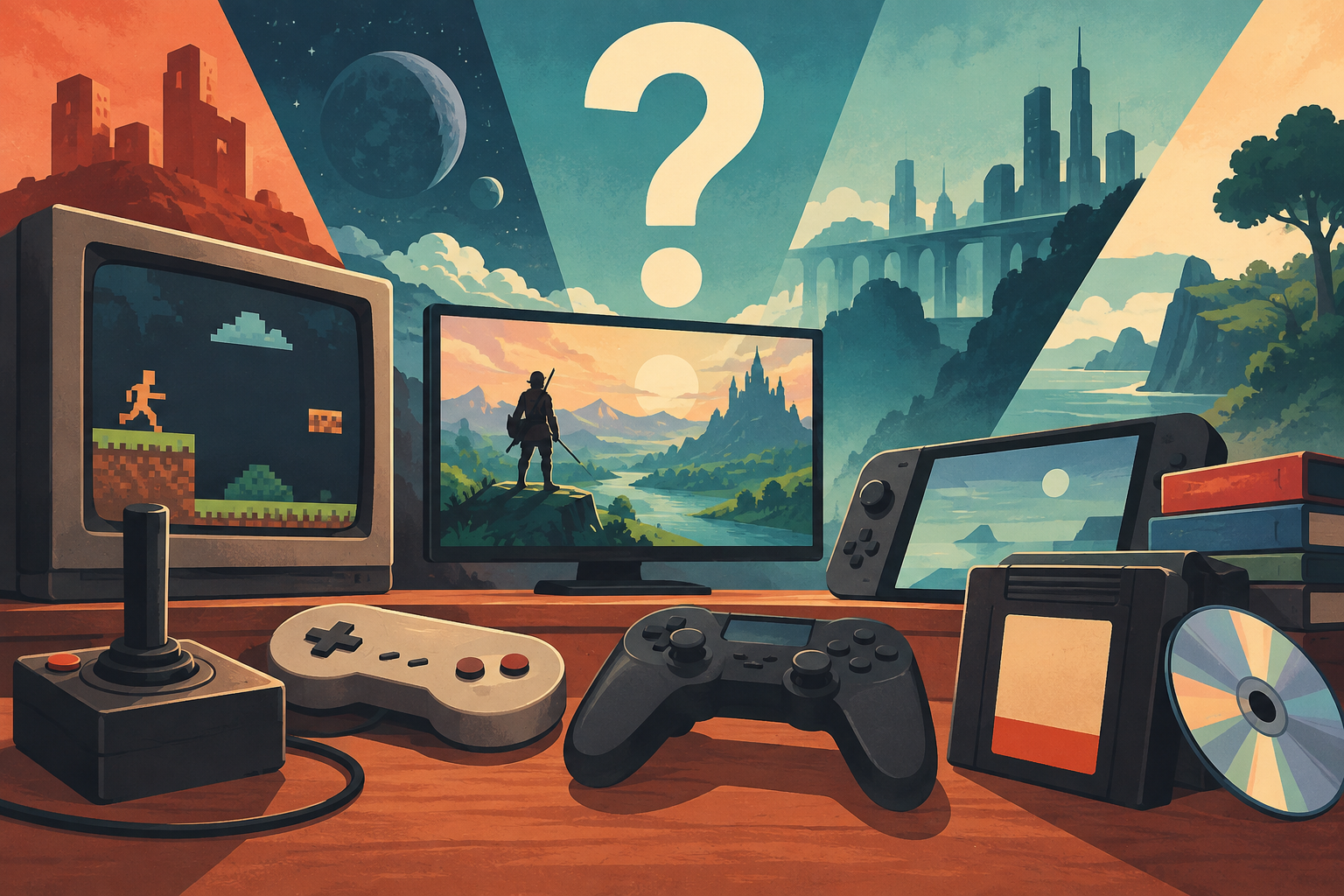
In 2017, El Periódico described the recovery of products regarded as iconic, but updated, in a context of renewed consumption. The article mentioned varied categories—branded clothing, food, phones, 16-bit video games and instant photography—and connected their return with nostalgia and the purchasing power of a generation aged 35 to 50. This is one newspaper article’s account of that moment; it should not be treated as a finding that applies to every market or period.
The word “updated” matters. Recovering a reference does not necessarily mean reproducing the object, its materials, operation or original conditions of use. It may mean keeping a recognizable signal while changing other elements. The supplied sources do not explain the technical or production changes made to each example, so assigning specific features would be unwarranted.
Between the object and the memory
A 2019 work indexed by OpenAlex is titled “Cultural archaeology of video games: between nostalgic discourses, gamer experience and technological innovation.” Its title confirms that nostalgia, gaming experience and innovation have been considered together in research on video games. Since the study’s full text is not among the supplied evidence, we cannot attribute more specific arguments, findings or conclusions to it.
Even with that limitation, the title points to a useful tension in contemporary retro culture: remembering an experience is not the same as recovering its technology. In material culture, a nostalgic reference can coexist with changes in format, production or distribution. Nostalgia is a way of framing an object; on its own, it proves neither technical continuity nor historical fidelity.
What these sources cannot establish
The available references provide no comparable sales figures, longitudinal studies or comprehensive inventory of relaunches. They cannot show what proportion of consumers buy out of nostalgia, how long interest lasts or whether revived products displace others. The 2017 newspaper article describes a particular moment and a selection of categories; the UOC piece presents interpretations; PuroMarketing discusses a business practice; and the academic record establishes a research topic, not its detailed results.
It is therefore helpful to distinguish three levels: recovery initiatives have been described; specialists have proposed possible reasons for the appeal of retro; and research exists on nostalgia and video games. Turning these clues into a general law of the market would go beyond the evidence.
A past designed for the present
Contemporary retro is not simply a return. It is a selection: someone identifies forms, products or memories that remain recognizable and incorporates them into a current offer. The sources suggest that this selection can serve commercial interests and desires for distinction, while leaving open questions about audiences, results and specific transformations.
The strongest conclusion is not that nostalgia always sells, but that the past can function as a present-day resource. To understand any particular case, we need to ask what is recovered, what changes and who interprets it. Without those details, “retro” describes a cultural and commercial orientation, not a complete explanation of why a product returns or succeeds.
- Decade
- Contemporary
- Region
- Spain
- Level
- Introduction
- Entities
- No linked entities
Sources and references
- Crece la fiebre por los productos del pasado | UOCwww.uoc.edu · 2026-09-27
- ARQUEOLOGÍA CULTURAL DE LOS VIDEOJUEGOS. Entre discursos nostálgicos, experiencia del gamer e innovación tecnológicaopenalex.org · 2026-09-27
- El poder de la nostalgia y por qué las empresas bucean en sus archivos para lanzar nuevos productoswww.puromarketing.com · 2026-09-27
- El negocio de lo 'retro'www.elperiodico.com · 2026-09-27
- Essential Retro: una guía de la tecnología Vintage – di-conexioneswww.di-conexiones.com · 2026-09-27