An image never arrives alone
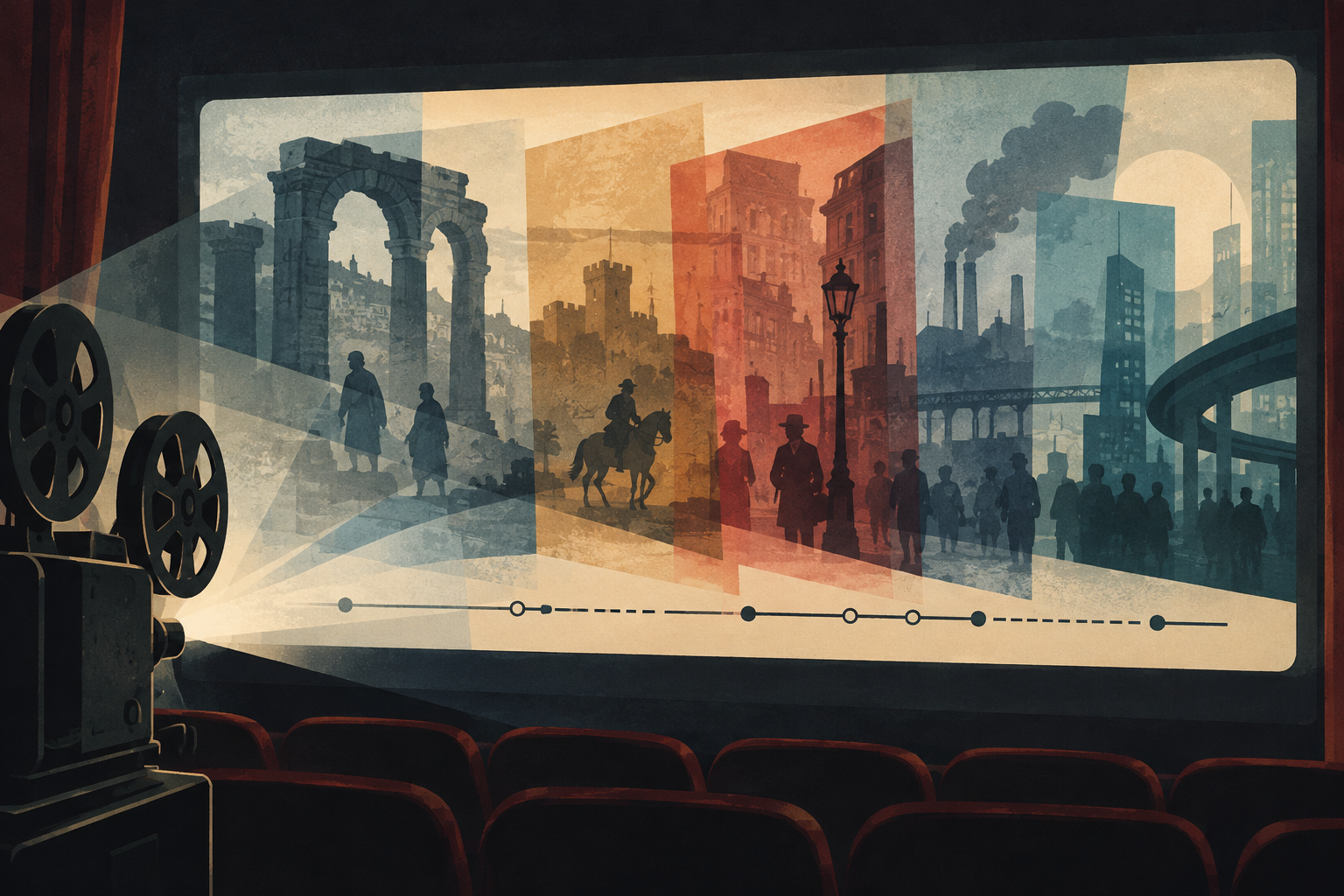
When a film represents the past, viewers do not receive a neutral window onto what happened. They encounter an organized work: images, sounds and narrative choices arranged to create meaning. This distinction matters for historical fiction as well as documentary. Visual material may offer clues, but its presence on screen does not automatically prove that the accompanying interpretation is correct.
The volume Historia y cine. La construcción del pasado a través de la ficción explicitly addresses the relationship between film production and historical interpretation. Its description refers to decisions made by producers, screenwriters and directors, as well as the possible use of imagination by historians. That framing encourages us to treat representation as a process, not an immediate reflection of events.
Construction is not the same as fabrication
Recognizing that a film constructs an image of the past does not require concluding that it deceives. Construction means selection and arrangement: a narrative establishes relationships, gives weight to some elements and leaves others out. The critical question is not only whether an image looks old or convincing, but what role it plays in the work and what claim it is being asked to support.
The Universidad Carlos III de Madrid study on historical “reality” in cinema examines the effort made by some documentaries to demonstrate to viewers that their archival materials are authentic. This example helps separate two questions that are often confused: whether a material is authentic and whether the conclusion a film draws from it is valid. Even when a fragment is authentic, its selection, editing and explanation still require analysis.
The archive as material and argument
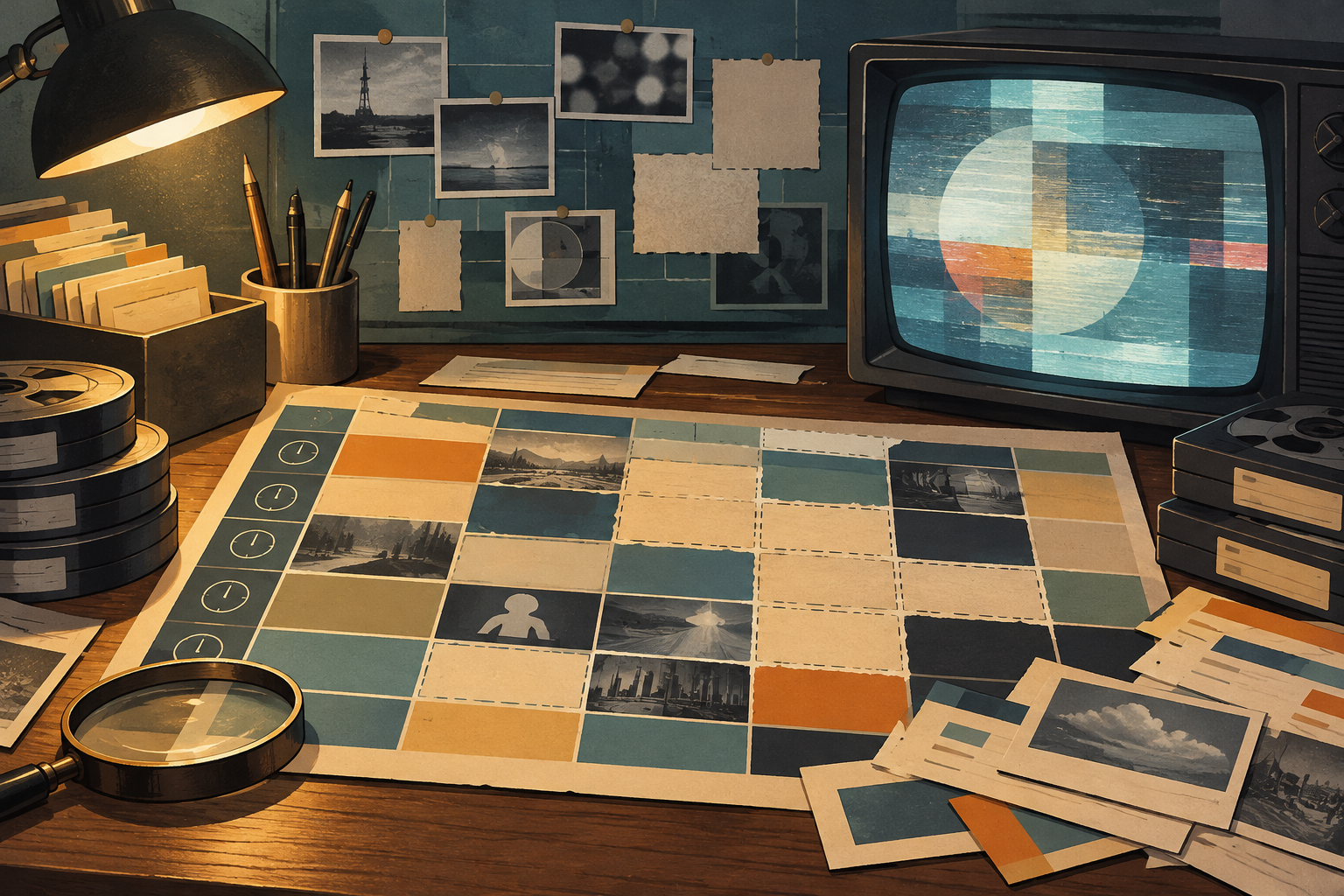
A film document can function at once as image, record and argument. Its documentary appearance may strengthen a sense of contact with the past; but appearance alone does not tell us who produced the material, under what circumstances it was recorded, or what context has been omitted. If the available documentation cannot answer those questions, we should not fill the gaps with conjecture.
The article on film documentation published in Documentación de las Ciencias de la Información provides a historical and contextual framework for thinking about how cinema is documented. The study on film documentation in the digital era, identified in El Profesional de la Información, also points to interest in its applications. As research references, both remind us that analysing a film does not end with what appears on screen: it also depends on how its materials are described, connected and contextualized.
Memory and history are not interchangeable
UNESCO’s publication on film museums and archives notes a distinction between memory and history associated there with the historian Pierre Nora. The available excerpt does not develop that discussion, so it cannot support attributing a complete theory to the publication. It does justify an editorial caution: a film may take part in the cultural memory of a period without thereby providing a sufficient historical account of that period.
Memory can gather around images that endure and recur. Historical research, by contrast, requires its questions, documents and limits to be made explicit. This difference does not diminish cinema’s cultural value; it helps describe that value accurately. A work may matter as a narrative construction, an object of study or evidence of a way of remembering, without those categories being confused.
What can be stated, and what remains open
When analysing a historical sequence, it helps to begin with specific questions: what do we see and hear? What does the narration claim? What production or documentation information is available? Which parts of the interpretation come from the film, and which from an external source? If we have only a bibliographic description or summary, our conclusions should remain correspondingly limited.
The sources gathered here support a methodological discussion, not a verdict on a particular film. They do not provide systematic comparisons of reception in cinemas and on video, nor establish how different audiences responded. The available excerpts also do not offer a complete inventory of film archives or materials. Those questions would require further, specific documentation.
Watching cinema without turning it into nostalgia
Critically reading a historical film does not mean demanding that it replace an archive, or dismissing it because it uses imagination. It means observing how it turns materials and formal decisions into a version of the past, and distinguishing that version from what other sources allow us to verify.
Cinema can make an interpretation memorable; that is precisely why it is worth asking how it is constructed. The screen offers an experience and a proposal for making sense of things. Moving from that proposal to a historical claim requires context, documentation and explicit limits. The past on film may be revealing, persuasive or debatable, but images alone never make it transparent.
- Decade
- 2000s
- Region
- Global
- Level
- Enthusiast
- Entities
- Sounds
Sources and references
- Cine en la era digital: aplicaciones de la documentación cinematográfica (Alfonso López Yepes, director)doi.org · 2026-10-09
- Historia y cine. La construcción del pasado a través de ...ifc.dpz.es · 2026-10-09
- Museos y archivos del cineunesdoc.unesco.org · 2026-10-09
- La Documentación Fílmica: marco contextual históricorevistas.ucm.es · 2026-10-09
- La "Realidad" histórica en el cine: el pese del presentee-archivo.uc3m.es · 2026-10-09