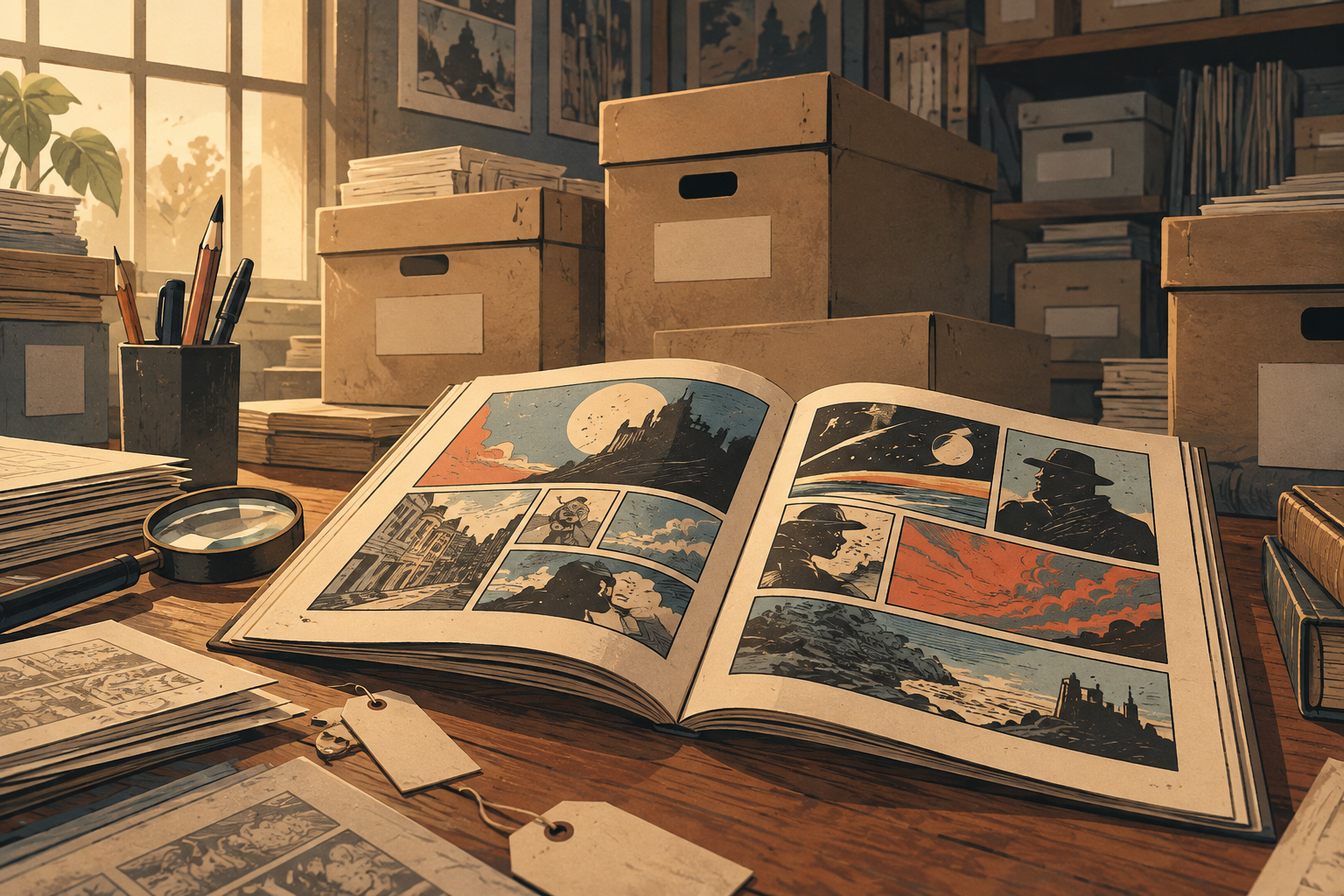
The transition of a comic magazine from a home shelf to an archive shelf is not a simple change of location; it is an ontological mutation. What was once a consumer object, designed to be read, folded, and forgotten, becomes a document that demands respect for its materiality. This transformation forces a rethinking of what it means to read a comic when its existence is conditioned by preservation.
Materiality as Part of the Narrative
A comic is not just text and image; it is also paper, ink, and binding. When a magazine enters an archive, its physical state becomes part of the narrative. Moisture stains, yellowed pages, or broken stitches are not defects but witnesses to time and use. Research in museum archives suggests that these elements document the history of the institution and its collections, adding a layer of meaning that digital reading cannot capture.
The Archive as a Research Space
Historical archives, such as those of state museums, function as research sources for internal and external departments. In the case of comics, the archive allows for the study not only of the works but also of the circulation conditions surrounding them. This includes understanding how they were distributed, who read them, and in what social contexts they were consumed. Documentation regarding the pieces held since their deposit offers clues about these dynamics, although it often falls outside the main focus of artistic research.
The Tension Between Preservation and Access
There is an inherent tension between the need to preserve materials and the need to make them accessible. Museum archives document the history and development of the institution but also face the challenge of balancing the protection of objects with research demand. In the case of comics, this may mean limiting physical access to digital copies or facsimiles, which alters the reading experience. The key research question here is: what edition changes modified the reading? The answer often lies in the preservation conditions and how the material is presented to the public.
Cultural Context and Collective Memory
As a mass cultural product, comics are intimately linked to collective memory. Museum archives, by preserving these materials, contribute to the preservation of this memory. However, the selection of what is preserved and what is discarded is a curatorial decision that influences how the medium is remembered. Documentation from state museum archives shows that the management of these funds is a complex task requiring clear and consistent criteria.
Digitization and Its Limits
Digitization offers a partial solution to the tension between preservation and access. It allows comics to be studied without handling the originals but also introduces new layers of mediation. The digital image does not reproduce the texture of the paper, the smell of the ink, or the feeling of turning pages. Moreover, digitization can standardize the presentation, eliminating the variations that make each copy unique. Research in museum archives suggests that digitization should complement, not replace, access to original materials.
The Comic as a Historical Document
Beyond its artistic value, the comic is a historical document reflecting the attitudes, values, and concerns of the society that produced it. Museum archives, by preserving these materials, allow researchers to access a primary source for the study of popular culture. Documentation from state museum archives indicates that these funds are valuable for external research, not just for museum departments.
The Ethics of Preservation
The preservation of comics raises ethical questions about intervention in the materials. How far should a comic be restored to make it legible? Should its original state be respected, even if it is deteriorated? These questions do not have easy answers and require a delicate balance between preservation and accessibility. Research in museum archives suggests that the ethics of preservation should be a guiding principle in the management of these funds.
Conclusion
The archive redefines the reading of comics by turning them into documents that require a specific context to be understood. Materiality, preservation conditions, and archival management are inseparable parts of the reading experience. By studying comics in the archive, one does not only access the works but also the conditions of their existence and the collective memory surrounding them. This perspective expands the understanding of comics beyond the page, situating them in a broader cultural and historical context.
- Decade
- 1990s
- Region
- Global
- Level
- Enthusiast
- Entities
- Museum
Sources and references
- El cómic, una cuestión de formatos (2): revistas de cómics, fanzines, mini-cómics, álbumes y novelas gráficasdoi.org · 2026-10-13
- El arte contemporáneo y el museo llevados al cómicopenalex.org · 2026-10-13
- Archivo histórico - | Ministerio de Culturawww.man.es · 2026-10-13
- ARCHIVOS DE LOS MUSEOS ESTATALESwww.cultura.gob.es · 2026-10-13
- Archivos de Museo: Funcionamientoevemuseografia.com · 2026-10-13
- Archivo - Museo Nacional del Pradowww.museodelprado.es · 2026-10-13