A collection before a building
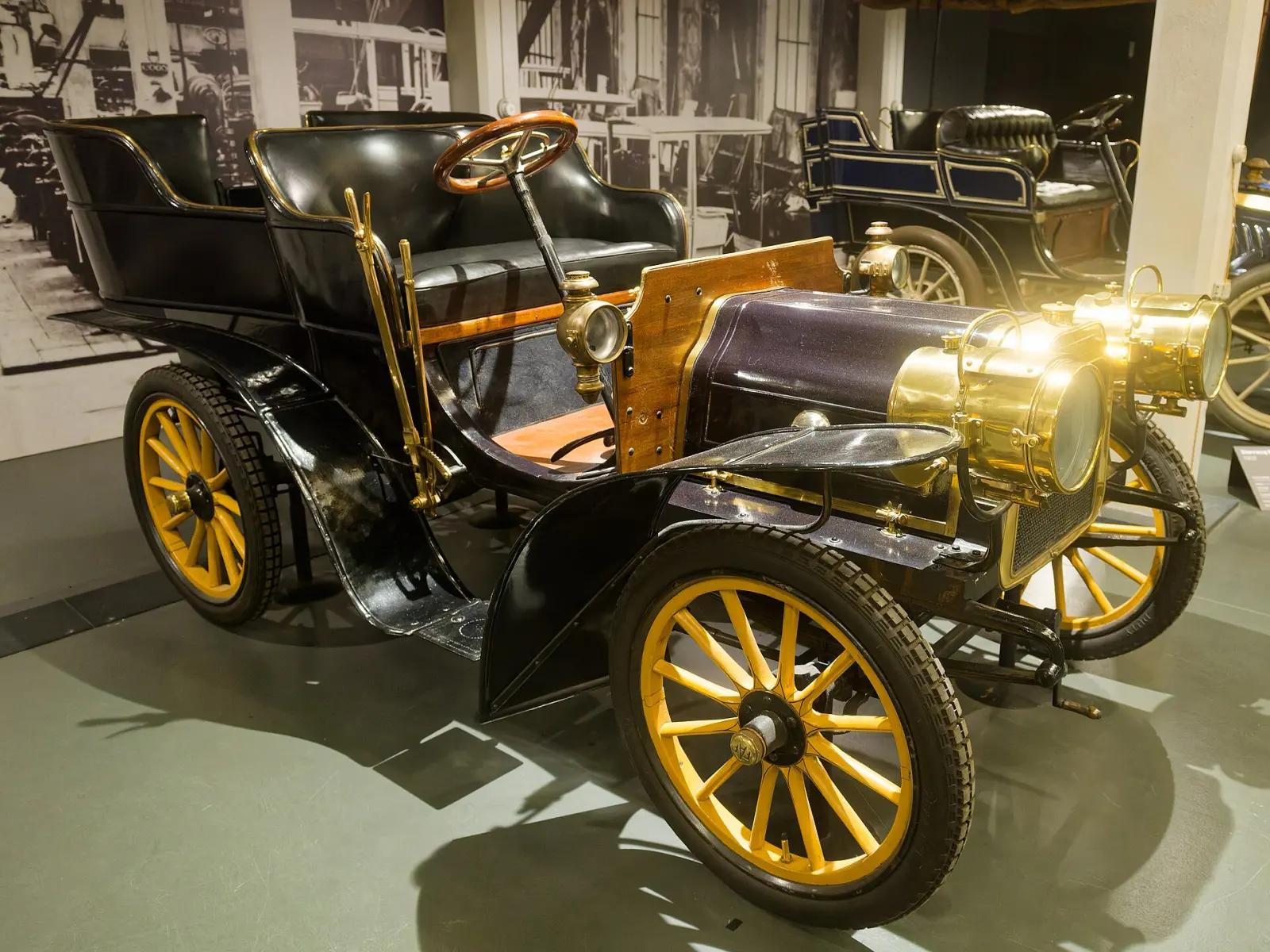
The history of Turin’s National Automobile Museum, the MAUTO, does not begin in a grand exhibition hall but with the decision to assemble objects. According to the museum’s institutional history, Carlo Biscaretti di Ruffia began collecting cars, chassis and engines in 1933. This places the museum’s origins in a specific practice: preserving diverse objects and making them legible as parts of a shared history.
The collection took shape before it had a permanent purpose-built home. That distinction matters. A museum does not begin only when a building opens: it can also begin when someone gathers objects and sees documentary value in them. Here, the initial holdings were not limited to complete automobiles. Including engines and chassis broadened the ways in which the museum could explain how a vehicle was assembled and which components might matter to its history.
Beneath the stadium stands
The MAUTO dates its first opening to the public to 1939, in a venue described as provisional: rooms beneath the stands of the Municipal Stadium. According to the museum, admission cost one lira, the same as a ticket to the stadium. The location and that detail about admission offer a different picture from the idea of a museum conceived from the outset as a monumental site set apart from everyday life.
The venue had material limits. The institution says the collection contained 181 objects dated from 1854 to 1939, but only 73 could be displayed because space was limited. Of those, 55 were cars, 62 engines and 30 chassis. The breakdown itself suggests a varied collection; the difference between what was preserved and what was visible is a reminder that an exhibition is always a selection, not a complete mirror of its holdings.
The available sources do not describe the first venue’s visitor experience in detail, so it would be unwise to invent one. We can say that the museum opened in rooms beneath the stands and that limited space affected what it could show. Those facts provide a firmer account of the early years than an imagined reconstruction of a visit.
What an automobile collection can tell
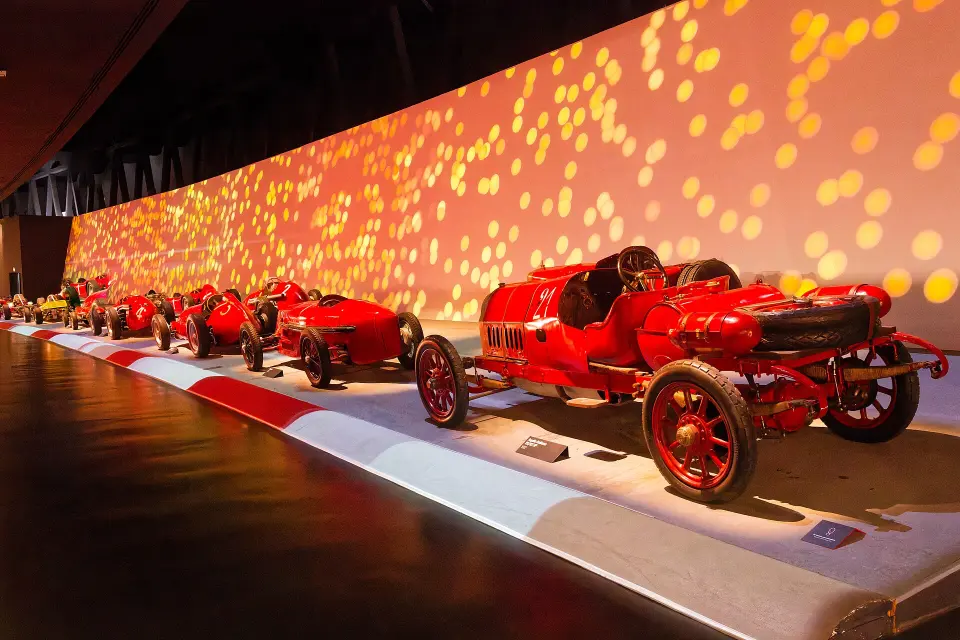
Today, the MAUTO presents its collection as a journey through the history of the automobile and related fields, including fashion, trends, scientific research, technology and social change. Its institutional narrative connects vehicles with cultural and social movements as well as technical discoveries. That is broader than arranging cars by age or describing engines by their specifications.
This perspective helps explain why a collection might include different kinds of objects. A complete car has an immediately recognizable form; an engine or chassis makes another part of the object visible. Reading these pieces as evidence of design, research or social change is a curatorial decision, not an automatic meaning that an object carries by itself. Context, documentation and display are what make that interpretation possible.
Other museums, other motor histories
The sources show that motor heritage is preserved in different ways. A brochure for the Automotive Museum Collection at Torrejón de Ardoz links its holdings to an Army Automotive School established in 1931, and says the collection included vehicles, motorcycles and numerous manuals. In this case, institutional provenance and documents form part of the story the collection can tell.
In Argentina, a report on the museum dedicated to Juan Manuel Fangio says the Technological-Cultural Centre and Museum of Motoring was established on 22 November 1986, with support from institutions, companies and individuals. The article names specific vehicles on display, including a 1903 Peugeot, a 1912 Daimler and the Yruam, a car designed and developed in Argentina between 1927 and 1928, according to the source. These examples show how a collection can bring together manufacture, circulation and motorsport memory without reducing them all to a single timeline.
An EL PAÍS report on official vehicles in Madrid also describes cars, motorcycles, ambulances, trucks, tools and a recreation of an office. That range illustrates another way of telling motor history: through service vehicles and the trades connected with their maintenance and use. The point is not that these museums all share one approach, but that the sources document different ways of selecting and contextualizing objects.
What is known, and what remains open
The MAUTO’s institutional account allows us to establish several precise details about its early years: Biscaretti di Ruffia’s collecting from 1933, the 1939 opening beneath the stadium stands, the admission price, the number of objects and the limit on how many could be exhibited. It does not provide a detailed account of individual visits, the exact arrangement of the rooms or visitors’ reactions. Those gaps should not be filled with scenes presented as fact.
The documented history is enough to show a significant change: a founder’s collection found a public space and began to be presented as a narrative. From the first venue, constrained by its size, to the present account that links automobiles with science, design and society, the interpretive frame has widened. The car appears not only as a machine, but as an object preserved, selected and explained. Beneath those stands, that story began to become visible.
Documentary gallery
- Decade
- Before 1950
- Region
- Europe
- Level
- Introduction
- Entities
- Museum, Argentina
Sources and references
- LA INDUSTRIA DEL AUTOMÓVIL DE ESPAÑA E ITALIA ...vallejo.webs.uvigo.es · 2026-09-27
- El MAUTO - MAUTOwww.museoauto.com · 2026-09-27
- Historia del coche oficial | Noticias de Madrid | EL PAÍSelpais.com · 2026-09-27
- Día de los museos: Tres historias que tenés que escuchar | Parabrisasparabrisas.perfil.com · 2026-09-27
- Folleto de la Colección Museográfica del Automóvilpatrimoniocultural.defensa.gob.es · 2026-09-27