Technique raises questions beyond the images
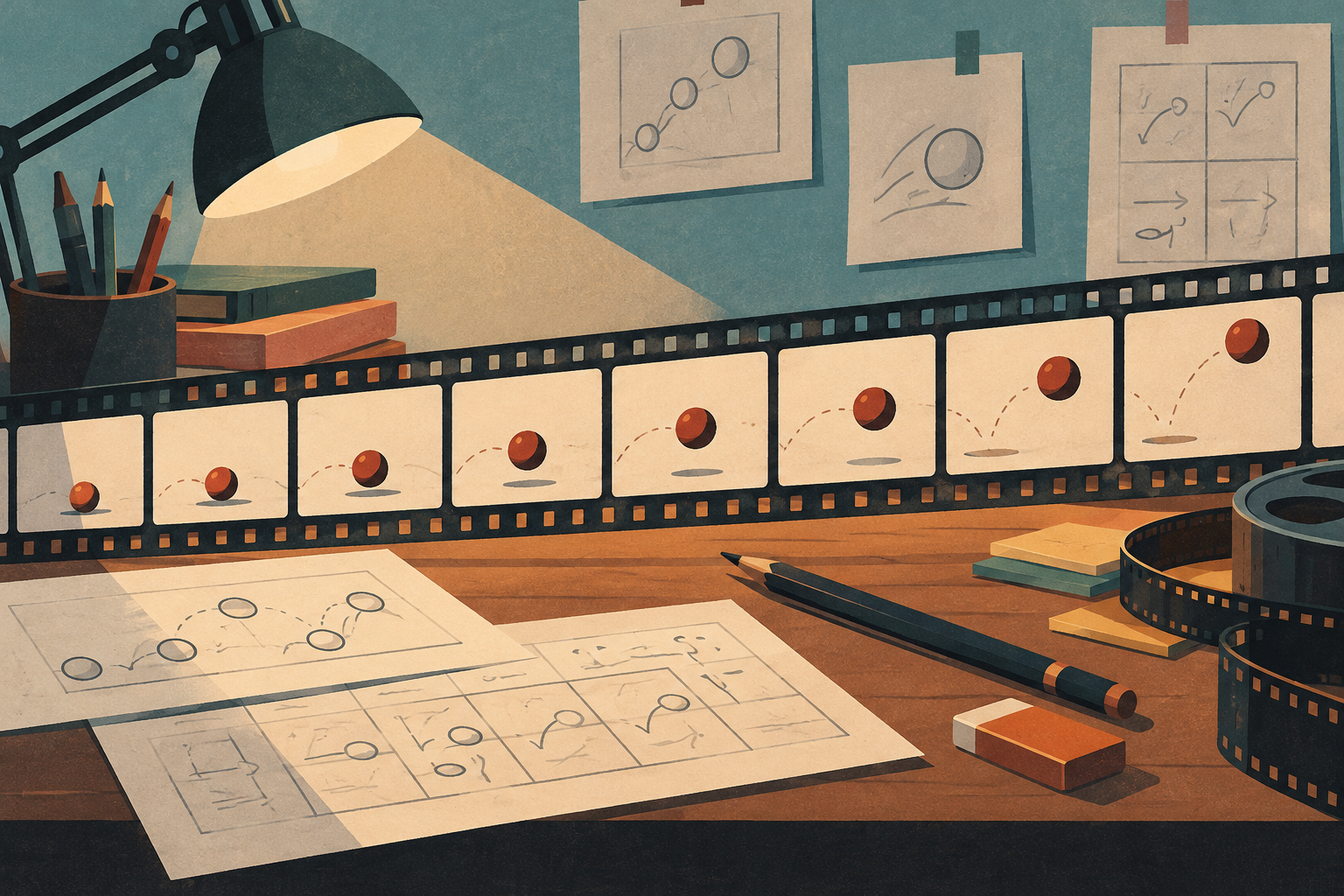
A stop-motion sequence presents movement that was not happening continuously in front of the camera: the technique depends on images captured at successive moments. But that broad description is not enough to reconstruct how each decision was made, what materials were prepared, or what difficulties a particular production faced. Specific sources are needed: production documentation, technical studies and analyses that explain their methods.
The evidence available here brings together titles and excerpts from academic and editorial works related to stop motion, pre-production, animation history and legacy. It can guide research and identify relevant questions; the excerpts alone do not justify attributing procedures to particular films or studios.
What a technical study can offer
The work hosted by SEDICI is described as a compilation concerning technological development, stop-motion technology, animation history and practice. That description identifies a field of inquiry; it does not confirm every conclusion in the document. To use it as a source, one would need to consult the full text, identify how it defines its terms, and distinguish historical background from tools and practical exercises.
Other works in the results also name stop motion as a central subject. A thesis in RiuNet mentions Chilean productions and television programmes created by Vivienne Barry; a document hosted by the Universidad Vasco de Quiroga connects stop motion and claymation. These are specific, limited clues in the excerpts: without reading the complete studies, they should not be turned into a general history of Chilean animation or modelling clay.
Pre-production: what a title tells us—and what it does not
A document presented as a study of pre-production addresses stop-motion techniques and legacy. Its title suggests a useful line of inquiry: which decisions precede image capture, and what traces might preserve them? The available record, however, does not detail the materials it examines or the methods it describes. It is therefore not possible to list storyboards, models, exposure sheets or other specific documents as though this source had verified them.
The distinction matters. A finished image allows analysis of the visual result; it does not automatically reveal the order of work, discarded changes or division of tasks. Those aspects require identifiable documents or analyses that explain their provenance. Process matters as much as outcome, but that is precisely why it should not be reconstructed through guesswork.
An exhibition as another form of documentation
The bibliographic record “Stop Motion Don’t Stop, la exposición,” published in Con A de animación, offers a complementary perspective: studying how an exhibition presents the technique. The available information establishes a publication with that title and an attribution to Beatriz Herráiz Zornoza; it does not, by itself, describe which objects were displayed, where the exhibition took place or how it was arranged.
For research into production materials, the difference between an exhibition and a document is fundamental. An article about a show can help trace exhibition choices, but it is not a substitute for a complete catalogue or the identification of each object. The relationship between drawings, models and a film must be established through sources that name those materials, not inferred from the exhibition’s general subject.
Comparing sources without erasing their limits
The Academy of Cinema’s magazine offers an introductory definition distinguishing computer 3D animation, drawn 2D animation and stop motion, described through the gradual movement of a figure and the capture of images. This is a straightforward starting point for reading different visual languages, not an exhaustive account of the technique’s variations.
An academic study of Toy Story appears among the results with a reference to stop motion, while other texts address art education or technological development. The mere presence of a bibliographic reference does not make all these works equivalent evidence. Before combining their claims, it is worth recording who produced each source, what question it asks and what evidence it presents.
A history that should remain open
The supplied information supports a documentary route: begin with definitions, compare them with studies focused on technology and pre-production, and then consider how the technique is interpreted in publications and exhibitions. These excerpts cannot establish which original materials survive, what process a particular production followed or how the technique changed in a given decade.
That limitation does not make the research useless. It helps separate an editorial hypothesis from a documented fact and points to the next question: which primary sources—such as production documents identified in a collection or archive—could confirm what the available summaries only allow us to ask? Movement appears on screen; its decisions require other kinds of evidence.
- Decade
- Contemporary
- Region
- Global
- Level
- Enthusiast
- Entities
- Televisión
Sources and references
- Tecnología stop motion - SEDICIsedici.unlp.edu.ar · 2026-10-09
- LA ANIMACIÓN EN STOP MOTION COMO ...dspace.uvaq.edu.mx · 2026-10-09
- Stop Motion como recurso innovador en la formación de ...www.academia.edu · 2026-10-09
- Stop Motion Don't Stop, la exposicióndoi.org · 2026-10-09
- departamento de dibujo - RiuNetriunet.upv.es · 2026-10-09
- La animación españolawww.academiadecine.com · 2026-10-09
- Toy Story (1995) - Trabajo Fin de Gradozaguan.unizar.es · 2026-10-09