The format is not a minor detail
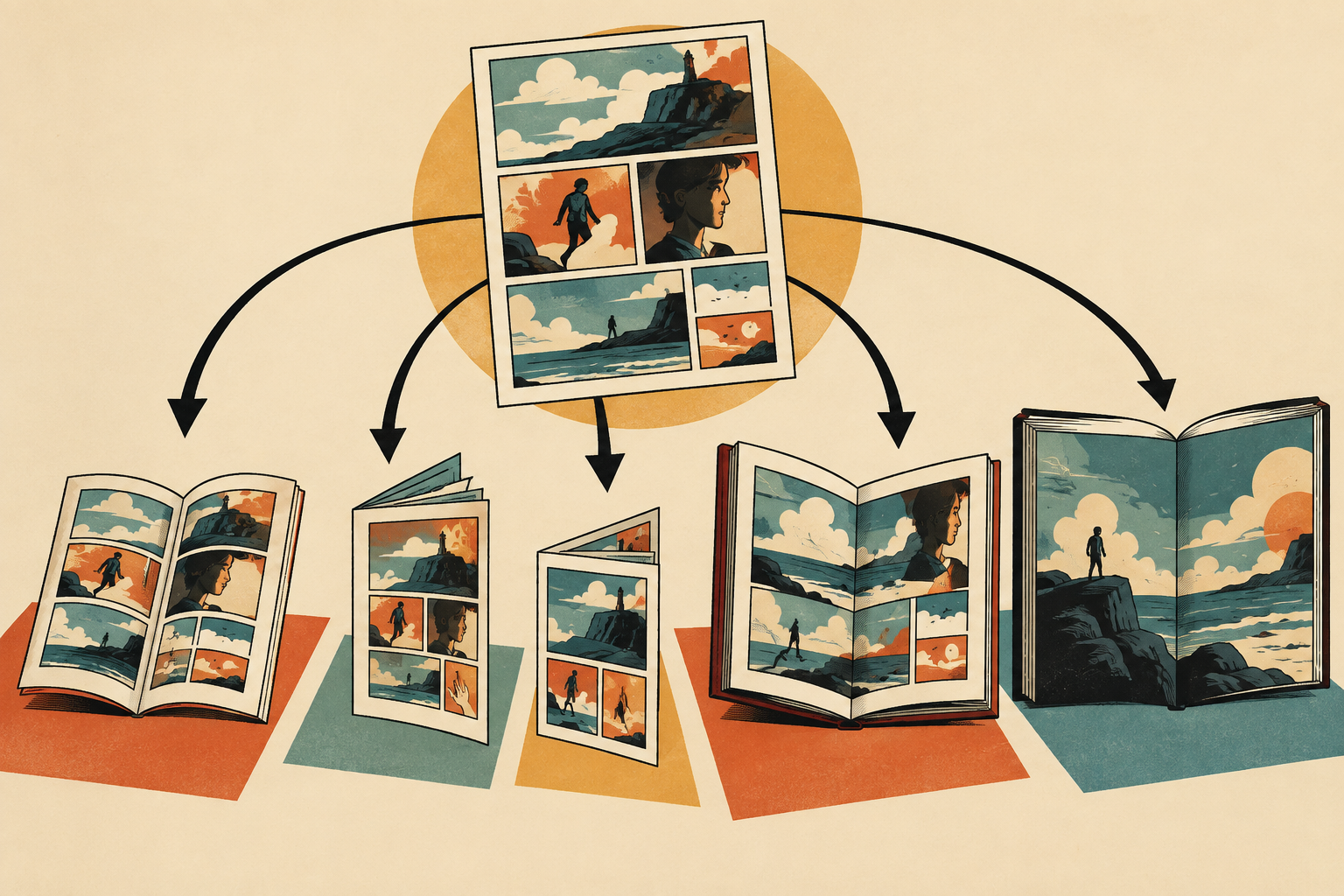
Reading a comic means following images, text and page design, but the work also reaches readers in a particular form of publication. Rubén Varillas’s study of formats lists comic magazines, fanzines, mini-comics, albums and graphic novels. That list suggests a useful question: what changes when a story is presented in one form rather than another? The available evidence identifies these formats as subjects of study, but does not support a universal rule about how each one shapes reading.
A list of forms, not a hierarchy
The list does not show that one format is more advanced, complete or artistic than another. It distinguishes modes of publication that may organize an encounter with comics differently. Format is a condition of presentation and access; to establish its effect on a specific work, its pages and edition would need to be examined. Without those materials, it would be unjustified to claim that a magazine always fragments a story or an album always gathers it into a whole.
Publication also means circulation
The Reina Sofía Museum Library describes its comics and fanzines collection as arising from research, analysis and documentation of its holdings. This shifts attention from the isolated page to the work involved in locating and studying publications. A documented collection can preserve clues about objects and categories; the available description does not, however, detail particular issues or their paths. It therefore cannot reconstruct who read each publication or how it reached its readers.
From copy to archive
A RetroPause article frames the move from magazine to archive through collection, museum and digital access. That formulation points to an important change: comics can be studied not only as narratives but also as preserved and consulted objects. The excerpt does not specify platforms, access conditions or which editions have been digitized. It would therefore be unwise to claim that digitization fully reproduces the experience of print. We can, however, distinguish access to a work from knowledge of the material and historical conditions of its circulation.
Exhibition as a frame for reading
An article about museums and comics dates the Paris exhibition Bande dessinée et Figuration narrative to 1967. This documents that comics have been presented in an exhibition setting; it does not, by itself, establish which works were shown or what reading the exhibition proposed. The Prado Museum also describes Sento’s Historietas del Museo del Prado as a comic comprising seven stories, some fictional and others based on real stories, according to the available notice. Both examples remind us that venue and context can inform interpretation, without replacing analysis of the pages.
What still needs checking
The cited sources allow us to identify formats, collections, documentation practices and some exhibition contexts. They do not provide a comparative study of the same comic published in different editions. To answer precisely which editorial changes altered reading, one would need to compare copies: sequence, pagination, size, reproduction, added or omitted content, and publication details. None of those changes should be assumed without specific evidence.
Reading the work and its conditions
Format offers a way to understand comics beyond the character on the cover: it connects graphic storytelling with publication, circulation, preservation and access. The available evidence supports posing that relationship and identifying institutional examples, not making conclusive claims about every reader’s experience. A careful reading keeps both scales in view: what happens on the page and the documented conditions under which that page was published, preserved and encountered again.
- Decade
- Contemporary
- Region
- Global
- Level
- Enthusiast
- Entities
- Museum, Museo Reina Sofía, Rubén Varillas
Sources and references
- El cómic, una cuestión de formatos (2): revistas de cómics, fanzines, mini-cómics, álbumes y novelas gráficasdoi.org · 2026-10-05
- Cuando una revista pasa a ser archivo: el cómic entre colecciónwww.retropause.com · 2026-10-05
- Cómics y fanzineswww.museoreinasofia.es · 2026-10-05
- HISTORIETAS del MUSEO DEL PRADO, un cómic de ...www.museodelprado.es · 2026-10-05
- El contexto de la historietarevistascientificas.us.es · 2026-10-05
- El año del cómic y los museoswww.jotdown.es · 2026-10-05