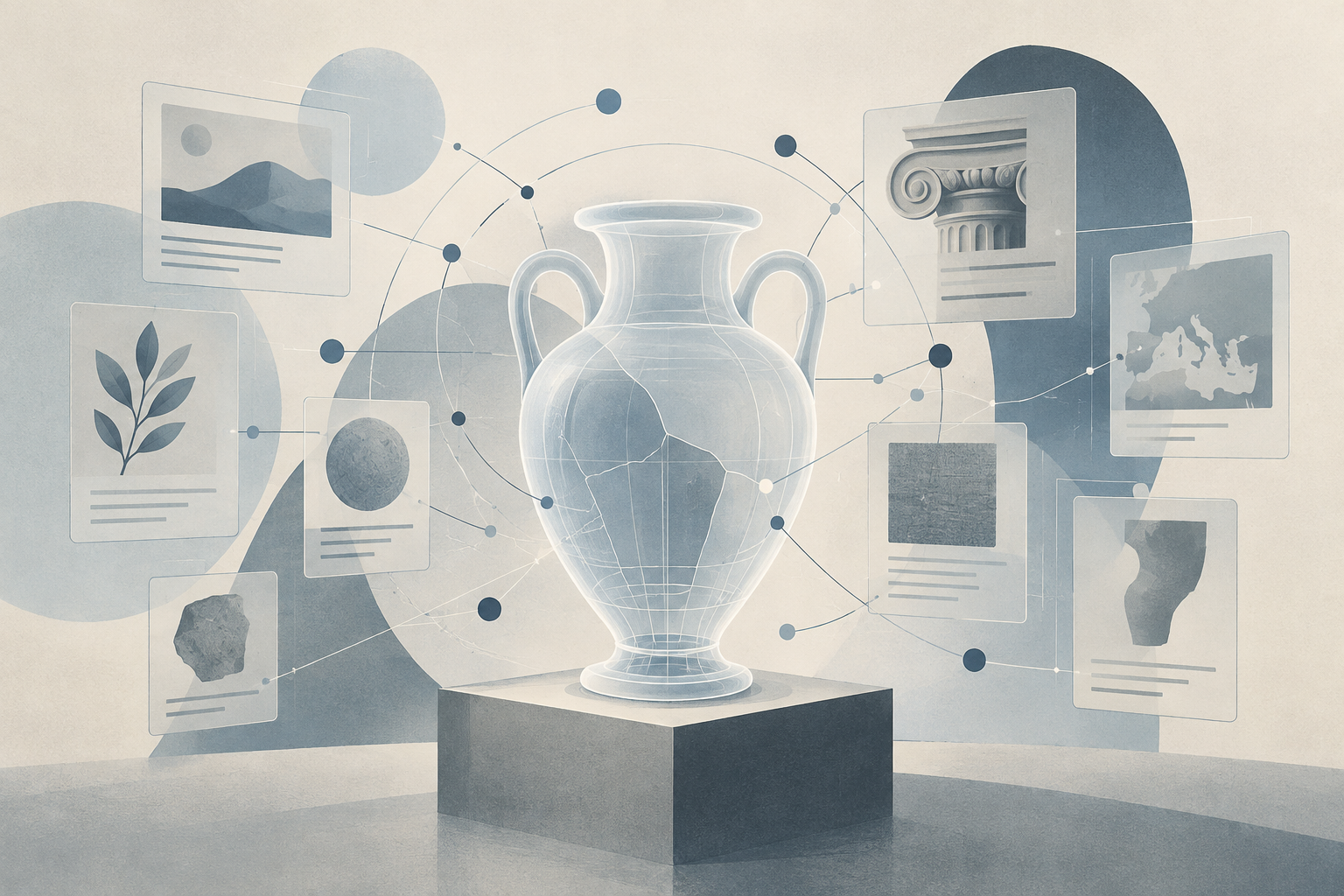
The relationship between design and cultural heritage has undergone a paradigm shift. For decades, preservation focused on the physical piece, treating graphic design as an aesthetic object isolated from its context. Today, academic evidence suggests that design has shaped the world and improved life in complex ways, demanding a broader approach that includes the conservation of processes and contexts. This article explores how cultural institutions navigate this complexity, distinguishing documentary and functional value from mere aesthetic labels.
The evolution of the heritage concept
Design is not just a visual discipline, but a tool that has shaped society. The inclusion of design pieces in museum collections is justified not only by their beauty, but by their ability to document everyday life. This view has evolved from a purely aesthetic perspective to one that recognizes design as an active agent in the construction of reality. Museums and archives must now consider not only the object, but also the circumstances surrounding it.
The case of Balder and Sanz's ventriloquism
A concrete example of this complexity is the conservation of the ventriloquism collection of Balder and Sanz. This case illustrates that preserving physical objects is insufficient. It is necessary to document their social and communicative function. The collection is not just a set of puppets or posters, but a testament to a specific form of entertainment and communication. Documentation acts here as a key interpretive tool to understand the value of these pieces in their historical and social context.
Brand museums and commodification
Brand museums, such as IKEA's, represent another front in design conservation. These spaces use concepts like democratic design to facilitate cultural transfer and the commodification of heritage. A brand's identity can become a cultural object of study, but this raises questions about authenticity and commercialization. Billore's study (2025) explores how these museums facilitate the commodification and cultural transfer of a brand's heritage, showing a tension between preservation and marketing.
Documentation as an interpretive tool
Documentation is fundamental to understanding the value of design pieces. It is not just about cataloging, but about interpreting. Documentation allows distinguishing functional decisions from aesthetic labels. In the case of advertising and design, the communicative effectiveness and social function of brands are key aspects that must be preserved. Documentation helps contextualize these pieces, showing how they adapted to the social context and how they influenced it.
The social function of brands
Advertising and design have a social function that goes beyond sales. They evolve and adapt to the social context. Beatriz Moreno Palacios' thesis highlights the communicative effectiveness and social function of brands. This perspective is crucial for conservation, as it implies that the value of a design piece is not static, but depends on its interaction with society. Museums must capture this dynamic to offer a complete understanding.
Challenges of contemporary conservation
The conservation of graphic design faces unique challenges. Unlike painting or sculpture, design is often ephemeral and functional. Its value lies in its use and impact, not just its form. This requires new preservation strategies that include digital documentation, process preservation, and historical contextualization. Museums and archives must collaborate with designers, historians, and archivists to develop these strategies.
Conclusion
The conservation of graphic design is a complex task that requires a holistic view. It is not just about preserving objects, but about preserving contexts, processes, and functions. Documentation is the key tool to achieve this. By recognizing design as cultural heritage, institutions can offer a deeper understanding of how design has shaped our world. This approach not only preserves the past, but also illuminates the present and the future of design.
- Decade
- Contemporary
- Region
- Global
- Level
- Enthusiast
- Entities
- Museum
Sources and references
- Publicidad y diseño: la eficacia comunicativa y función social de las marcas: evolución y adecuación al contexto socialdoi.org · 2026-10-19
- El diseño y la publicidad de los espectáculos de variedades: la conservación de la colección de ventriloquía de Balder y Sanzdoi.org · 2026-10-19
- Diseño y patrimonio cultural: cómo asegurar la conservación ...turia.uv.es · 2026-10-19
- Museos de marca, mercantilización del patrimonio cultural ...translate.google.com · 2026-10-19
- (PDF) ¿Se merece la publicidad un museo? Estudio y ...www.researchgate.net · 2026-10-19
- Cómo administrar un museo: manual prácticounesdoc.unesco.org · 2026-10-19