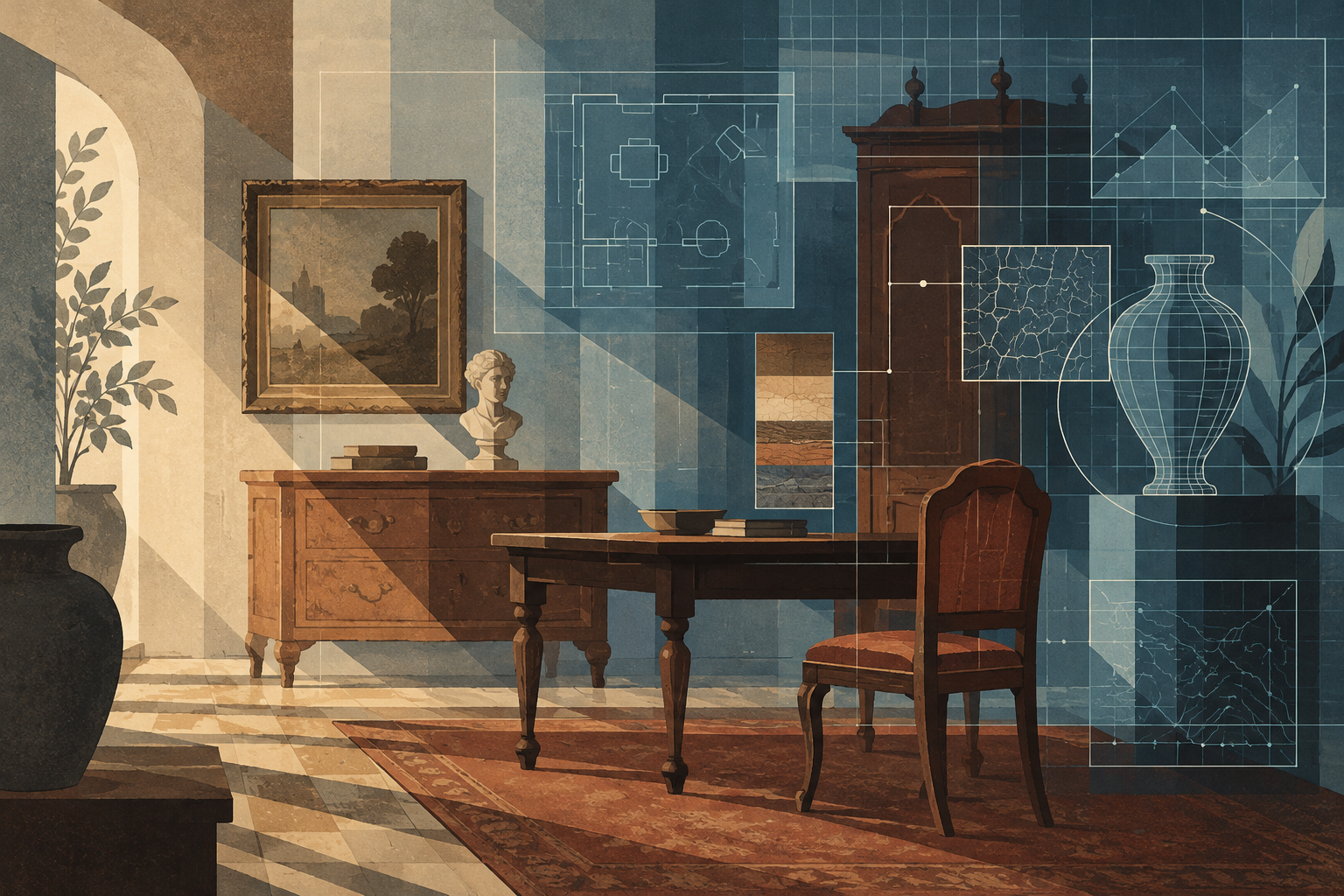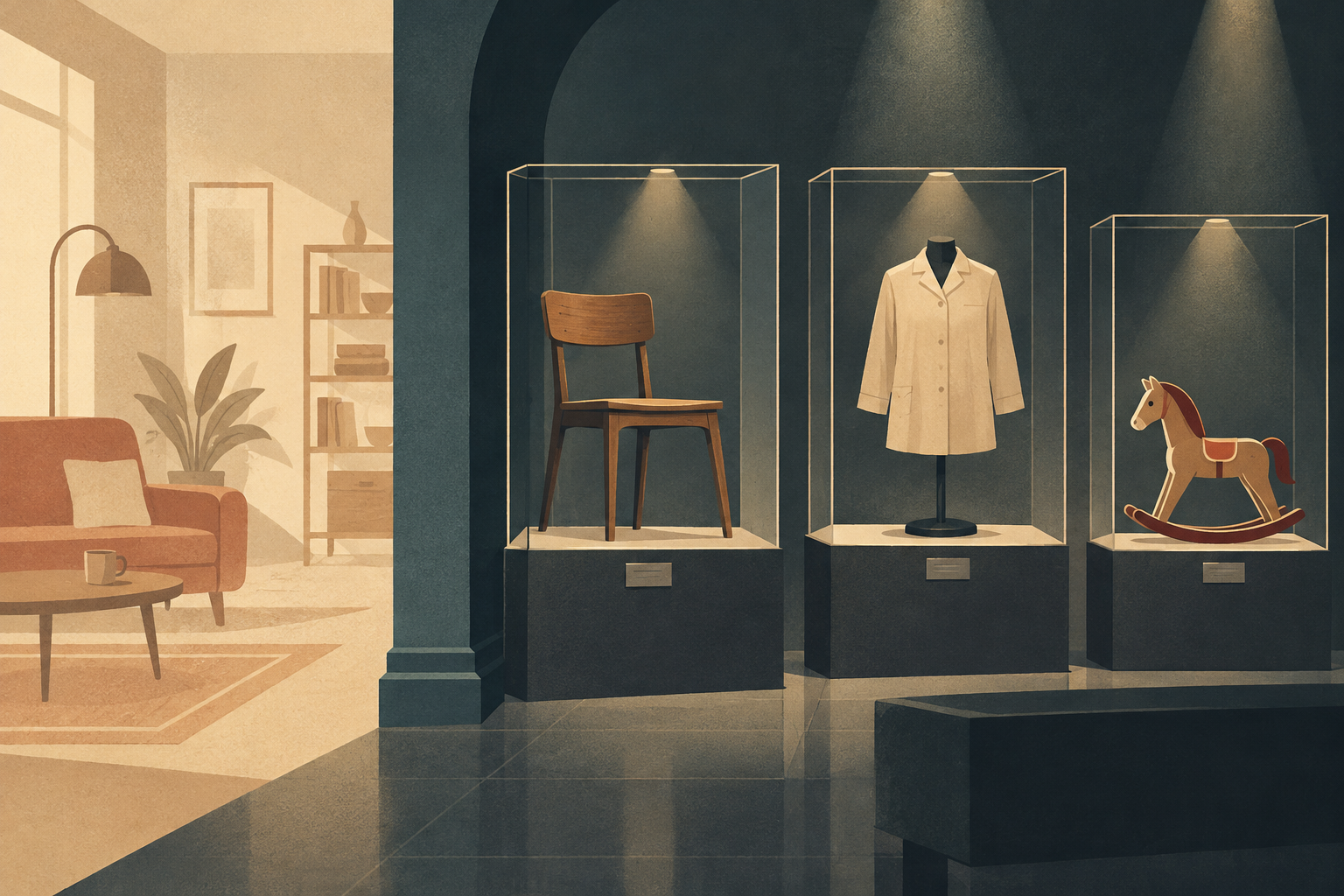
The preservation of domestic decoration faces a challenge that goes beyond the aesthetics or materiality of objects. It is not merely about cataloging furniture, textiles, or decorative elements, but about understanding the social and cultural fabric that gives them meaning. Technical conservation and registration documents indicate that the effective identification of a piece depends on its link to the context in which it was created and used. This perspective changes how interior documentation is approached, especially in spaces that reflect specific everyday practices.
Registration as an interpretive tool
Documentation manuals for heritage collections, such as the one produced by the Directorate of Libraries, Archives, and Museums of Chile, establish that registration work is not an end in itself, but a tool for interpretation. This document highlights the integration between collection registration and vocabulary standardization. This operational duality ensures that technical data does not remain isolated but connects with conceptual categories that facilitate the understanding of the object within a social practice. Without this connection, decoration is reduced to an inventory list devoid of meaning.
The requirement of cultural context
The Preventive Conservation Plan of the Sephardic Museum provides clear guidance on the elements that should be prioritized in documentation. According to this plan, special attention must be paid to descriptions, measurements, dates, and, crucially, to the cultural context and reasoned classifications. This requirement aims to ensure that pieces are well identified not only by their physical characteristics but by their historical and cultural relevance. The inclusion of cultural context allows understanding why an object exists and how it interacted with other elements of the space, avoiding a fragmented view of decoration.
International guidelines and their application
UNESCO guidelines reinforce this view by stating that museums should not merely highlight objects but understand their meaning. This institutional stance suggests that the valorization of heritage does not reside in the rarity or economic value of the piece, but in its ability to transmit information about the society that produced it. For domestic decoration, this implies that documentation must capture the intentions, functions, and symbols associated with spaces, not just their material components.
Risks associated with lack of context
ICCROM's risk management guide for museum heritage adds a practical dimension to this discussion. Context analysis directly influences the conservation status of cultural assets. By identifying the context, specific risks such as contamination, mold growth, or the dissociation of documents from a museum archive can be detected. In the case of domestic decoration, the lack of context can lead to inadequate interventions that alter the integrity of the ensemble. For example, the separation of elements that formed part of the same decorative set can be considered a form of dissociation that compromises the value of the heritage.
The aesthetic and functional duality
Domestic decoration is the result of the coexistence of practical needs and aesthetic aspirations. Spaces are not just containers for objects, but stages for everyday life where routines, relationships, and expressions of identity develop. The documentation of these spaces must reflect this duality. Understanding how an interior was organized, who used it, and for what purposes allows appreciating the complexity of decoration as a social practice. This understanding is essential for any preservation effort that aspires to be faithful to historical reality.
Implications for historical reconstruction
For projects seeking to reconstruct or interpret historical interiors, the availability of sources explaining the use and organization of the space is fundamental. The absence of a documented cultural context can lead to reconstructions that, although visually appealing, lack historical authenticity. Decoration loses its value as a witness to everyday life if its relationship with the people and practices surrounding it cannot be traced. Therefore, documentation must be as rigorous in its contextual analysis as in its technical registration.
Towards comprehensive documentation
The available evidence suggests that the documentation of domestic decoration must evolve from an object-centered approach to a context-centered one. This requires interdisciplinary collaboration integrating knowledge from conservation, history, sociology, and design. Existing manuals and guides provide the basis for this approach, but its effective application depends on the willingness of professionals to go beyond technical data. Ultimately, the preservation of domestic decoration is not just a technical act, but a cultural interpretation exercise that seeks to keep alive the memory of the spaces people inhabited.
- Decade
- Contemporary
- Region
- Global
- Level
- Enthusiast
- Entities
- Museum, Museo Sefardí
Sources and references
- PLAN CONSERVACIÓN PREVENTIVA MUSEO SEFARDÍwww.cultura.gob.es · 2026-10-17
- Manual de Documentación - de Colecciones Patrimonialeswww.cdbp.gob.cl · 2026-10-17
- Guía para la Elaboración e Implantación de Planes de ...www.ibermuseos.org · 2026-10-17
- Guía de Gestión de Riesgos para el Patrimonio Museológicowww.iccrom.org · 2026-10-17
- La Conservación: el porvenir del pasadounesdoc.unesco.org · 2026-10-17
- manual de registro y documentaciónobservatoriocultural.udgvirtual.udg.mx · 2026-10-17