1970s fashion has often been reduced to a succession of visual trends or the influence of mass advertising. However, a more rigorous examination of academic sources and institutional archives reveals a deeper dimension. Accessories and garments were not mere objects of consumption, but active vehicles for the expression of social, political, and aesthetic identities. This article explores how the clothing of that era functioned as a social document, using available evidence to trace a connection between design, the body, and cultural context.
Clothing as a conduit for identity
Academic research has established that fashion is a fundamental channel for the expression of social identity and political ideas. AX Miller Sickert, in his work on clothing as cultural heritage, underscores that clothing has been and continues to be a medium for manifesting aesthetic taste and ideological stances. This perspective moves fashion away from a purely decorative view and places it at the center of social dynamics. Accessories, in particular, acted as markers that allowed individuals to negotiate their position within specific social groups during the 1970s.
Industrial transitions in Latin America
The Latin American context provides concrete examples of how fashion production evolved during this period. In Colombia, studies document the transition from the traditional textile industry to the fashion industry between 1970 and 1999. This change was not only technical but also cultural, involving a new language and knowledge of appearance. Similarly, in Chile, research such as that by JV Miranda seeks to contribute to the history of fashion and clothing, highlighting the scarcity of previous work on the subject. These cases illustrate how local fashion production intertwined with the region's economic and social transformations.
The role of archives and museums
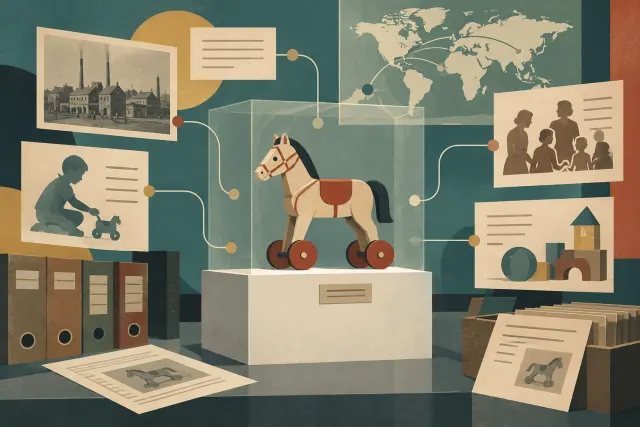
The preservation of garments and accessories in museums and universities is crucial for the historical study of fashion. These archives allow for the analysis of practices of the time without falling into generalizations. By preserving physical objects, researchers can examine materials, construction techniques, and context of use. This material documentation is essential to understand fashion as a historical phenomenon, beyond images reproduced in magazines or catalogs. Archives act as silent witnesses to the design decisions and social practices of the era.
The case of Pablo & Delia
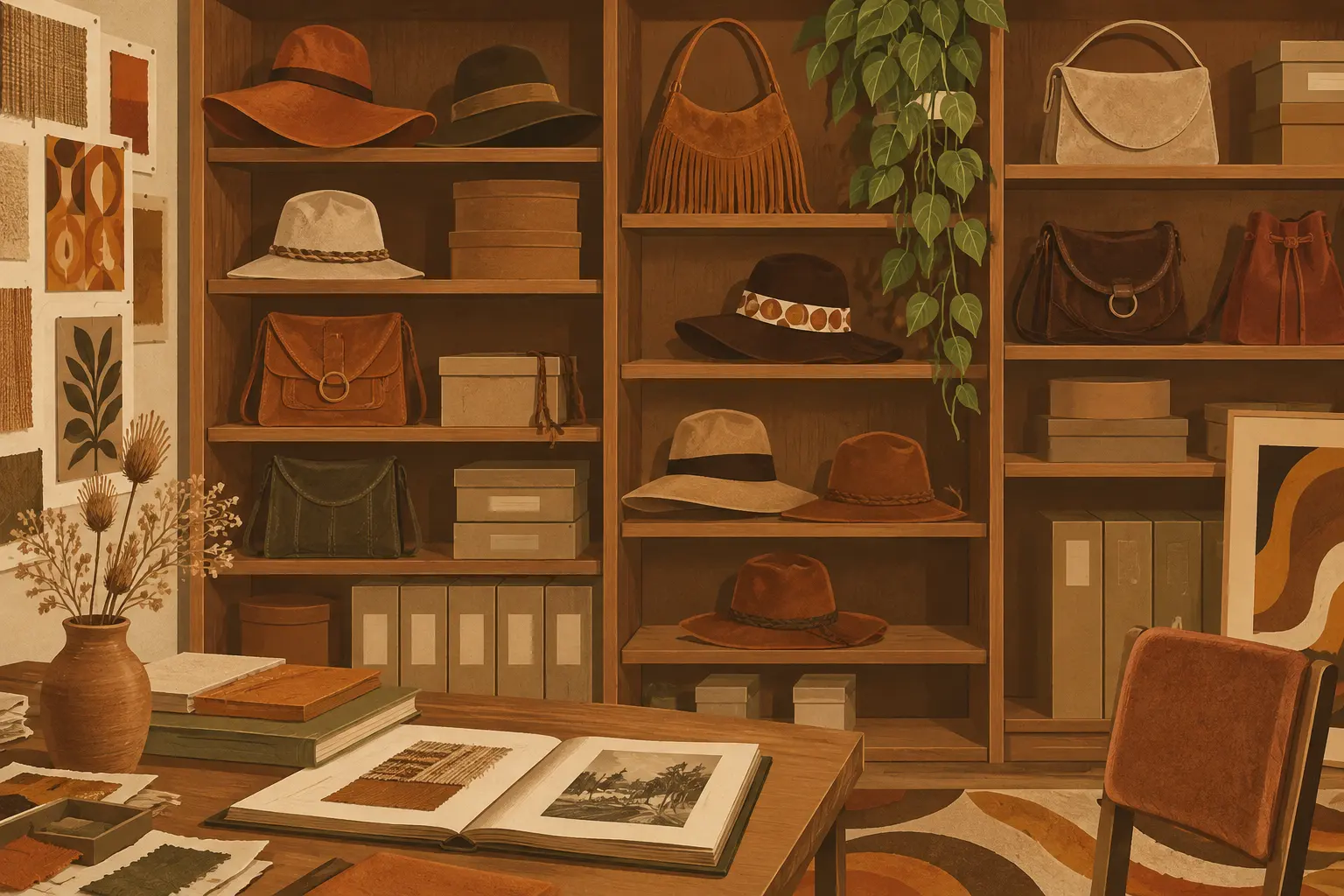
A specific example of the fusion between art and fashion in the 1970s is the production of the brand Pablo & Delia, active between 1970 and 1974. Records indicate that the artists involved incorporated materials such as suede into their creations, including accessories like women's hats. This practice demonstrates how designers of the era experimented with textures and forms, blurring the boundaries between haute couture and artistic expression. The brand represents a microcosm of the trends of the time, where material and conceptual innovation went hand in hand.
Sports influences and amalgam of styles
Men's fashion in the 1970s and 1980s showed a strong influence from sportswear, according to historical records. This trend was combined with an amalgam of diverse influences, reflecting a society in transition. The incorporation of sports elements into everyday clothing indicates a change in dress codes and the perception of the body. This phenomenon was not isolated but part of a broader movement towards comfort and functionality, which also impacted the design of accessories and complements.
It is important to recognize that the analysis of 1970s fashion is limited by the availability of sources. Many garments and accessories have not survived the passage of time, and archives may be incomplete. Furthermore, documentation often focuses on elites or major brands, leaving out the fashion practices of other social sectors. Therefore, any interpretation must be made with caution, avoiding speculation on unverified trends. Current evidence allows for general lines to be drawn, but not an exhaustive image of the clothing of the era.
Conclusion
1970s fashion was much more than an aesthetic issue; it was a complex social practice that reflected the tensions and transformations of the time. Accessories and garments functioned as documents that recorded identity, politics, and cultural taste. By turning to academic sources and archives, it is possible to understand fashion as a historical phenomenon that connects design with everyday life. This approach allows us to appreciate clothing not only as an object of consumption but as an integral part of cultural and social memory.
- Decade
- 1970s
- Region
- Global
- Level
- Enthusiast
- Entities
- No linked entities
Sources and references
- De los textiles a las apariencias. Los tránsitos de la moda ...www.academia.edu · 2026-10-23
- Historia de la moda - Wikipedia, la enciclopedia librees.wikipedia.org · 2026-10-23
- Tejidos, moda y cuerposhistoriadeldisseny.org · 2026-10-23
- EL TRAJE COMO PATRIMONIO CULTURAL Y EL MUSEO DE ...repositorio.uchile.cl · 2026-10-23
- Moda al paso - Diseño UCdiseno.uc.cl · 2026-10-23
- Delia Cancela y Pablo Mesejeán: una moda hecha por artistas.caiana.caiana.com.ar · 2026-10-23