Format is part of the story
A comic does not reach its reader in the abstract. It may appear in a magazine, a fanzine, a mini-comic or an album, and later become part of a digitisation project. Each medium shapes the encounter with the pages: it determines what is brought together in a publication, how it circulates and what unit a reader keeps. A history of comics therefore needs to consider not only characters and creators, but also the material and publishing forms that make reading possible.
Rubén Varillas’s study of magazines, fanzines, mini-comics, albums and graphic novels treats format as a significant question for the medium. Manuel Barrero’s research on transformations in Spanish comics in the twenty-first century provides another point of reference. It places recent changes within a history of publications and practices rather than reducing them to the arrival of a single technology.
From periodical publication to preserved object
A magazine invites readers to encounter an instalment within an editorial sequence. An album, by contrast, may be presented as a collected unit. These differences do not determine every reader’s experience, but they raise questions about how stories are grouped, what continuity is suggested and what is preserved when an item enters a collection.
RetroPause’s archive article on comics and magazines describes how materials often treated as ephemeral change status when they become part of a collection, an institution or a digitisation project. That change matters: preserving a magazine is not simply a matter of keeping paper. It also means recognising it as a document and creating conditions for it to be consulted again. The available description, however, does not establish that every collection is organised or made accessible to the public in the same way.
Exhibiting is not the same as archiving
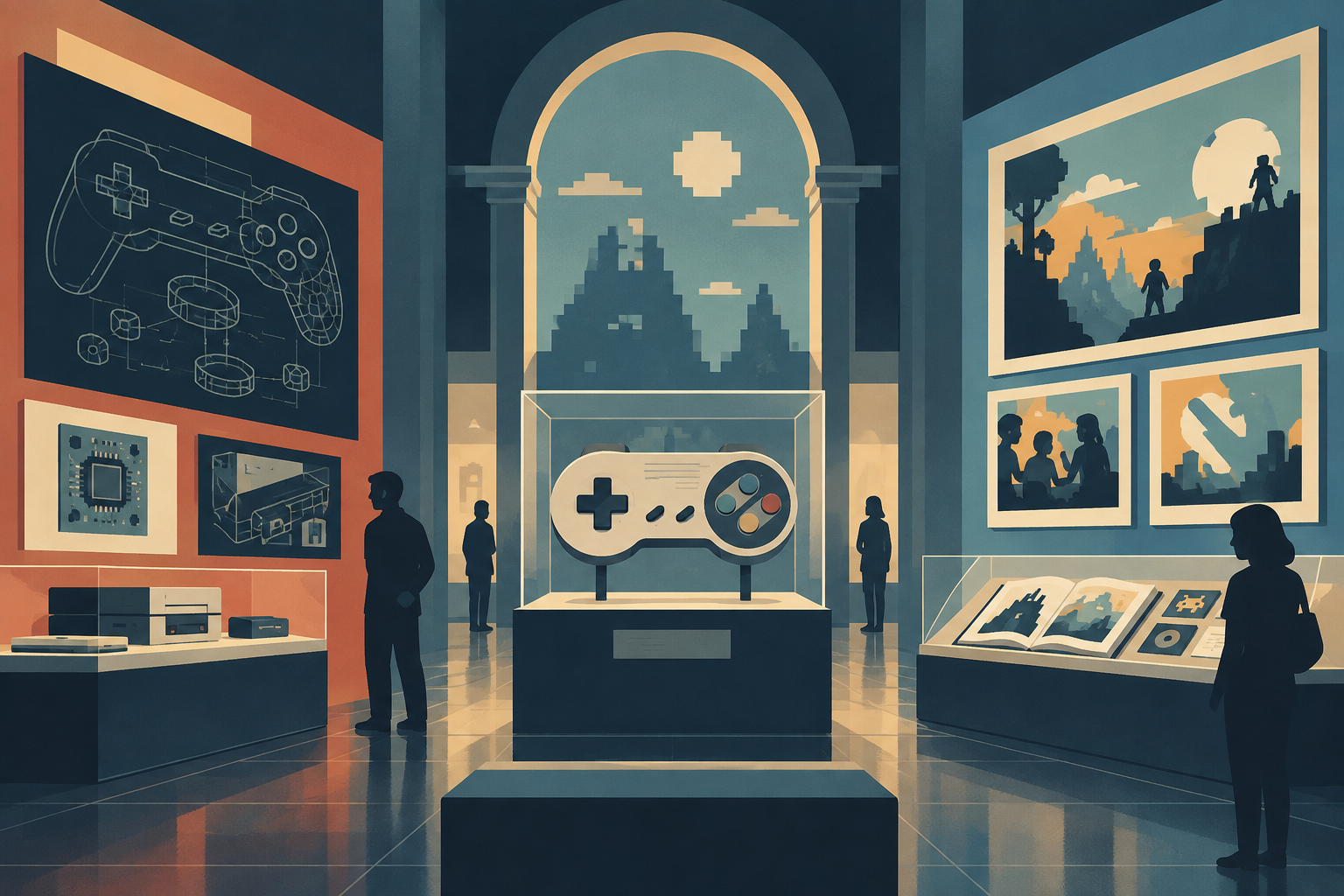
An exhibition is another way to make comics visible. A study of the history and global context of comic exhibitions points out that their presence in galleries is not merely a recent development. Yet an exhibited work is no longer encountered exactly as it was in its publishing context: visitors see it within a selection, a sequence and a curatorial argument.
A specific example of an exchange between comics and an institution comes from the Prado Museum. Its notice about Historietas del Museo del Prado, a comic by Sento, says that it brings together seven stories and combines a fictional account of Goya visiting on the museum’s opening day with real stories. This documents a relationship between comics and a museum, but it is not enough to generalise about all comic exhibitions. It does show that comics can narrate an institution’s space as well as appear there as objects on display.
Digitisation opens possibilities, but does not remove choices
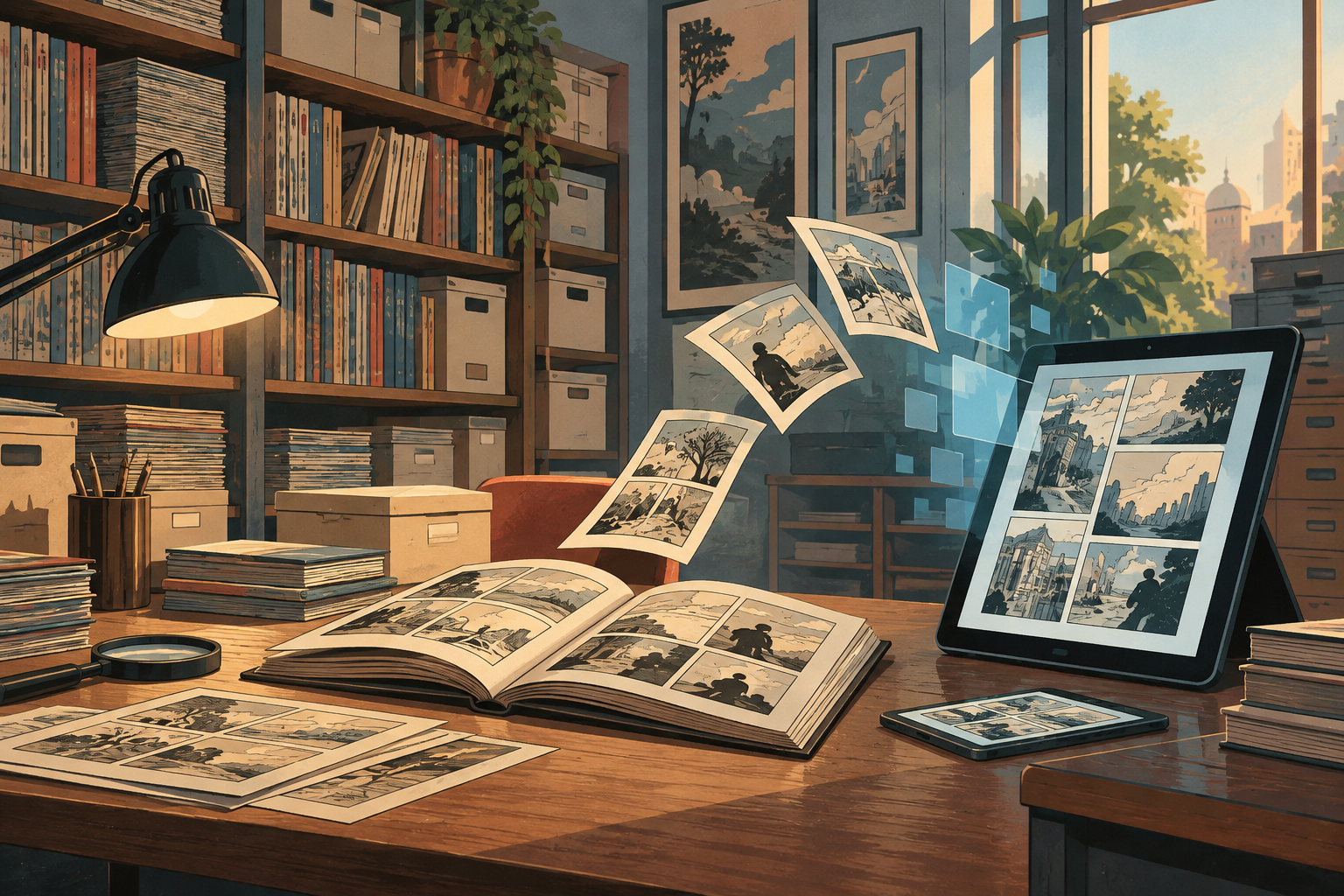
Digitisation can make materials easier to consult when access to printed copies depends on their preservation and availability. But the statement “digitised” does not answer essential questions by itself: what was selected, what was left out, how items are described or under what conditions the public can consult them. Archiving and access are connected, but they are not synonyms.
The distinction is cultural as well. A screen offers a different route to consultation, while the physical copy retains its own material character. The sources available here support the existence of digitisation projects and an interest in archives; they do not provide enough detail about the platforms, technical criteria or access policies used in every case. Digitisation should therefore be described as a possibility, not an automatic guarantee of preservation, completeness or universal access.
The museum as a space for reading and context
A museum can bring documents together, present works and propose interpretations. The Prado example shows one possibility: using a comic to tell stories connected to the institution. Research on exhibitions, meanwhile, invites us to consider the display of comics as a subject with its own history and its own forms of mediation.
These presentations do not replace the original publication or the consultation of archives. They add another layer: selecting items, building relationships between them and placing comics before visitors who might not encounter them in a magazine or personal collection. That mediation can enrich a reading, provided we distinguish between the object, its publishing context and the interpretation proposed by an exhibition.
What the evidence supports—and what remains open
The available sources support three careful conclusions. First, format is a significant dimension of comics, as the research on magazines, fanzines, mini-comics and albums demonstrates. Second, collecting and digitisation can change how comics and magazines treated as ephemeral materials are regarded. Third, exhibitions and museums provide specific contexts in which comics can be presented and read, as the Prado project illustrates.
The sources do not provide a complete chronology of every format, comprehensive circulation or print-run data, or a systematic comparison of archival policies. Acknowledging those limits does not weaken the analysis; it helps separate documentation from interpretation. Comics do not end when a magazine or album is closed. They continue in the ways they are preserved, described and made accessible—but each of those actions involves choices that also belong to their history.
- Decade
- 2000s
- Region
- Spain
- Level
- Enthusiast
- Entities
- Museum
Sources and references
- El cómic, una cuestión de formatos (2): revistas de cómics, fanzines, mini-cómics, álbumes y novelas gráficasdoi.org · 2026-09-30
- Cuando una revista pasa a ser archivo: el cómic entre colecciónwww.retropause.com · 2026-09-30
- Transformaciones del cómic en España en el siglo XXIedizionicafoscari.unive.it · 2026-09-30
- HISTORIETAS del MUSEO DEL PRADO, un cómic de ...www.museodelprado.es · 2026-09-30
- (PDF) Las exposiciones de cómics. Historia y contexto globalwww.researchgate.net · 2026-09-30
- El año del cómic y los museoswww.jotdown.es · 2026-09-30