Format is part of reading
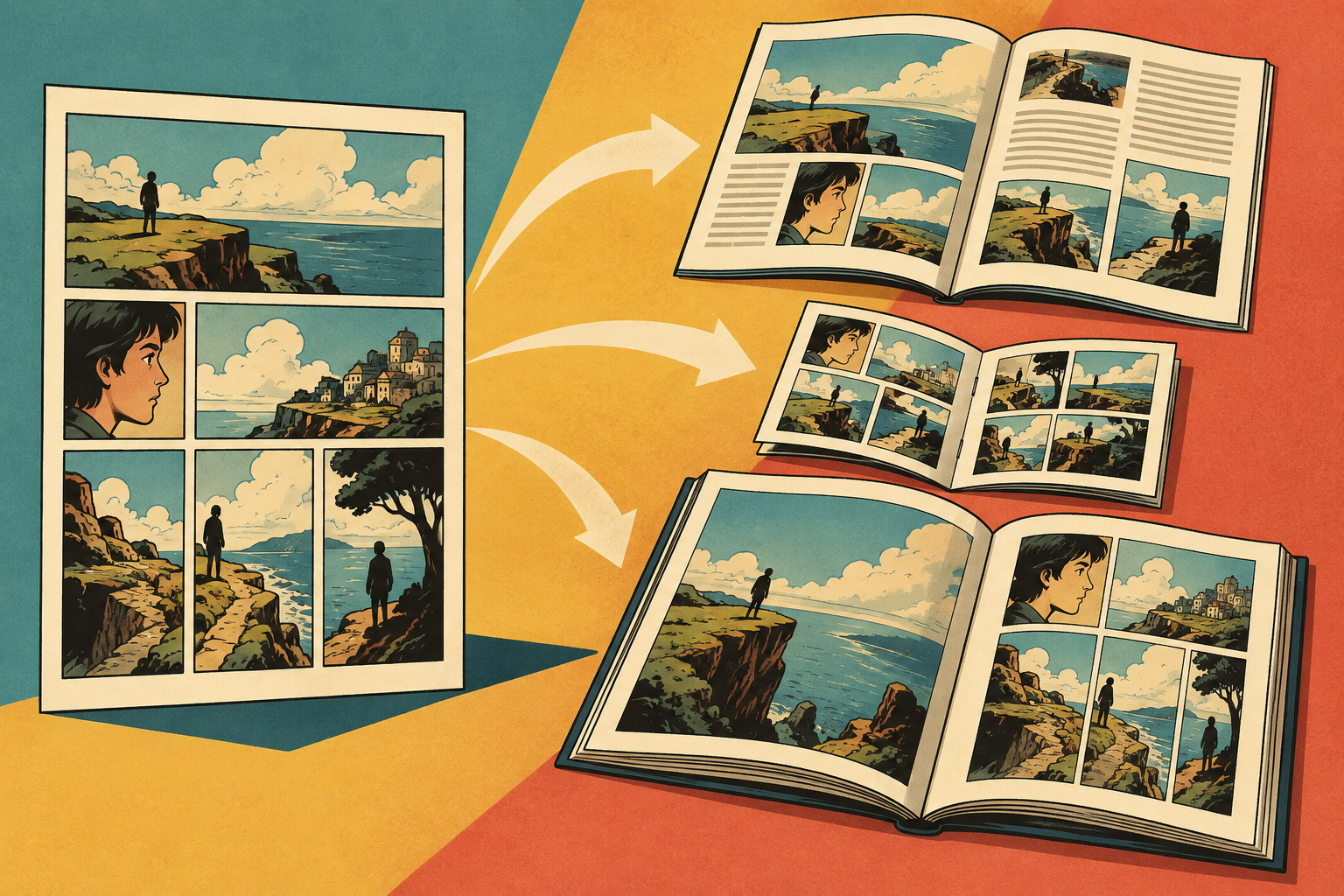
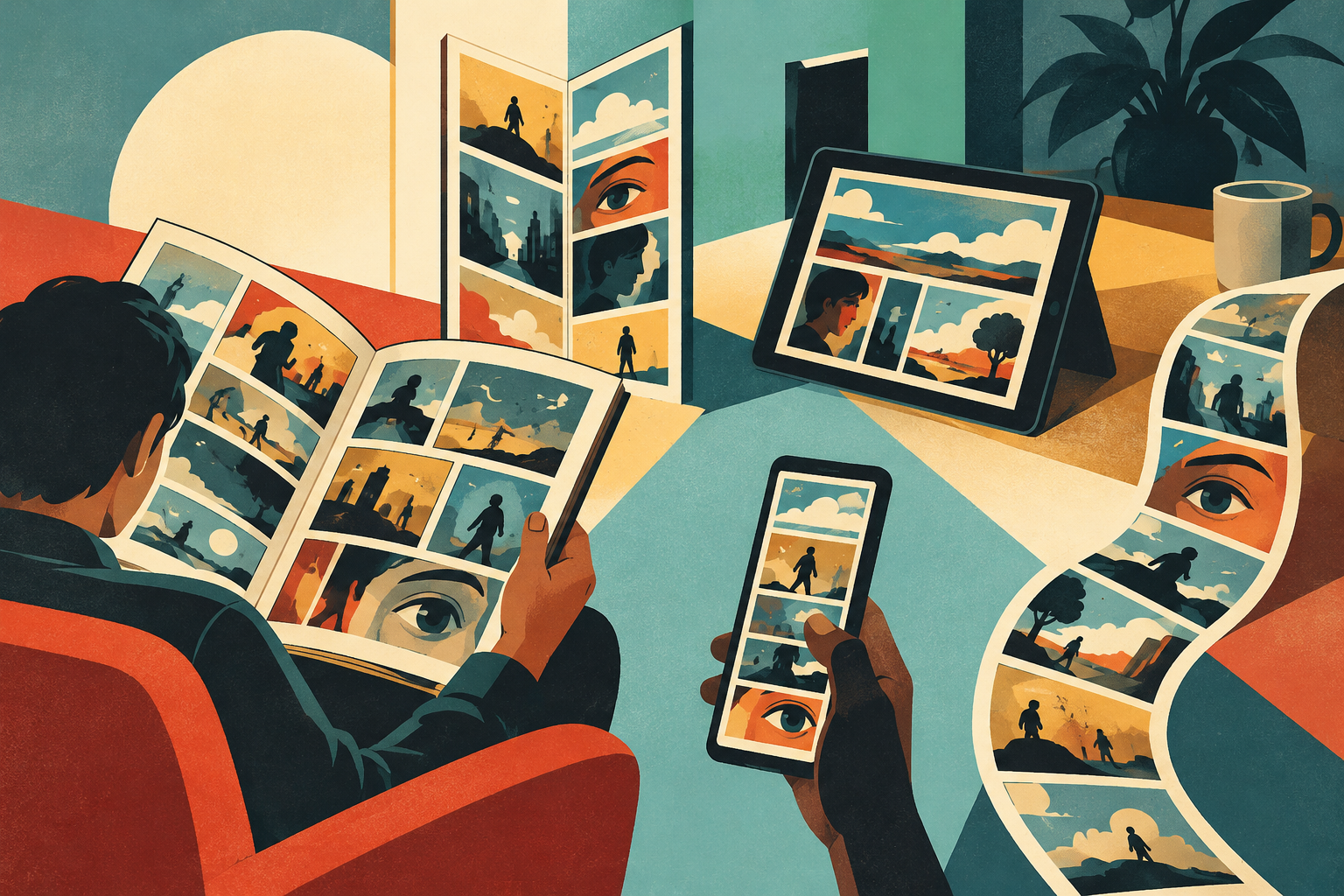
A comic does not reach its reader as an abstract sequence of drawings and words. It arrives in a particular publication, with specific dimensions, page organization, and conditions of circulation that shape the encounter with its audience. This does not mean that every format automatically produces a particular kind of story. It means that questions about material form belong alongside questions about narration.
Rubén Varillas’s article, titled “El cómic, una cuestión de formatos,” names comic magazines, fanzines, minicomic books, albums, and graphic novels. That list offers a useful starting point: the categories are not interchangeable. But the available record does not include the article’s full text, so it does not support attributing particular conclusions to the author. Here, comparison is a research question, not an already established finding.
Five labels, several questions
The list of formats invites us to examine the reading unit each publication offers and the way it organizes access to its pages. A rigorous answer would require looking at copies: how they begin and end, what kind of continuity they suggest, what role the margins play, and how an installment or complete work is identified. Without the objects in view, we cannot claim that all fanzines, magazines, or albums share the same structure.
The difference between naming a format and describing it matters. “Magazine” or “album” can help organize research, but is not enough to explain the design of a particular work. Nor does the label alone show that a story changed when it moved from one publishing form to another. That claim would require comparing editions, pages, or verifiable publishing information; the supplied evidence contains no such comparison.
Circulation matters too
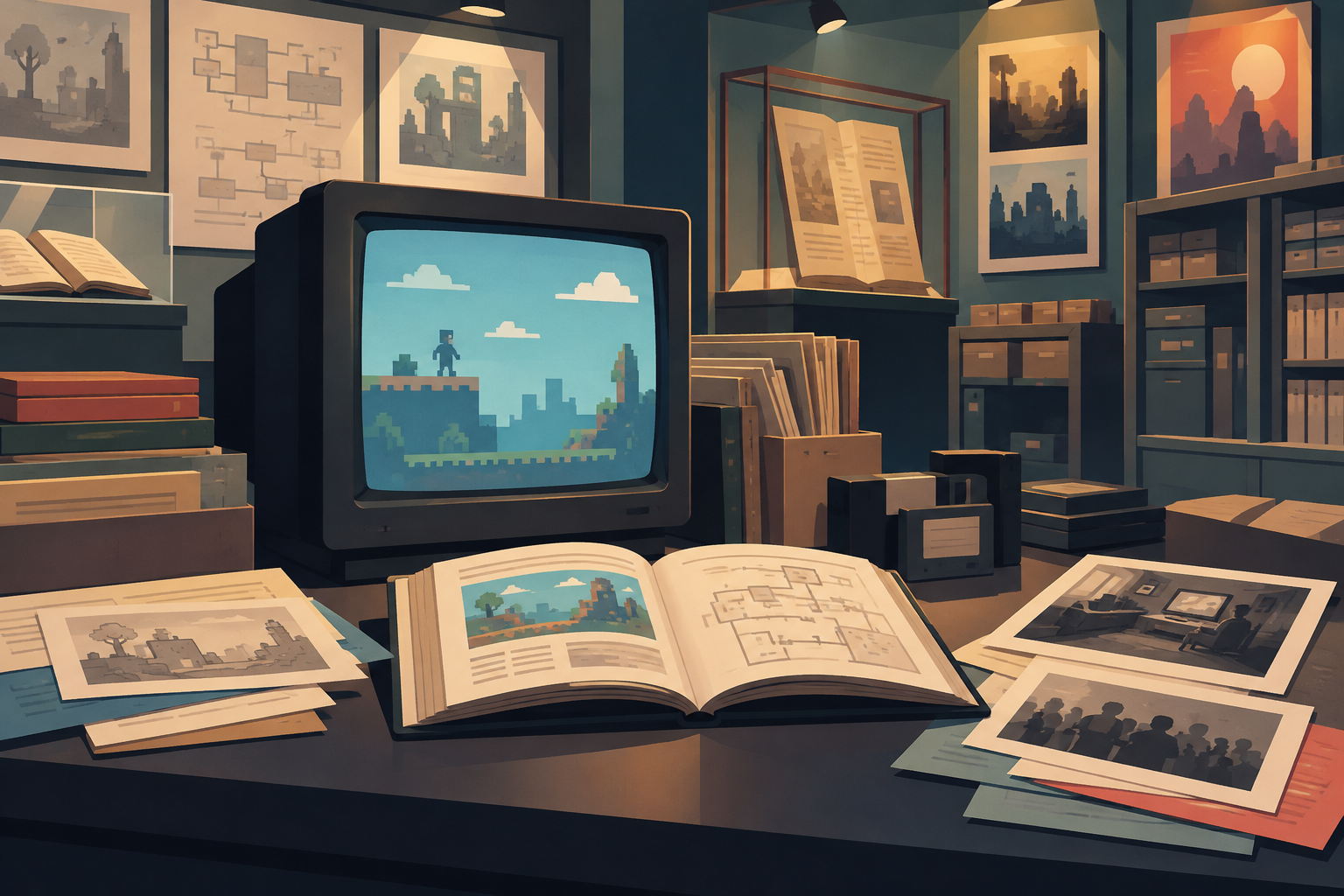
A publication is not read in a vacuum. A RetroPause source observes that a museum or archive can make a publication visible outside its original reading context. This helps distinguish two situations: encountering an object under the circumstances for which it circulated, and encountering it again as a preserved or exhibited document. These are not identical experiences, although both can provide information about comics.
That shift in context should not be mistaken for a change to the original edition. An exhibition may alter what we see today—for example, by isolating a publication or presenting it alongside other materials—without proving that its content or format changed at the time. This distinction matters to publishing history: preservation and display affect present-day reading, but do not replace evidence about production and circulation.
The archive as a tool, not a shortcut
MP Méndez’s study of comic exhibitions is presented as a global history and context. The available summary says exhibitions have existed since the medium’s beginnings, even if they may seem recent. This challenges an overly simple division between popular comics and the museum: exhibiting comics has its own history. Without the full article, however, we cannot reconstruct its cases, dates, or arguments in detail here.
A separate work concerns comic-book cataloguing and catalogues of Spanish historical comics; its title places one such catalogue within the period 1940–2000. This points to another line of inquiry: how a body of work is described and classified. A catalogue can improve access and organize material, but a bibliographic record does not replace examination of the pages or guarantee that the reading conditions of each copy can be reconstructed.
What it would take to establish a change
The central question—what editorial changes altered reading—requires comparable evidence. We would need to identify a work and its editions, verify differences between copies, and describe what changes in sequence, page space, or presentation. We would also need documentation of where and how those editions circulated. None of the supplied sources provides a complete case of this kind, so it would be irresponsible to assign a specific transformation to a particular work.
There is, however, a basis for a framework: distinguish format, edition, and reading context. Here, format refers to a material or publishing category; an edition is a version that must be identified through evidence; and context means the circumstances of circulation, preservation, or display. Keeping these strands separate prevents a visual impression or catalogue entry from becoming an unsupported publishing history.
Read the object and acknowledge the limits
The available bibliographic records show that formats, exhibitions, cataloguing, and historical perspectives are relevant fields of comic-book study. They are not enough to summarize all those works or attribute specific findings to them. They do help guide close reading: examine how the object is organized, ask how it reached its reader, and distinguish what is known from what still needs verification.
Format does not fully explain a comic, but neither is it an irrelevant wrapper. It is one condition to examine alongside the page, the narrative, and circulation. To know exactly what changed in the experience of reading, we need comparable publications and specific documentation. Until then, the soundest approach is to keep the question open and not present as fact what the available sources only allow us to investigate.
- Decade
- Contemporary
- Region
- Global
- Level
- Enthusiast
- Entities
- Museum, Rubén Varillas, Revistas de cómics, fanzines, mini-cómics, álbumes y novelas gráficas
Sources and references
- El cómic, una cuestión de formatos (2): revistas de cómics, fanzines, mini-cómics, álbumes y novelas gráficasdoi.org · 2026-10-07
- Historia y Cómics: una perspectiva francesadoi.org · 2026-10-07
- Cuando la revista de cómic cambia de lugar - RetroPausewww.retropause.com · 2026-10-07
- Las exposiciones de cómics. Historia y contexto globalerevistas.publicaciones.uah.es · 2026-10-07
- Catálogo de la historia de España a través del cómic (1940 ...www.comares.com · 2026-10-07