A vehicle does not tell its whole story
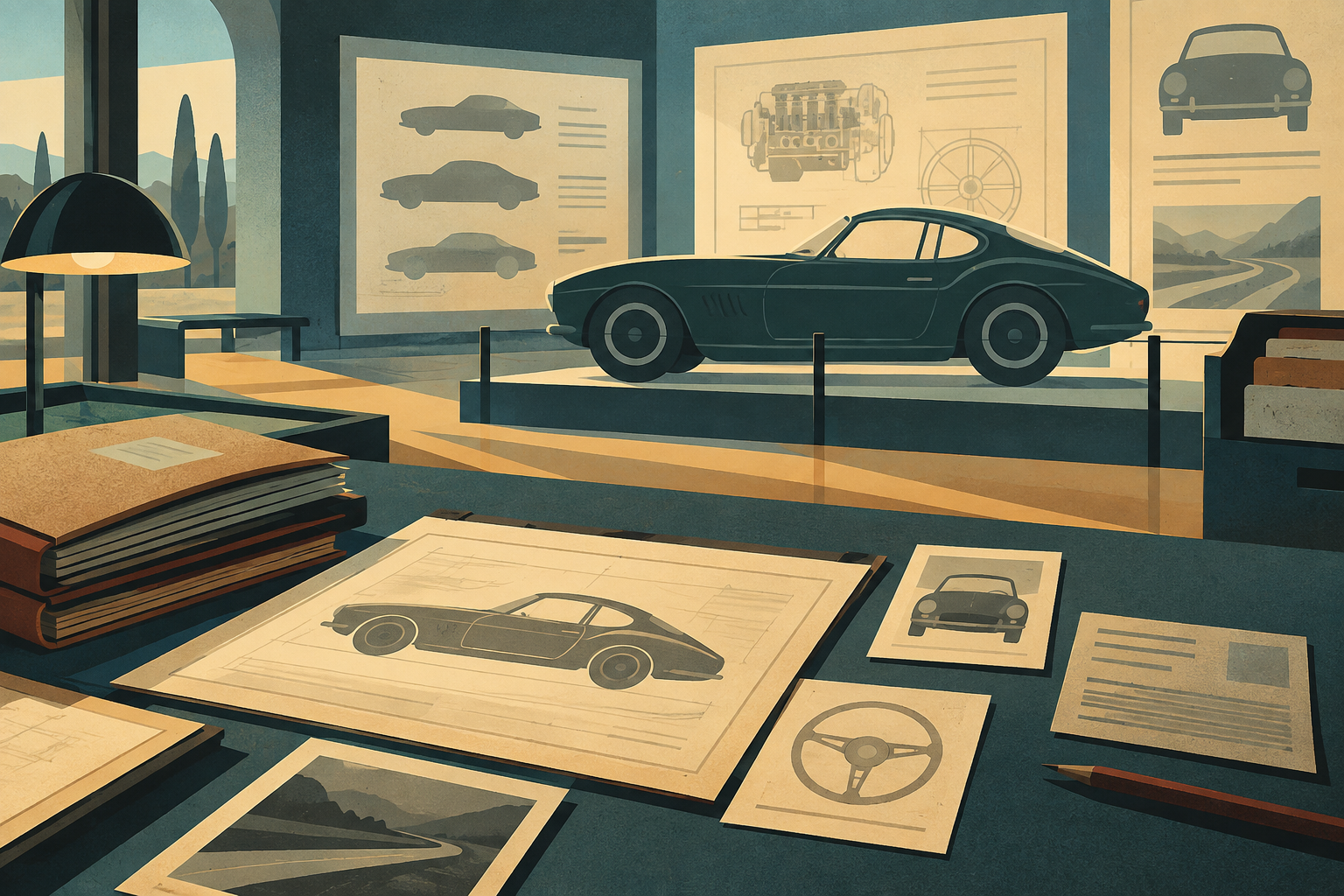
An exhibited car has a material presence: visitors can observe its shape and, depending on the conditions of the visit, look at it from different angles. Appearance alone, however, does not explain its uses, performance or place in history. Those questions require documents—and a careful reading of what those documents actually say.
The available sources on the Museo de Historia de la Automoción de Salamanca (MHAS) point to two complementary resources: an archive and a documentation centre. The archive is described as holding documentary collections; the centre reports a substantial collection of magazines. These are signs of documentary infrastructure, not proof that a particular publication resolves the history of every vehicle.
What archives and publications can contribute
A magazine may preserve descriptions, vocabulary and ways of presenting motoring in its editorial context. An archival collection, in turn, may bring together documents whose provenance and arrangement matter as much as their contents. Without examining particular items, it would be unjustified to attribute technical data, manufacturing dates or accounts of use to them.
The MHAS centre’s published information gives a measure of scale: more than 8,000 magazine issues and nearly 400 titles. That figure suggests that periodicals are a significant resource there. It does not identify the titles, their date coverage or the contents of particular issues. Those details require more specific catalogues or records.
Performance, use and reputation
The useful editorial question is not simply what has been said about a car, but which document supports each claim. A claim about performance needs a source that makes it and context that helps interpret it. Evidence of use may appear in documents other than those presenting technical characteristics. And a repeated reputation does not become verifiable data simply because it appears in a retrospective account.
The references available here cannot reconstruct the specifications of a particular model or compare catalogues. They do support a cautious method: distinguish information stated by a source from later interpretation, and say clearly when the necessary document is missing. That limit is not a failing of the object or the archive; it marks the boundary of what has been published and verified here.
The museum as a place of documentation
An academic article among the sources describes how records management in science and technology museums can organise activities and exhibitions, and connects that work with the transformation of vehicles into heritage. This suggests looking beyond the gallery: documentation is part of how a collection is organised and communicated.
An institutional page introduces the MHAS documentation centre and its magazine holdings. A record in Spain’s Censo-Guía de Archivos also identifies the Fundación Gómez Planche archive in Salamanca and links it to the Archivo MHAS. Each reference contributes a different kind of information. None should be treated as a substitute for detailed inventories, object records or original documents.
Reading with context and limits
An earlier RetroPause article about MAUTO offers an editorial point of comparison: its summary connects the museum’s oldest holdings with Carlo Biscaretti di Ruffia and the start of a collection in 1933. That information concerns another institution and must not be transferred to MHAS. The comparison only reinforces that collection histories are specific and should be attributed to the relevant museum.
The result is a more attentive way to visit. The vehicle remains the visible focus, but documents help us ask where claims about it come from and what context can be reconstructed. For MHAS, the evidence consulted supports discussion of an archive and periodical resources; it does not support detailed accounts of individual models, performance or histories.
What still needs to be consulted
To distinguish verifiable characteristics from inherited reputations, researchers would need identifiable catalogue records, specific magazine issues and documents connected to particular vehicles. Their dates, provenance and relationship to each object would also need to be checked before they were used as evidence.
The conclusion is deliberately limited: archives and documentation centres are part of motoring history because they make contextualisation possible, but the existence of holdings does not, on its own, prove any particular claim about a car. Responsible interpretation starts there—with identified documents, clear attribution and room to acknowledge what remains unknown.
- Decade
- Contemporary
- Region
- Spain
- Level
- Enthusiast
- Entities
- Museum, Museo de Historia de la Automoción de Salamanca, Museo de Historia de la Automoción, Museo de Historia de la Automoción de Salamanca (MHAS)
Sources and references
- archivo de la fundación gómez planche (salamanca, españa)censoarchivos.cultura.gob.es · 2026-10-07
- El archivo en los museos de ciencias y tecnologías | Tábulapublicaciones.acal.es · 2026-10-07
- Cómo leer un museo del automóvil: el MAUTO y ... - RetroPausewww.retropause.com · 2026-10-07
- Centro de documentaciónmuseoautomocion.com · 2026-10-07
- Museo de la Moto y el Coche Clásico - Turismo Ambroz-Cáparraturismoambrozcaparra.es · 2026-10-07