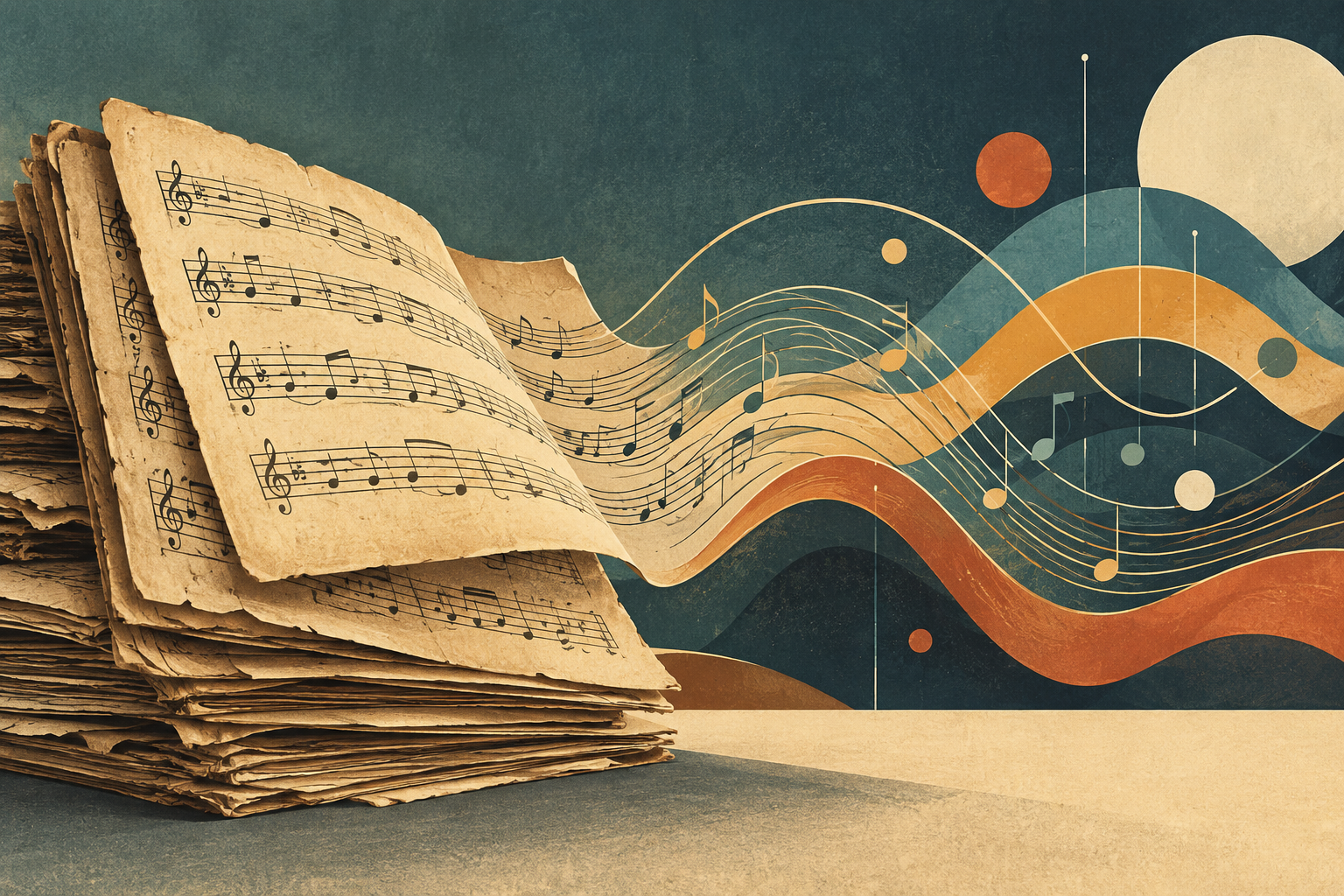
The management of musical archives has moved beyond the mere custody of physical objects to address sound as complex cultural heritage. This transformation involves recognizing that conservation is not limited to the restoration of paper or instruments, but encompasses the documentation of contexts and the accessibility of recordings. The archive ceases to be a static repository to become a dynamic space where the past is heard in the present. This perspective, aligned with contemporary institutional visions, proposes an active reconfiguration of sound memory.
From Custody to Cultural Practice
Traditionally, conservation was understood as the protection of physical supports. However, recent evidence shows a paradigm shift. Initiatives such as those by the Claudio Museum in Chillán, Chile, within the project «Claudio Arrau and Chilean Music», illustrate this evolution. It is not just about maintaining documents, but activating their cultural content. This approach suggests that the value of the archive lies in its ability to generate new interpretations and access, not just in its material integrity.
The Role of Specialized Institutions
Institutions like the National Institute of Musicology «Carlos Vega» in Argentina organize symposia on musical archives that reflect this new orientation. These events are not merely technical; they are spaces for debate on how to manage sound memory. The participation of researchers and cultural managers in these forums indicates that conservation is an intellectual and social process, not just a technical one. It discusses how institutional agendas influence which sounds are preserved and how they are presented to the public.
The Tension Between Authenticity and Agenda
The management of authentic sounds presents complex challenges. Academic studies, such as those published in Latin American Research Review, analyze the «accidented management» of these sounds. It is noted that the folkloric musical archive is born from transnational contexts where intellectual and institutional agendas converge. This implies that authenticity is not a fixed state, but a construction that depends on who manages the archive and with what objectives. The tension between preserving the «purity» of sound and adapting it to current contexts is a central axis of this discussion.
The Distinction Between Work, Edition, and Support
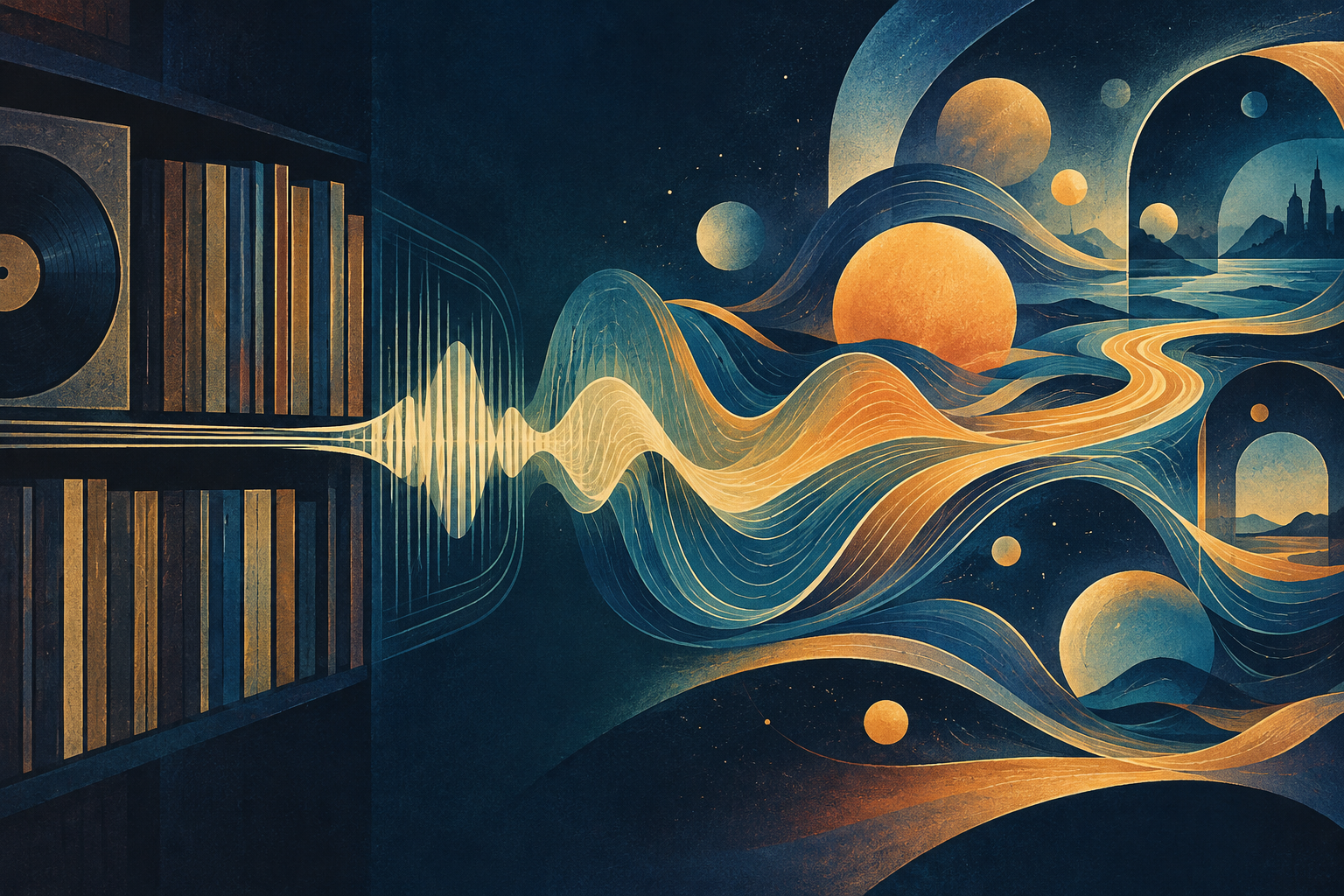
To understand this complexity, it is crucial to distinguish between the musical work, its edition, and the physical support. Technology conditions how we listen to each of these elements. The same sound can have different meanings depending on whether it is accessed through a vinyl record, a magnetic tape, or a digital file. Cultural preservation must address both material objects and the immaterialized practices surrounding listening. This distinction allows us to understand how technology not only stores but transforms the auditory experience.
The Archive as a Moving Space
The vision of the archive as a moving space aligns with proposals from institutions like the Reina Sofía Museum. In its program «Listening to a Country», it invites us to think of the archive not as a retrospective, but as a place where the past is heard in the present. This spatial metaphor suggests that the archive is a living environment, subject to changes and reinterpretations. It is not a museum of inert objects, but a field of forces where memory is constantly activated and renewed.
Limitations and Challenges of Verification
Although this perspective is promising, it presents limitations. The documentation of cultural contexts is subjective and depends on available sources. Not all sounds can be contextualized with the same depth. Furthermore, digital accessibility raises long-term preservation issues, as obsolete digital formats can make archives inaccessible. The verification of sound authenticity in transnational contexts is a continuous and often incomplete process.
Conclusion: An Active Memory
The conservation of musical archives is a continuous process involving museums, researchers, and communities. It is not about freezing the past, but allowing sound memory to be reconfigured in the present. This active cultural practice requires a balance between fidelity to the object and openness to new interpretations. The archive, understood as a moving space, offers a valuable tool for understanding how society listens to and remembers itself through sound.
- Decade
- 1990s
- Region
- Global
- Level
- Enthusiast
- Entities
- Museum, Museo Reina Sofía, Sounds, Argentina, Vinilo
Sources and references
- La valoración de colecciones como herramienta para la ...revistas.javeriana.edu.co · 2026-10-20
- Una aproximación para la conservación de instrumentos ...www.academia.edu · 2026-10-20
- Museo Claudio realizará taller de conservación de ...m.facebook.com · 2026-10-20
- La Conservación de instrumentos musicalesunesdoc.unesco.org · 2026-10-20
- 🥼SIMPOSIO SOBRE ARCHIVOS MUSICALES ● 2026 El ...www.instagram.com · 2026-10-20
- Escuchar un paíswww.museoreinasofia.es · 2026-10-20
- La accidentada gestión de sonidos auténticos: Agendas ...www.cambridge.org · 2026-10-20