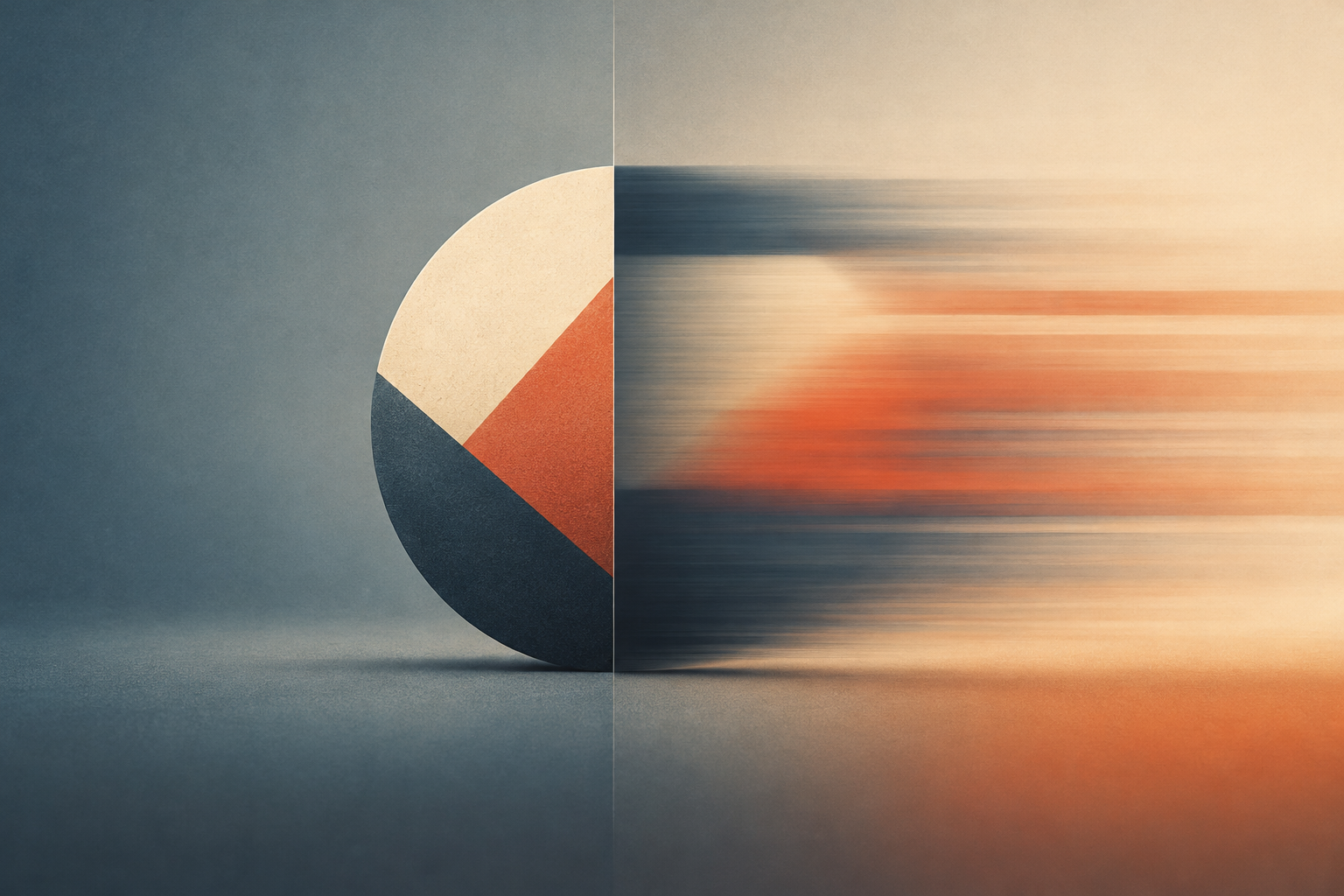
The distinction between photography and video has traditionally been technical, based on support and capture. However, recent studies suggest that the temporal factor and rhythm act as fundamental distinctives in contemporary perception. As digital cameras allow high-resolution video capture, such as the Red Dragon lines announced in 2009, the boundary between the fixed image and the sequence blurs. The article explores how image rhythm conditions its reading, differentiating the photographic pause from the videographic flow. It is not just about hardware, but an epistemological reconfiguration where time becomes the main support of visual narrative. This perspective helps understand why digital platforms prioritize motion, altering the historical hierarchy of photography as a primary document.
The technical evolution of support
Historically, the separation between photo and video depended on the medium's ability to freeze or record time. Photography captured an instant, while video recorded a sequence. With the advent of digitalization, this technical distinction has become less relevant. Modern cameras, such as the 2009 Red Dragon line, allow 6K resolution capture, bringing the quality of the fixed image closer to motion. This technical convergence forces a reconsideration of what truly defines each medium.
Rhythm as a perceptual element
Rhythm is not only a property of video but also of photography. In static images, rhythm is perceived through composition, light, and texture. In video, rhythm manifests in editing and duration. Recent studies indicate that contemporary viewers process both forms through the same temporal filter. Rhythm conditions how we read an image, whether fixed or in motion, creating a unified perceptual experience.
Photographic pause versus videographic flow
Photography is traditionally associated with pause, reflection, and contemplation. Video, on the other hand, is linked to flow, immediacy, and action. However, in the digital era, this dichotomy has blurred. Digital platforms favor motion, but also allow interaction with high-resolution static images. The photographic pause is no longer a state of inactivity, but a moment of intensity within a continuous flow.
Epistemological reconfiguration
The epistemological reconfiguration implies that time becomes the main support of visual narrative. It is no longer the physical support, such as celluloid or paper, that defines the image, but the temporal relationship between the viewer and the content. This perspective changes how we understand photography and video, moving from a technical view to a perceptual experience.
The impact on digital platforms
Digital platforms prioritize motion because it generates higher engagement. Video is easier to consume on mobile devices and in contexts of fragmented attention. However, photography remains relevant as a primary document. The historical hierarchy of photography as a recording medium is altered, but not eliminated. Rhythm and time are now the factors that determine the relevance of each medium.
Limits of verification
It is important to note that, although technology has converged, the perception of rhythm remains subjective. There is no universal formula to measure rhythm in an image. Additionally, the influence of digital platforms varies according to cultural and geographic context. The epistemological reconfiguration described here is based on recent studies, but its practical application is still developing.
Conclusion
Time and rhythm are now the key elements that define the boundary between photo and video. The technical distinction has given way to a unified perceptual experience. Understanding this reconfiguration is essential to comprehend how images are consumed and created in the digital era. Photography and video are no longer separate media, but two sides of the same temporal coin.
- Decade
- 1990s
- Region
- Global
- Level
- Enthusiast
- Entities
- No linked entities
Sources and references
- El factor temporal y el ritmo como distintivo entre fotografía y vídeodoi.org · 2026-10-19
- La génesis del vídeo y su debut innovador en la creación audiovisualopenalex.org · 2026-10-19
- fotografía de Stanley Kubrick como espacio de innovación epistemológicaopenalex.org · 2026-10-19
- Hitos en la fotografía subacuática | Buceotranslate.google.com · 2026-10-19
- 2009es.wikipedia.org · 2026-10-19