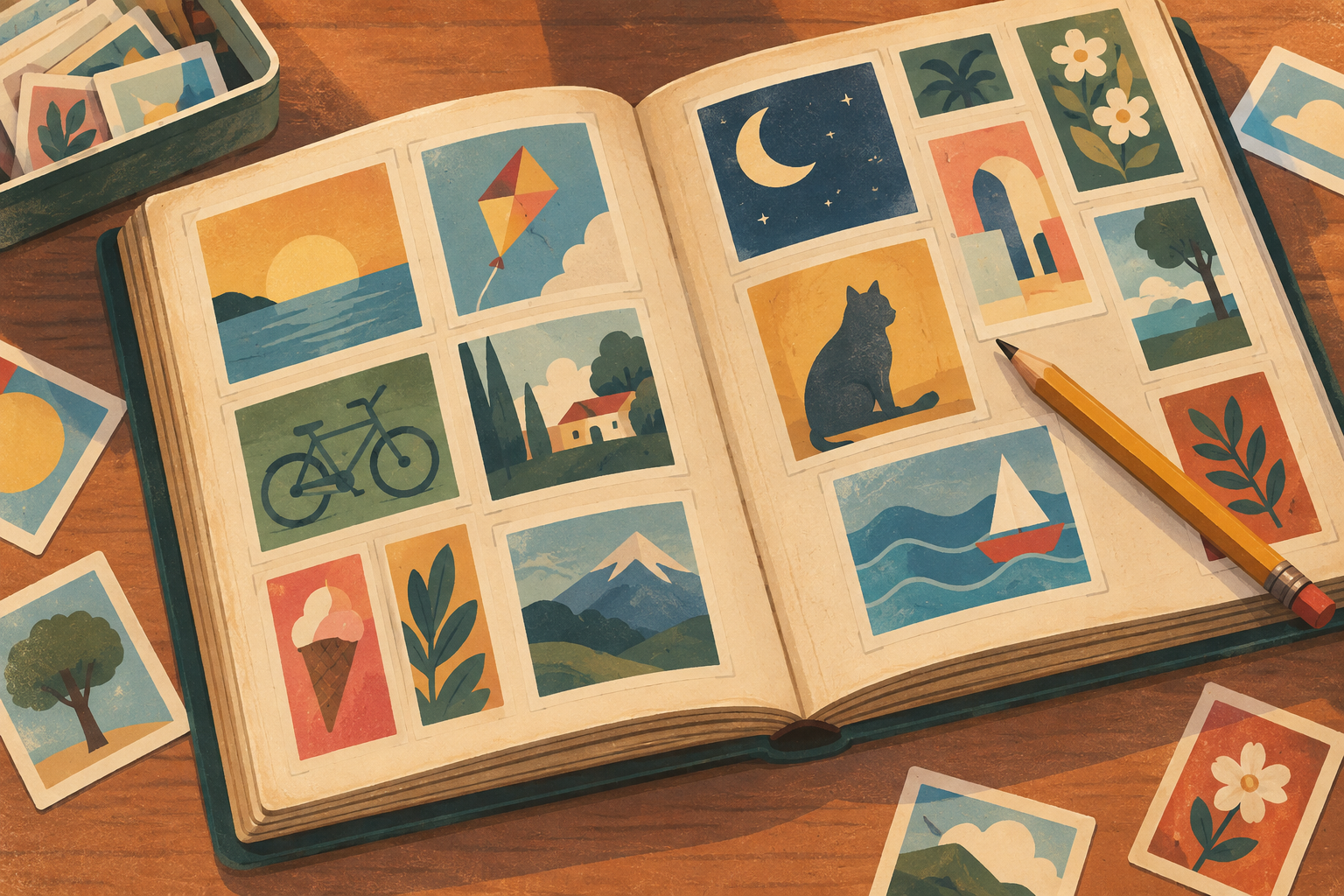
The transformation of a mass-consumption object into an archival document is not an automatic process, but an institutional decision that redefines the object's value. In the case of sticker albums, this transition involves moving from the logic of the individual collector to that of collective heritage. The Sticker Album Museum in Estadilla, for example, has established a framework to exhibit a century of these practices, from 1900 to the present, demonstrating that sticker collecting is a cultural practice with an extensive and documentable chronology. This approach is not limited to exhibition but involves archive management and visual documentation, key aspects for long-term preservation.
From ephemeral to permanent
Archive management in museums has evolved to include objects previously considered ephemeral. The visual documentation of collections, as described in international protocols, focuses on the identification and photographic recording of objects. For a sticker album, this means not only photographing the cover but also recording the condition of the pages, the adhesion of the stickers, and any handwritten notes it may contain. These notes, often overlooked, are an integral part of the document, as they reflect the user's interaction with the object and can provide historical context about the collection period.
Challenges of paper support
Paper, as a support material, presents specific conservation challenges. Paper degradation, color loss in stickers, and the fragility of adhesives are common problems that require specialized interventions. The conservation and restoration of cultural heritage on paper support, as studied in institutions like the Jesuit National Museum, offers techniques applicable to sticker albums. These techniques include controlling humidity, temperature, and light exposure, factors that can accelerate material degradation.
Visibility in collective catalogs
The integration of these objects into collective catalogs, such as CER.es, allows for greater visibility and access to research. Searching for 'sticker album' on this platform reveals examples such as an album from the Zoological Collection dated 1907, contextualized during the reign of Alfonso XIII. This type of record not only identifies the object but places it in a broader cultural and political context, facilitating interdisciplinary research. The connection between the everyday object and the historical context is what turns the album into a valuable document.
The social dimension of collecting
The user experience of the sticker album is also a relevant aspect for its preservation. The act of collecting, exchanging, and completing an album is a social practice that generates shared memories. In a museum context, this social dimension can be highlighted by documenting exchange practices and creating networks of collectors. These networks, although informal, are part of the cultural archive and deserve to be recognized and preserved.
Limits of verification
The limits of verifiability in the conservation of sticker albums are significant. Often, the provenance of objects is uncertain, and pre-museum storage conditions may have caused irreversible damage. Documenting this damage is crucial for understanding the object's history and planning future interventions. Transparency in presenting these limits is essential to maintain the integrity of the archive and public trust.
Conclusion
The sticker album as an archive of childhood is an example of how everyday objects can be revalued as historical documents. The combination of conservation techniques, visual documentation, and historical contextualization allows these objects to transcend their original function and become valuable research sources. The challenge for museums and archives is to maintain this balance between physical preservation and cultural interpretation, ensuring that the material memory of childhood is accessible to future generations.
- Decade
- 1990s
- Region
- Spain
- Level
- Collector
- Entities
- Museum
Sources and references
- Conservación y Restauración del Patrimonio Cultural en soporte Papel - Museo Jesuítico Nacional de Jesús Maríadoi.org · 2026-10-13
- CER.es Colecciones en Red - Ministerio de Culturaceres.mcu.es · 2026-10-13
- Introducción a la Gestión de Archivos en Museosevemuseografia.com · 2026-10-13
- protocolo-documentacion-visual.pdfwww.ibermuseos.org · 2026-10-13
- MACVE. Museo del Álbum de Cromos Villa de Estadillaculturadearagon.es · 2026-10-13
- CER.es Colecciones en Red - Resultados de la búsquedaceres.mcu.es · 2026-10-13