Circulation tells a story too
A comics magazine is not read through drawings and words alone. Where it is encountered, and how it is preserved, can affect access and remembrance. A RetroPause article raises just such a shift between the places from which comics are seen, read and remembered, focusing on Spanish magazines from the 1970s and 1980s. This makes for a productive editorial question. The available summary, however, does not describe particular changes or attribute them to specific titles, editors or decisions.
Format is not an automatic answer
Rubén Varillas’s study, identified in the CuCo record by the title “El cómic, una cuestión de formatos (2),” lists magazines, fanzines, mini-comics, albums and graphic novels among the formats it addresses. That list is a reminder not to treat “comics” as a single medium. It does not, by itself, show that any particular magazine changed format or that its reading experience changed in a specific way. Such claims would require comparison of issues and publishing data.
From point of sale to public memory
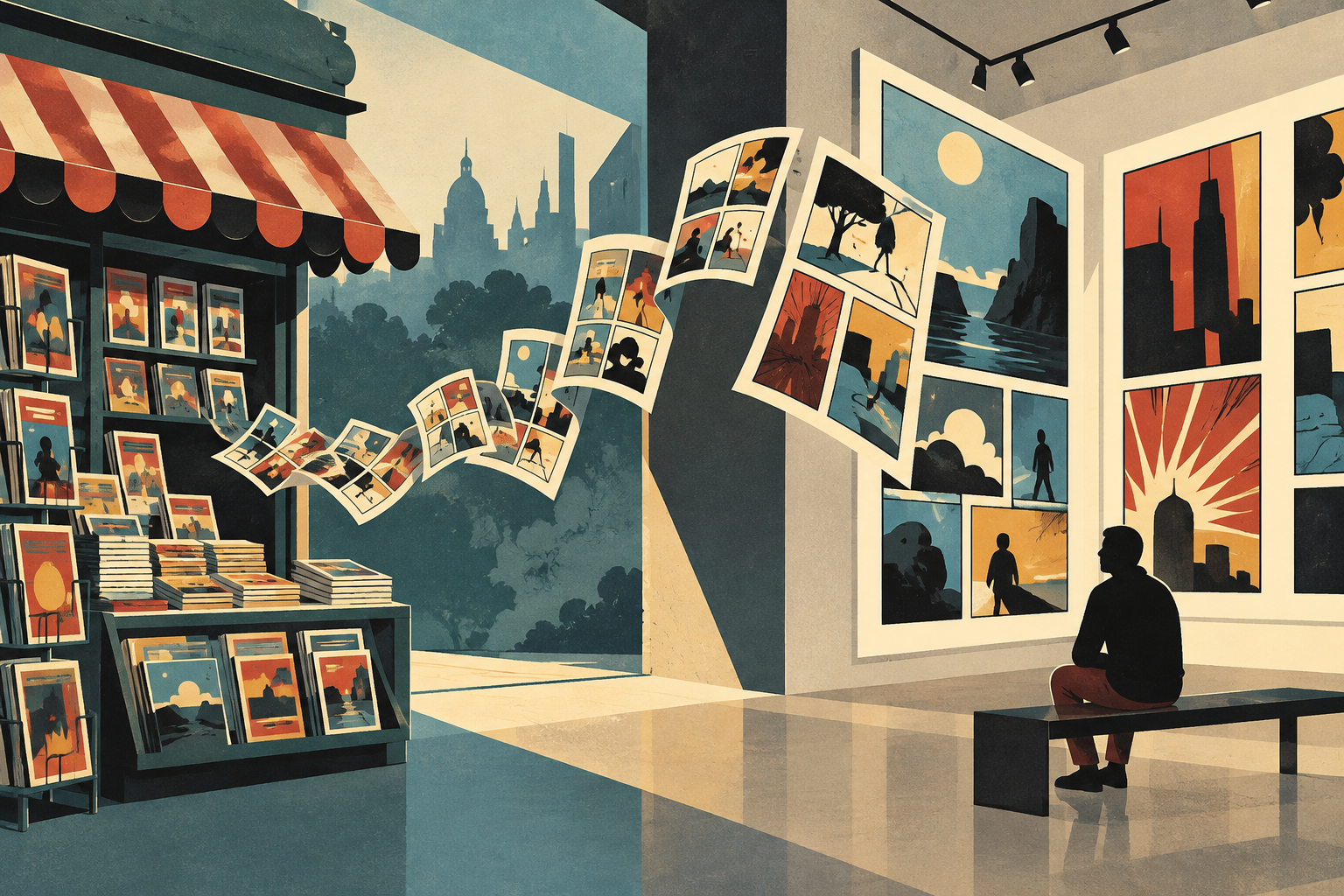
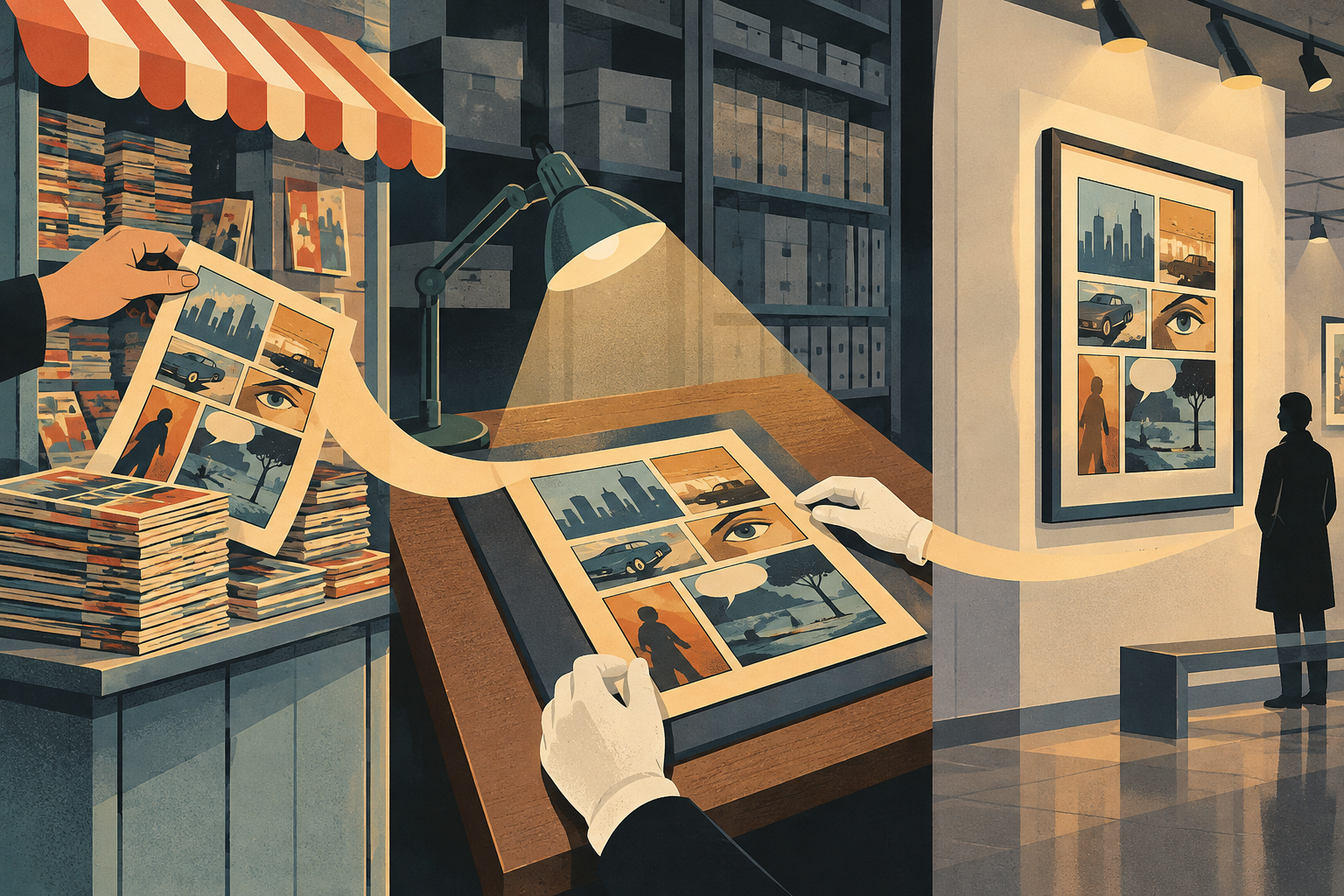
The move from newsstand to museum can frame a question: what changes when a printed work is no longer encountered primarily as reading material, but is remembered or displayed as a cultural object? Here this is an interpretive question, not a chronology established by the supplied sources. The RetroPause material raises the shift as a subject; the provided information does not give institutions, exhibitions, dates or specific issues connected to the Spanish magazines in question.
What can be read on the page
A comics page combines narrative, drawing and design, but a claim about changes in reading needs comparable evidence: identified issues, content order, dimensions, pagination, sections or publishing information. None of these details appears in the available summaries. It would therefore be irresponsible to claim, for example, that a change of format altered the pagination, narrative rhythm or composition of a particular publication. These are questions further research could test, not findings this evidence establishes.
Exhibitions and archives as contexts
The academic reference on the history and global context of comics exhibitions confirms that exhibition history is a subject for study and should not automatically be treated as recent. Casa de Velázquez, meanwhile, describes a graphic itinerary through archives. These references help frame questions about how comics are selected and contextualized, but their summaries do not establish a direct connection to the Spanish magazines of the 1970s and 1980s discussed here. Keeping that distinction clear prevents an analogy from becoming a historical claim.
A hypothesis that needs surviving issues
The safest conclusion is also the most limited: circulation and remembrance provide a way to investigate comics magazines, while the available sources only allow us to formulate the problem. Establishing which editorial changes altered reading would require identified issues and documentation enabling their features to be compared. Until then, “from newsstand to museum” works as a question about access, context and memory—not as proof of a uniform evolution or an already demonstrated editorial transformation.
- Decade
- 1980s
- Region
- Spain
- Level
- Enthusiast
- Entities
- Museum, Rubén Varillas
Sources and references
- El cómic, una cuestión de formatos (2): revistas de cómics, fanzines, mini-cómics, álbumes y novelas gráficasdoi.org · 2026-10-11
- Del quiosco al museo: qué cambió para las revistas de cómic ...www.retropause.com · 2026-10-11
- (PDF) Las exposiciones de cómics. Historia y contexto globalwww.researchgate.net · 2026-10-11
- Revistas de estudios sobre la historietarodin.uca.es · 2026-10-11
- Historia del cómic español, 1875-1939bilbaomuseoa.eus · 2026-10-11