Comics were historically conceived as fast-consumption products, designed to be read and discarded. However, their value has evolved to become a cultural document requiring active conservation. This transformation implies a fundamental shift in perspective: comic collections are no longer treated solely as collectibles, but as artistic heritage demanding new archival practices. In this new paradigm, the physical integrity of paper and inks becomes as important as the narrative content of the work.
From Ephemerality to Preservation
In their origins, comics were designed as ephemeral publications, intended to be read and discarded. Despite this, their cultural relevance has grown to the point where institutions and academics have begun to treat these collections as artistic heritage. This shift in focus implies that conservation is no longer an option, but a necessity to ensure that these works remain accessible for future generations. Active preservation requires a deep understanding of the materials used in printing and a strategy that respects the original nature of the object.
Physical Integrity as a Priority
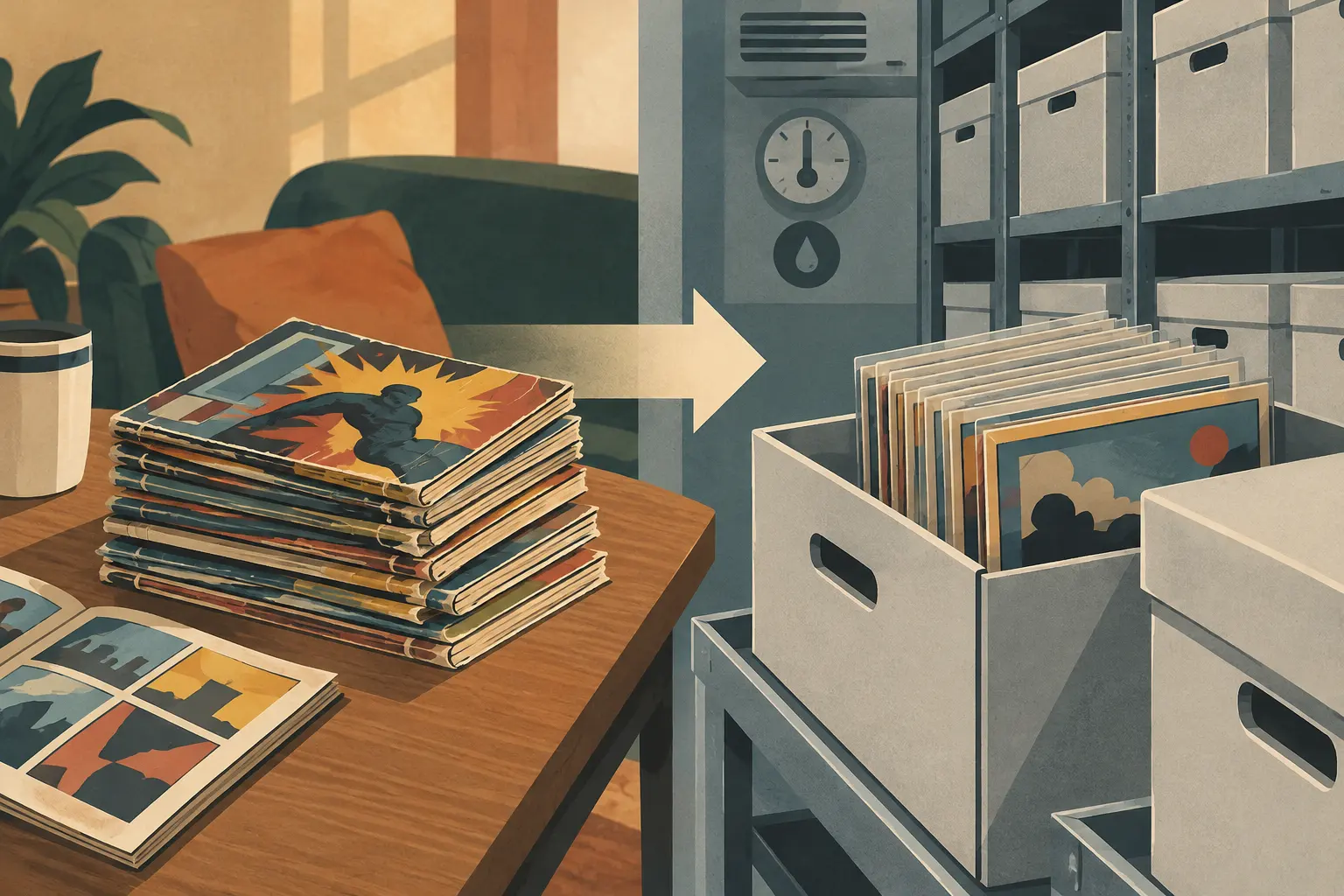
New archival practices for comics focus on the physical integrity of paper and inks. This means that conservation not only protects the narrative content but also the materiality of the work. The transition from newsstand to museum or digital archive represents a technical and conceptual challenge. It requires a deep understanding of the materials used in printing and a preservation strategy that respects the original nature of the object. This process not only protects the work but also allows researchers to access primary sources documenting the history of graphic narrative.
The Role of Exhibitions
Recent exhibitions demonstrate that comics can be studied in their global context, showing how circulation and editing conditions modify the reading of the work. The exhibition of comics is something common since its beginnings, however it may seem recent. These exhibitions allow visitors to understand the importance of conservation and the role of comics as cultural heritage. Additionally, exhibitions serve as a tool to educate the public about the importance of preserving these works.
Technical and Conceptual Challenges
The transition from newsstand to museum or digital archive represents a technical and conceptual challenge. It requires a deep understanding of the materials used in printing and a preservation strategy that respects the original nature of the object. This process not only protects the work but also allows researchers to access primary sources documenting the history of graphic narrative. Comic conservation is therefore a discipline that unites library science, restoration, and art history, ensuring these works remain accessible for future generations.
Conservation as an Interdisciplinary Discipline
Comic conservation is a discipline that unites library science, restoration, and art history. This interdisciplinarity is essential to ensure that these works remain accessible for future generations. Conservation not only protects the work but also allows researchers to access primary sources documenting the history of graphic narrative. This interdisciplinary approach allows for a more complete understanding of the cultural importance of comics.
Future Access as a Goal
The ultimate goal of comic conservation is to ensure that these works remain accessible for future generations. This implies not only the physical preservation of the works but also the creation of access strategies that allow researchers and the general public to enjoy these works. Comic conservation is therefore a discipline that unites library science, restoration, and art history, ensuring these works remain accessible for future generations.
- Decade
- Contemporary
- Region
- Global
- Level
- Enthusiast
- Entities
- Museum
Sources and references
- El cómic, una cuestión de formatos (2): revistas de cómics, fanzines, mini-cómics, álbumes y novelas gráficasdoi.org · 2026-10-22
- Del archivo al lector: el valor de las colecciones de cómiclaregenta.org · 2026-10-22
- (PDF) Las exposiciones de cómics. Historia y contexto globalwww.researchgate.net · 2026-10-22
- Los desafíos del museo en el cómicwww.zubiaurcarreno.com · 2026-10-22
- coleccionismo y conservación del cómic en estados unidos ...riull.ull.es · 2026-10-22