An image does not arrive alone
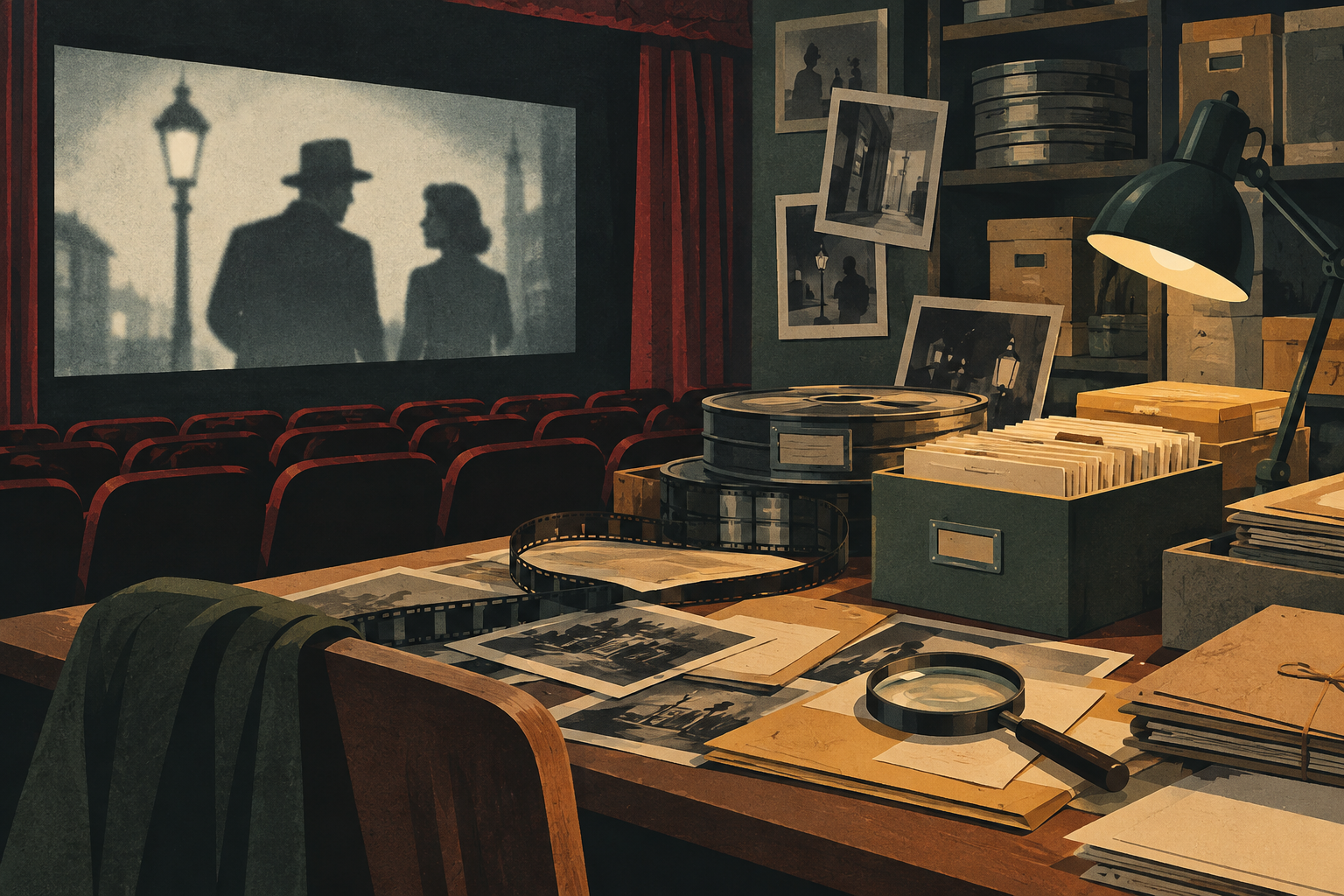
When we look at a photograph, we often begin with its content: who appears, what is happening, where it was taken. But a preserved image also has a material form and a production history. It may exist as a negative, a positive print, a slide or another support; it may also belong to a larger documentary collection. This distinction is not a technical footnote: it changes what we can observe, what information should be recorded and which conclusions are prudent.
Writing on photography as a historical document proposes considering its different technical aspects, including negatives, positives and slides. Work on photographic documentation, in turn, organizes information into identification data, negative data, additional photographic documentation and content description. Taken together, these approaches move the question beyond “What does it depict?” to a fuller one: “What object do we have, how does it relate to other versions, and what do we know about its context?”
The support is part of the document
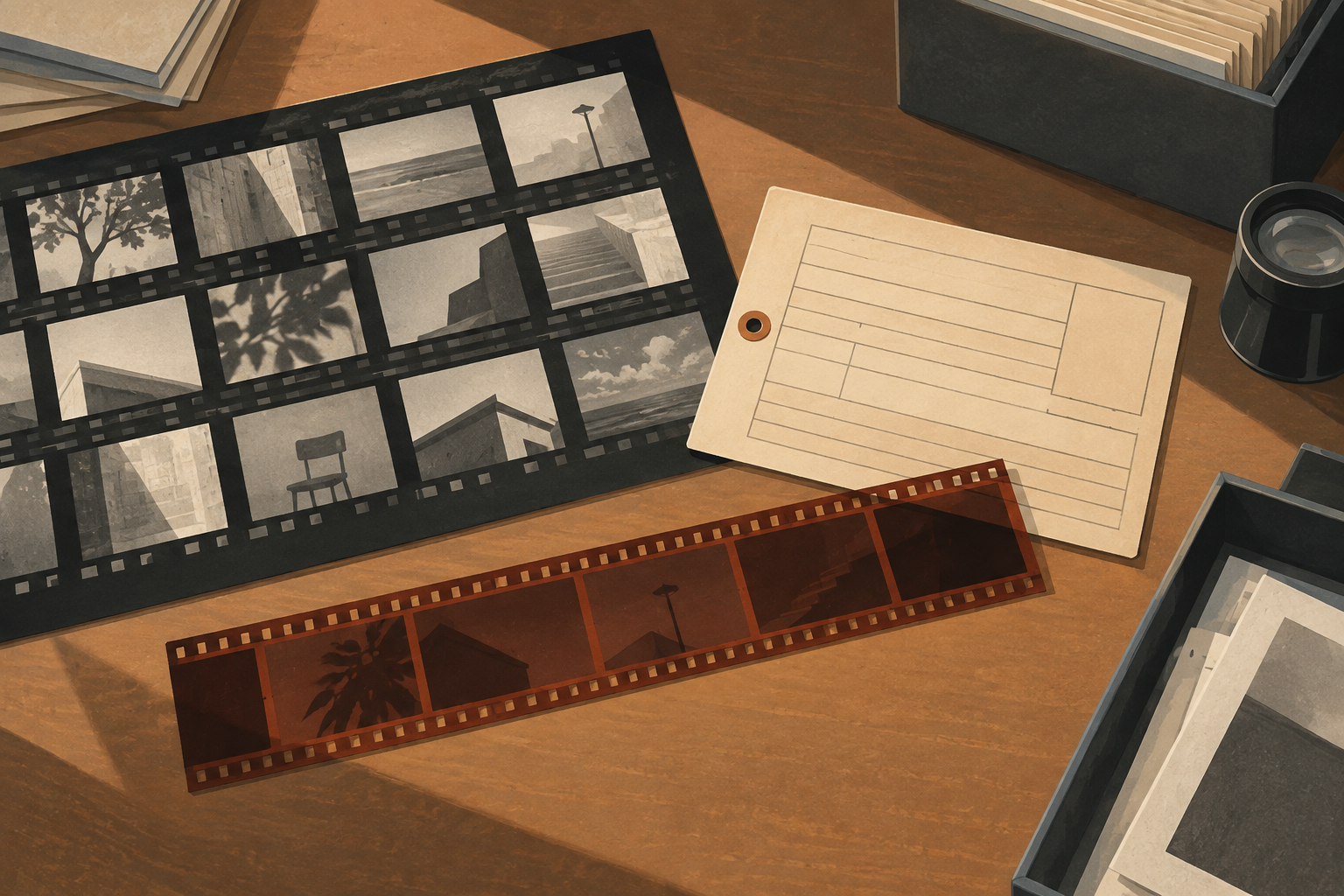
The word “photograph” can refer to a process as well as to its result. Yet an image on film and a print on paper are not the same object, even if they show the same scene. A study of photographic documentary sources includes support—negative or positive, black and white or colour—and format among the elements that can be analysed. These are not interchangeable labels: they identify material characteristics that belong in the record.
Attending to the support helps prevent us from treating an image as a transparent window. A negative is not a miniature positive print, and a print alone cannot tell the whole story of the negative from which it may have been made. A careful description distinguishes direct observation from inference: format and appearance can be observed; a claim that two items are related as original and copy needs supporting documentation.
From exposure to positive print
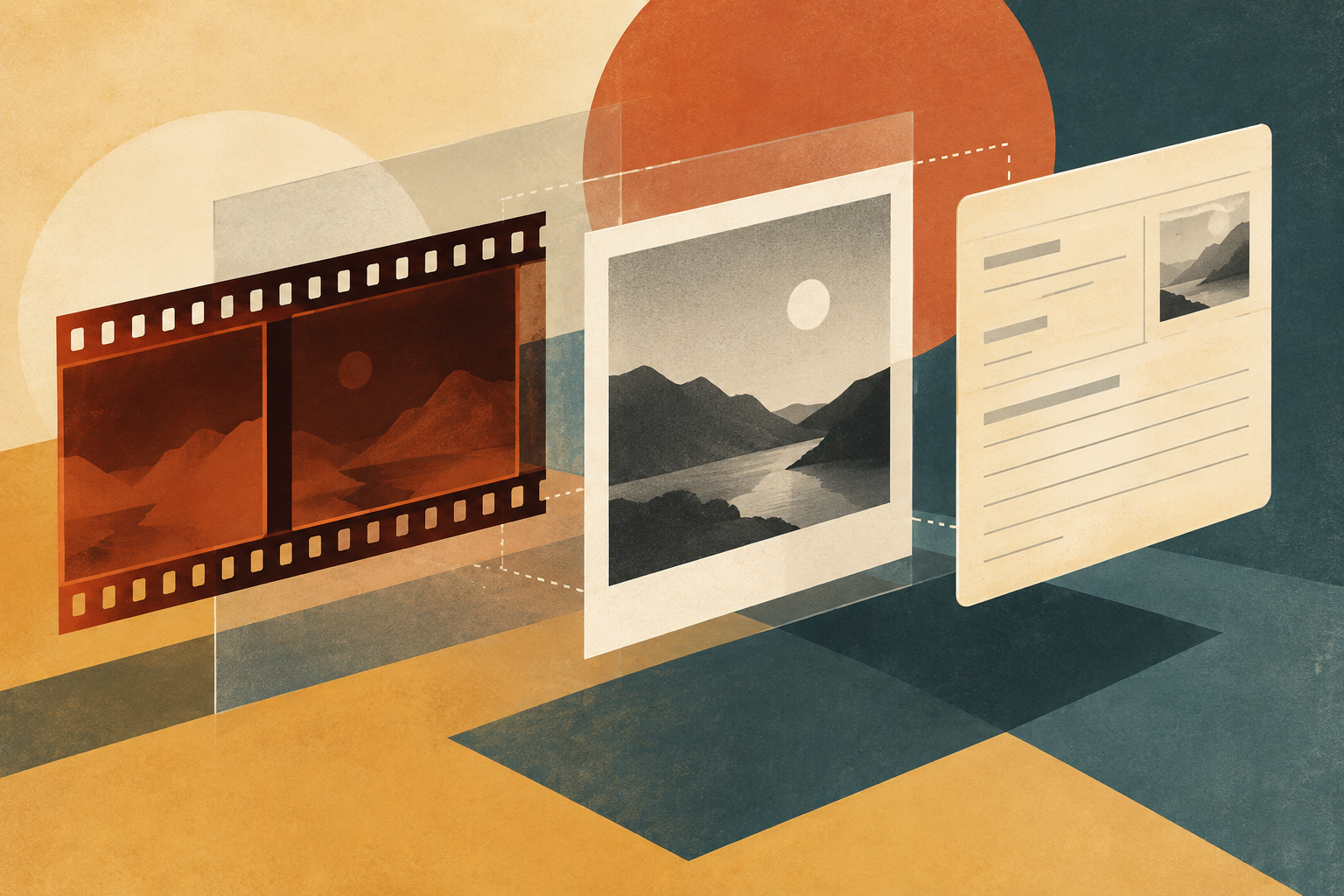
The Museo del Prado exhibition on photography and memory describes a particular sequence for the photographs it discusses: after exposure, the negative was processed and a positive was subsequently made, which the photographer could commercialize. This account helps explain why “the image” can have more than one material manifestation and why a positive print should not be confused with its negative.
The sequence also places photographs in a context of use: besides being objects to look at, positive prints could circulate commercially. But that possibility does not establish the purpose of any particular print. Reconstructing an individual item’s history requires identification data, associated documentation or information about its collection. A general account of a process helps us ask questions; it does not replace evidence about a specific example.
A record is not a caption
The outline described in the article on photographic documentation distinguishes identification, negative data, additional photographic documentation and content description, among other fields. That separation matters in archival and editorial work. A short caption may say what an image appears to show, but it does not necessarily identify the support, explain its relationship to other items or report the documentation that accompanies it.
A structured record keeps those layers apart. “What appears in the image” belongs in the description; “what object is this?” and “how is it related to other items?” need their own fields. The study on international standards also cites the idea that a photograph can have documentary value in any of its technical forms and supports. The practical implication is simple: a description should not erase the difference between a negative, a print and a slide merely to make the account read more smoothly.
From object to context, without leaps
A photograph can acquire documentary value through its relationship to a context, but the image alone does not prove everything attributed to it. Peter Burke notes that photographs are themselves historical: they offer testimony, but they must also be read as objects produced under particular circumstances. This invites questions about who made them, how they were preserved and what documents accompany their interpretation—provided the sources allow those questions to be answered.
Neither the record nor the support automatically resolves those questions. They do help keep levels of certainty distinct. We can record a visible material feature, note information supplied by a source and state what remains unverified. In a group of prints, negatives and documents, relationships between items should be supported by records rather than assumed from similarities in what they depict.
What can be stated, and what remains open
The available sources support several points: documentary photographs can exist in different supports; some described practices follow a sequence of exposure, negative processing and positive production; and specialist documentation distinguishes identification, technical data and content. They do not, by themselves, reconstruct the process behind a particular photograph without examining the object and its records, or establish the photographer’s intention from an isolated image.
That limitation does not make photography less interesting. It makes our account more precise. Looking at the support, describing the process only when it is documented and attending to the record help us understand what kind of object we are seeing. A photograph preserves an image, but how we read it also depends on how it was made, in what form it has reached us and what context can be evidenced. Keeping these layers distinct is a way to preserve both the object and the limits of what we know about it.
- Decade
- 2000s
- Region
- Global
- Level
- Enthusiast
- Entities
- No linked entities
Sources and references
- LA FOTOGRAFÍA COMO DOCUMENTO HISTÓRICOrevistaselectronicas.ujaen.es · 2026-10-01
- La documentación fotográficarevistas.ucm.es · 2026-10-01
- ESTUDIO DE LA NORMATIVA INTERNACIONAL ...riunet.upv.es · 2026-10-01
- El patrimonio fotográfico en la encrucijada digitalestaticoarchivo.carm.es · 2026-10-01
- LAS FUENTES DOCUMENTALES FOTOGRÁFICAS EN LA ...e-archivo.uc3m.es · 2026-10-01
- El Prado multiplicado. La fotografía como memoria ...www.museodelprado.es · 2026-10-01
- 20882163-peter-burke-visto-y-no- ...profesorgerardou.wordpress.com · 2026-10-01