A single sticker may seem like an inconsequential printed scrap; placed in an album, with a number, a position and a history of exchanges, it becomes part of a system. That shift—from loose item to organized set—helps explain why collecting is more than keeping objects. It also involves selecting and relating them, then deciding what information is worth preserving.
The series gives order; swapping creates connections
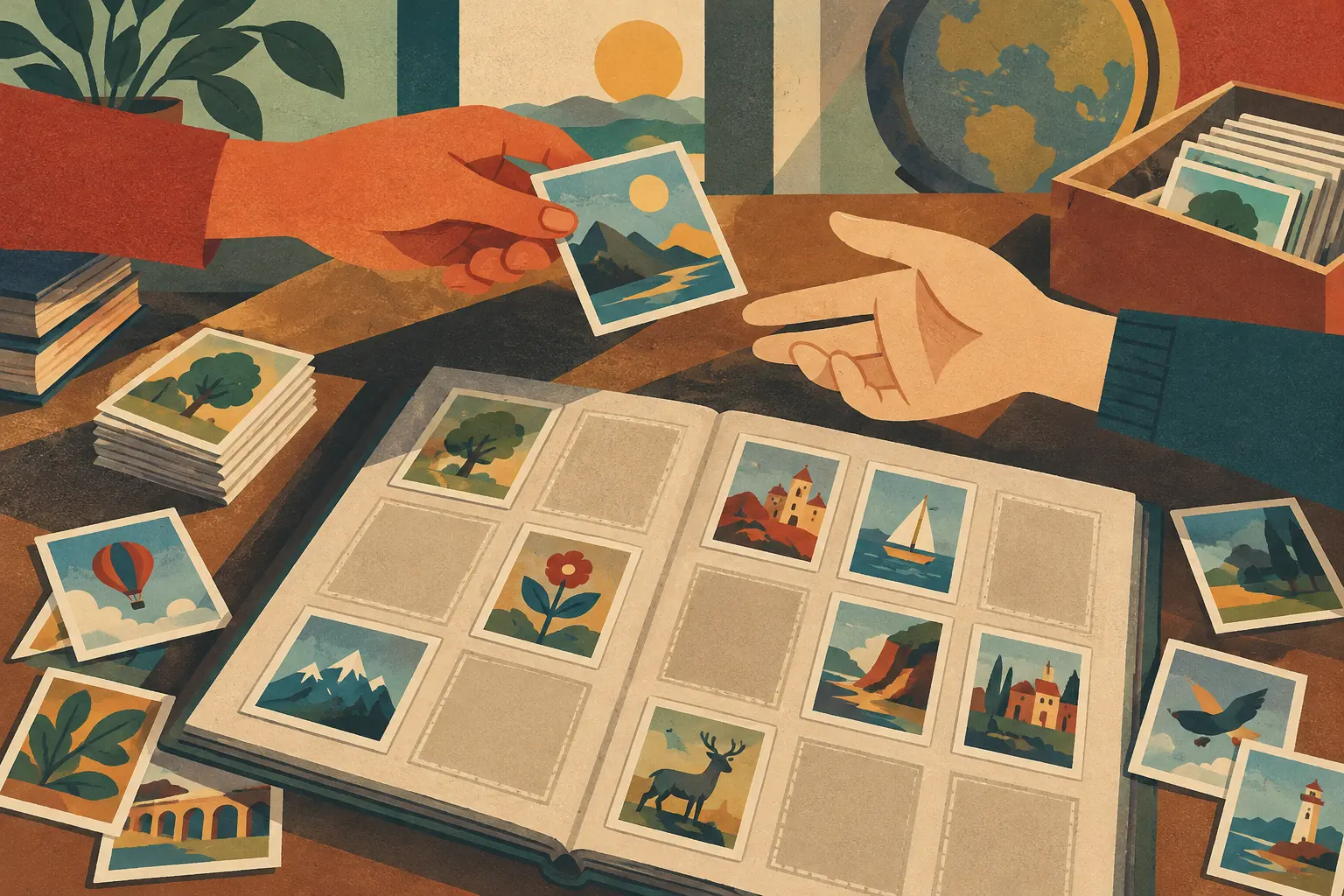
Stickers are produced as parts of a series, but completing that series often depends on circulation among people. A duplicate that one collector does not need may be precisely the item another is missing. Swapping therefore serves both a practical and social purpose: it redistributes items and creates opportunities to share knowledge, experience and advice.
Research on children’s collections and hobbies describes such exchanges as part of communities that may be informal but are sustained by shared rules. Progress depends on agreeing on what counts as a distinct item, how a variant is identified and what it means to complete a set. The printed series proposes an order; collectors interpret it and keep it in circulation.
This process also distinguishes collecting from mere accumulation. Russell Belk defines collecting as the selective acquisition of objects removed from ordinary use and understood as part of a set of nonidentical items. In that framework, a sticker matters not only for the image it reproduces, but also for its relationship to other pieces, its place in a sequence and the reasons someone chooses to keep it.
The album as a material map
An album records a structure: it can show the intended sequence, the empty spaces and the position assigned to each item. Even an incomplete album makes decisions about order and numbering visible. Separating a sticker from that support can erase some of its context; keeping it with the album makes it easier to study how the series was organized and used.
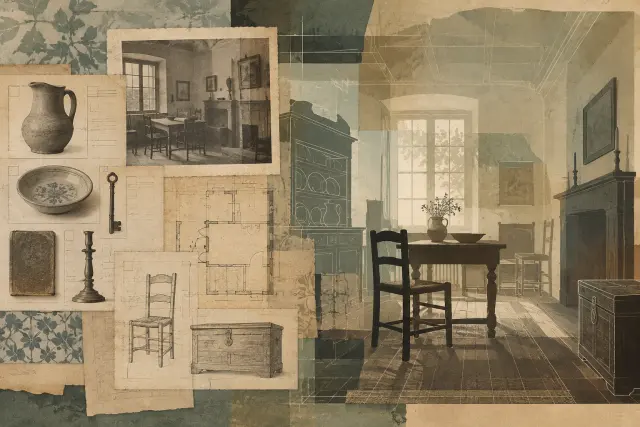
A catalogue extends this reading by describing items and sets according to verifiable criteria. It can record text, design, printing technique and the relationship to an album, and note differences between copies without automatically turning a variant into a commercial rarity. Material description matters because printed objects are not all alike. Museo Soumaya, for example, presents a range of techniques and supports in its graphic collections, from chromolithography and lithography to other prints and printing materials.
Context also includes provenance and known associations between objects. Recording who passed on an item, which album it came from or what other materials were kept with it can make later comparisons possible. Such details do not guarantee a complete history, but they can help explain uses and relationships without confusing a market estimate with a historical conclusion.
From hobby to document
Private and institutional collections have different purposes and methods. Both, however, select objects and place them in a set that can give them a meaning different from the one they had in everyday circulation. Belk observes that collecting can make objects singular by removing them from ordinary use and bringing them into a context valued by the collector.
In an institution, that work can extend to documentation, preservation, research and public access. Museo Soumaya’s description of its holdings illustrates how archives and objects can serve as documents for studying historical contexts, practices and techniques; it also identifies research and digitization as parts of its preservation and dissemination work. This does not mean every sticker will become museum heritage. It means that printed objects can provide information when they are preserved and described alongside the relationships that give them context.
Not every album survives, and not every item enters an archive. Yet a collection’s history can be read at several scales: the printed piece, the series that organizes it, the album that records its positions and the exchange networks through which it circulated. Taken together, these scales show collecting as a cultural practice as well as an activity in which markets may play a part. Price can matter to some enthusiasts, but it cannot replace material identification, documentation or the history of an object’s uses.
- Decade
- 2000s
- Region
- Global
- Level
- Enthusiast
- Entities
- Museum, Mappa, Museo Soumaya
Sources and references
- Desarrollo y conservación del patrimonio cultural-natural en el contexto neoliberal y nuevas tecnologíasdoi.org · 2026-11-04
- Coleccionismo y conservación del cómic en Estados Unidos. Del mercado privado a las bibliotecas /openalex.org · 2026-11-04
- Coleccioneswww.museosoumaya.org · 2026-11-04
- Didáctica-Difusión-Museología-Museografíawww.cultura.gob.es · 2026-11-04
- Coleccionismotranslate.google.com · 2026-11-04