From recording images to circulating them
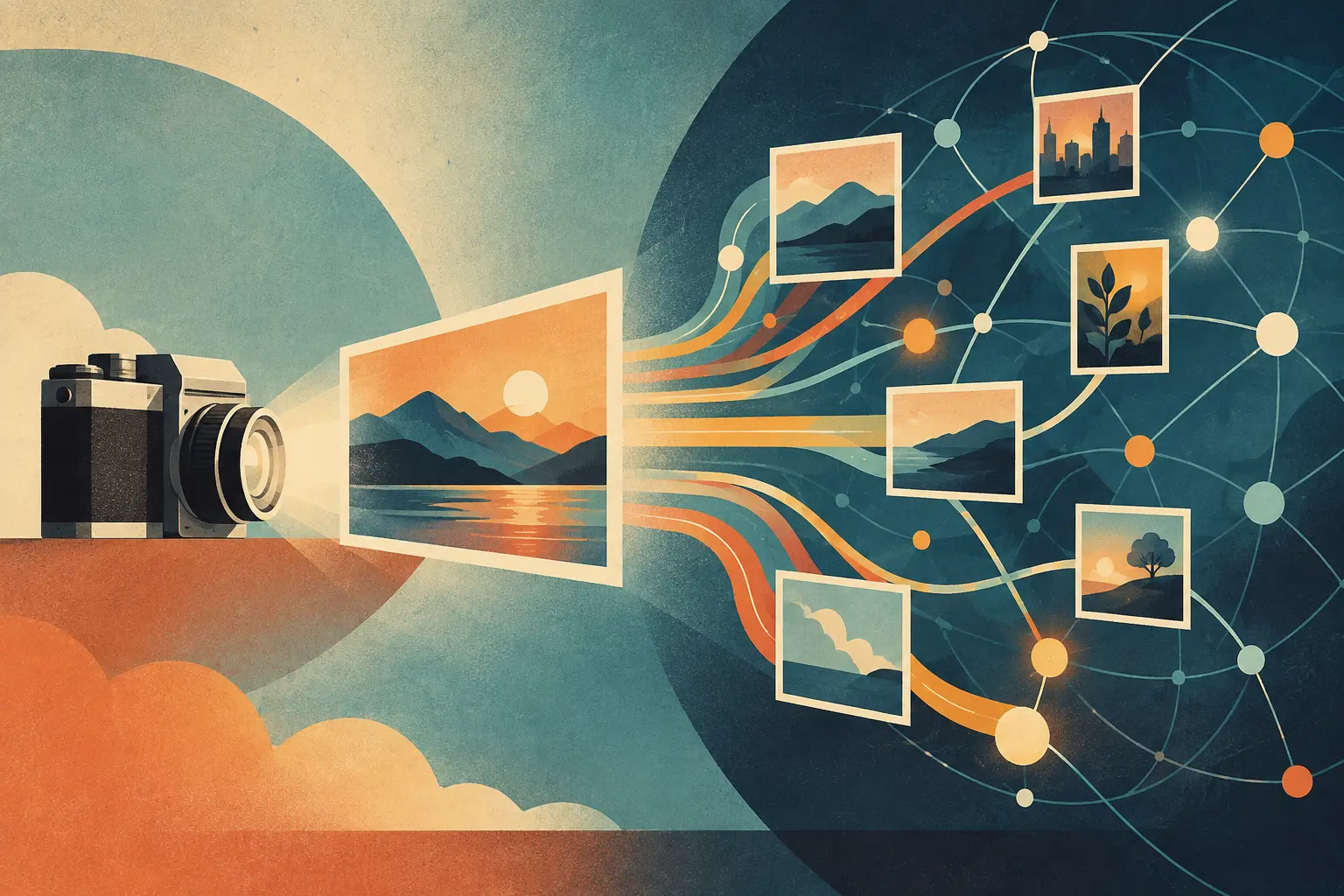
Digital photography transformed both image capture and the social uses of photography. Electronic sensors and digital memory replaced film as the means of recording and storing images; later, internet access and platforms brought the camera closer to everyday communication. Photographs were no longer made only to preserve memories or document scenes. Increasingly, they were also made to be shared and circulated.
The change was gradual. Analogue photography did not disappear with digital capture, and many earlier practices continued. What changed was the setting in which images were made and encountered: reviewing, editing, and distributing a photograph could become parts of one activity, without necessarily requiring a separate process of developing and printing.
From digital camera to connected phone
In digital photography, a sensor records light and the resulting information is stored electronically. This technical shift made new ways of saving and viewing images possible, but its cultural impact became especially visible when mobile phones combined cameras with internet access. Mira Pastor’s historical account follows the development of digital photography through to phones connected to Web 2.0, where image-making became intertwined with publication and circulation.
Taking a photograph could become one part of a sequence: making it, viewing it, altering it, and sharing it. This continuity encouraged exchange and co-production. It did not mean every image became collective or that older practices vanished; rather, the possibility of sharing became easier to incorporate into the act of photographing itself.
The document and its relation to reality
The spread of digital editing brought an old question into sharper focus: what is the relationship between a photograph and what it depicts? Altering images did not begin with digital files, but the ease of editing and distributing photographs made image processing easier to fold into their circulation. The contrast between an allegedly faithful analogue photograph and a necessarily manipulated digital one therefore oversimplifies a more complex issue.
Nekane Parejo Jiménez’s study examines this tension through documentary photography and the work of Pedro Meyer. The transition of Meyer’s images from paper to CD-ROM editions makes it possible to consider how a photographic tradition can be sustained while new ideas of the document are explored. The question is not only whether a photograph has been altered, but how its documentary value is established and what expectations viewers place on it.
Pastor broadens the discussion by considering photography as representation and as an agent that can shape stories, identities, and ways of being present. Images do not merely show the world; the ways they are made and circulated also influence how it is interpreted and shared.
Abundance, participation, and an ecology of images
As images become easier to produce and distribute, they occupy a more constant place in everyday life. Sharing can enable new forms of participation, but it also makes visual abundance harder to ignore: which images circulate, how they are received, and what happens when they move between contexts. Pastor connects the ubiquity of digital photography with the need for an ecology of images—a way of thinking not only about individual photographs, but also about the environment created by their continuous production and circulation.
Technology alone does not explain the change. Sensors and memory alter capture and storage; the connected phone brings the camera into everyday communication; platforms expand the possibilities for sharing and reusing images. The transformation emerges from the interaction of devices, networks, and social practices.
A transformation in photographic use
The history of digital photography is not simply the replacement of film by sensors. It describes a shift toward images that can be made, reviewed, and distributed quickly, in closer connection with everyday communication. This transition created new forms of exchange and expression while keeping debates about documentary photography, authorship, and the meaning of images alive.
Photographic culture did not end with analogue technology; it continued under different technical and social conditions. The connected camera expanded the opportunities for images to circulate, but did not make photography a practice without a past. Its history is best understood by looking at changes in equipment alongside the ways people produce, interpret, and share what they photograph.
- Decade
- 2000s
- Region
- Global
- Level
- Enthusiast
- Entities
- Internet, Fotografía analógica, Fotografía digital, Pedro Meyer
Sources and references
- Raymond Collerua.ua.es · 2026-11-03
- La fotografía digital en perspectiva - ¿En qué podemos ayudarle?dialnet.unirioja.es · 2026-11-03
- De la fotografía documental al documento digitalrepositorio.consejodecomunicacion.gob.ec · 2026-11-03
- COMPENDIUM Revista de investigación Científicarevistas.uclave.org · 2026-11-03
- Fotografíaes.wikipedia.org · 2026-11-03