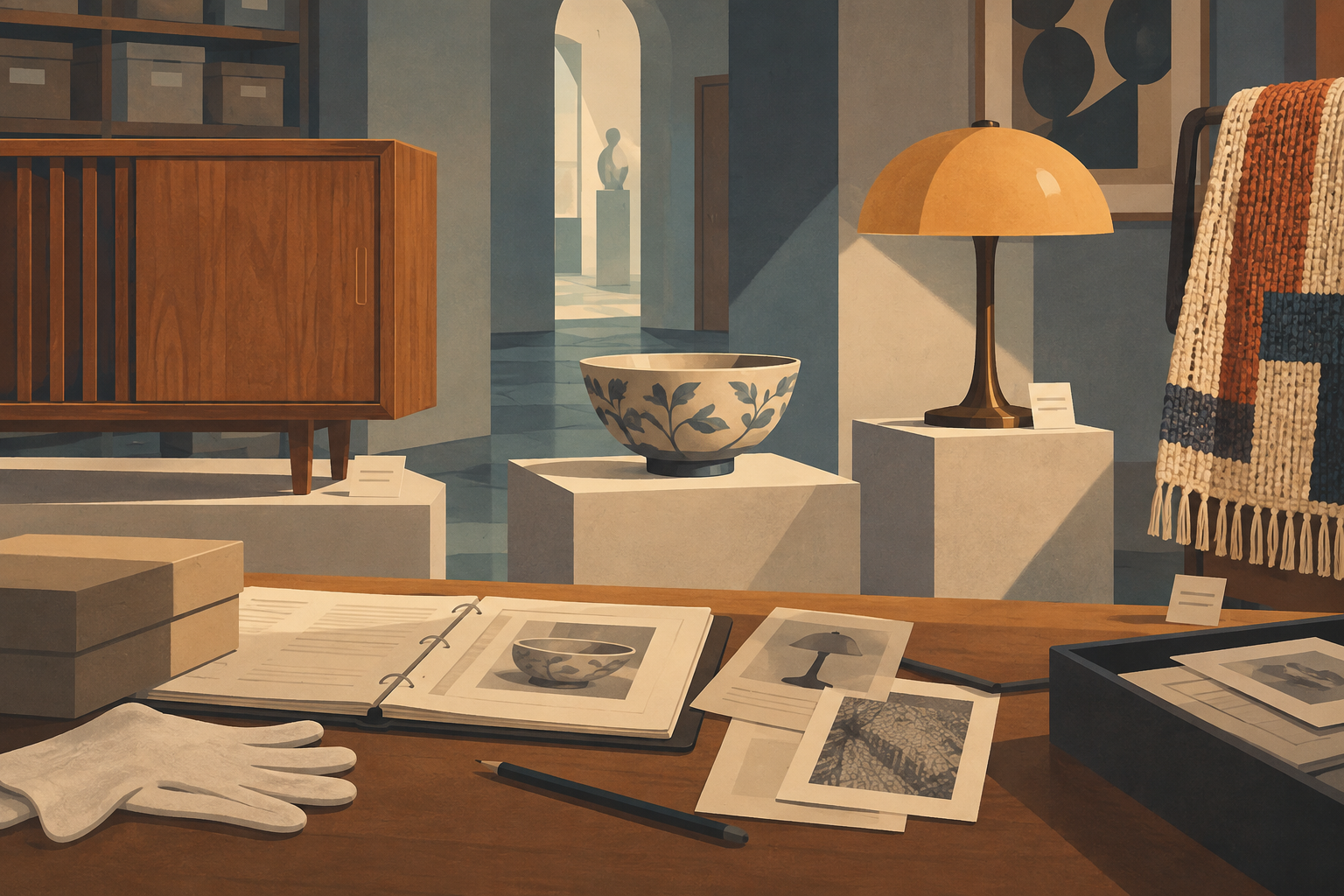
Museum decoration is not merely a matter of colour, furniture or finish. It also affects how a building is navigated, which spaces are made accessible, and what relationship is proposed between collections and visitors. The available records for Madrid’s National Museum of Romanticism and Brazil’s National Historical Museum reveal this practical dimension. They do not, however, provide a complete visual inventory of either interior or justify assigning a particular style to every renovation. The history that can be told is narrower: buildings whose spaces have been adapted at different times to changing museum functions.
A room has more than one history
In a historic institution, the interior seen by visitors may combine layers from different periods. A building may have been constructed for one purpose, later converted into a museum, and subsequently altered to meet needs for conservation, circulation or display. These layers should be distinguished: decorating a room does not necessarily restore it to an earlier state, and architectural rehabilitation alone does not amount to a faithful reconstruction of its historic decoration.
The National Museum of Romanticism record notes work at different times. A 1944 restoration affected the façade, a street-facing wing, the staircase and the decoration of the rooms, as well as corridors and the garden. This confirms that interior decoration formed part of the work, but the record does not describe its colours, materials, motifs or the precise scope of each change. That lack of detail matters: it supports discussion of interior intervention, not an appearance the source does not document.
The building also shapes the visit
The same record says that another phase was completed in 1996, focusing especially on the roof spaces and ground floor. The rehabilitation phase completed in 2009 affected areas of the ground floor, including courtyards and the entrance hall. It also created storage and other support areas and included the museographic project for the permanent exhibition rooms.
These details show that a museographic project can form part of a broader rehabilitation. According to the description, the work was not limited to the appearance of an individual room: service spaces and circulation areas were involved too. It is reasonable to interpret such decisions as affecting the visitor experience, since courtyards, entrance halls and galleries all contribute to a route through the building. But the record does not detail that route or explain which objects, display supports or lighting solutions were introduced. A specific decorative reconstruction would therefore go beyond the evidence.
From “temple” to place of encounter
A museology overview records a question raised in the 1970s: should the museum remain a “temple” or become a “forum”? It contrasts an intimate experience with an artwork with a space open to confrontation, experimentation and public debate. The same text suggests that during the 1980s and 1990s some museums sought to attract audiences through mass media, including computing.
This framing helps us consider decoration as part of a broader discussion about the museum’s purpose, not as proof that a particular institution adopted a specific solution. The National Museum of Romanticism record documents a museographic project completed in 2009, but does not explain how it related to that debate. The connection is interpretive: as expectations of the public change, spaces and ways of presenting collections may also be reconsidered.
A Brazilian comparison, with limits
The Censo-Guía describes how buildings of the former War Arsenal were expanded and decorated with Neo-Colonial features to host an event associated with the creation of Brazil’s National Historical Museum in 1922. It also reports restoration and modernisation works on the architectural complex between 2003 and 2006. Their stated objectives included recovering the original architecture, expanding public areas, improving services and supporting circulation and the route of the museographic narrative.
This offers a useful contrast for the contemporary period, but not a symmetrical comparison with the Madrid museum. The Brazilian source addresses the architectural complex and broad objectives; it does not list specific decorative decisions or explain how the visitor route was resolved. It does, however, show that restoration and modernisation can coexist in one project, and that public circulation may be considered alongside architectural recovery.
What the records cannot establish
The sources collected here describe dates, areas affected and general objectives, but they do not provide comparative plans, dated photographs of each phase, material specifications or testimony from the people who designed the interiors. Nor are they enough to determine which current features are original, which were reinstated, or how the rooms looked before the works. Contemporary images, if used, should be identified as views of the photographed state rather than automatic evidence of a historic arrangement.
Decoration and museography also need to be distinguished. The former can refer to the visual treatment of a space; the latter concerns exhibition design and the organisation of a visit. In the available records, the two are related but not always clearly separated. Maintaining that distinction prevents editorial interpretation from being presented as technical fact.
The interior as part of the story
The documented history supports a modest but meaningful conclusion: museum interiors are not unchanging settings. In Madrid, a record notes interventions to room decoration, successive rehabilitation phases and a museographic project completed in 2009. In Brazil, the available information links restoration and modernisation to recovery of the complex and appropriate museographic circulation. In both cases, spatial organisation belongs to the life of the museum, even if the sources do not allow every visual detail to be reconstructed.
Looking at decoration this way shifts the question from “what style did it have?” to better-supported ones: which spaces were altered, when, for what stated purposes, and what remains undocumented? Such caution does not make the interiors less interesting. It shows why preserving plans, photographs and project records is essential to understanding how a museum presents its collections and how its rooms change along with the institution.
Documentary gallery


- Decade
- 2000s
- Region
- Global
- Level
- Introduction
- Entities
- Museum
Sources and references
- Archivo del Museo Nacional del Romanticismo (Madrid ...censoarchivos.mcu.es · 2026-09-23
- Archivo del Museo Histórico Nacional (Brasil) - Censo-Guíacensoarchivos.mcu.es · 2026-09-23
- Capítulo 1 - El concepto de museo y sus antecedentes históricos - Fco Javier Zubiaur Carreñowww.zubiaurcarreno.com · 2026-09-23
- Historia del Museo - | Ministerio de Culturawww.man.es · 2026-09-23
- Tadao Andō - Urbipedia - Archivo de Arquitecturawww.urbipedia.org · 2026-09-23
- Archivo histórico - | Ministerio de Culturawww.man.es · 2026-09-23