A shift in perspective, not a founding date
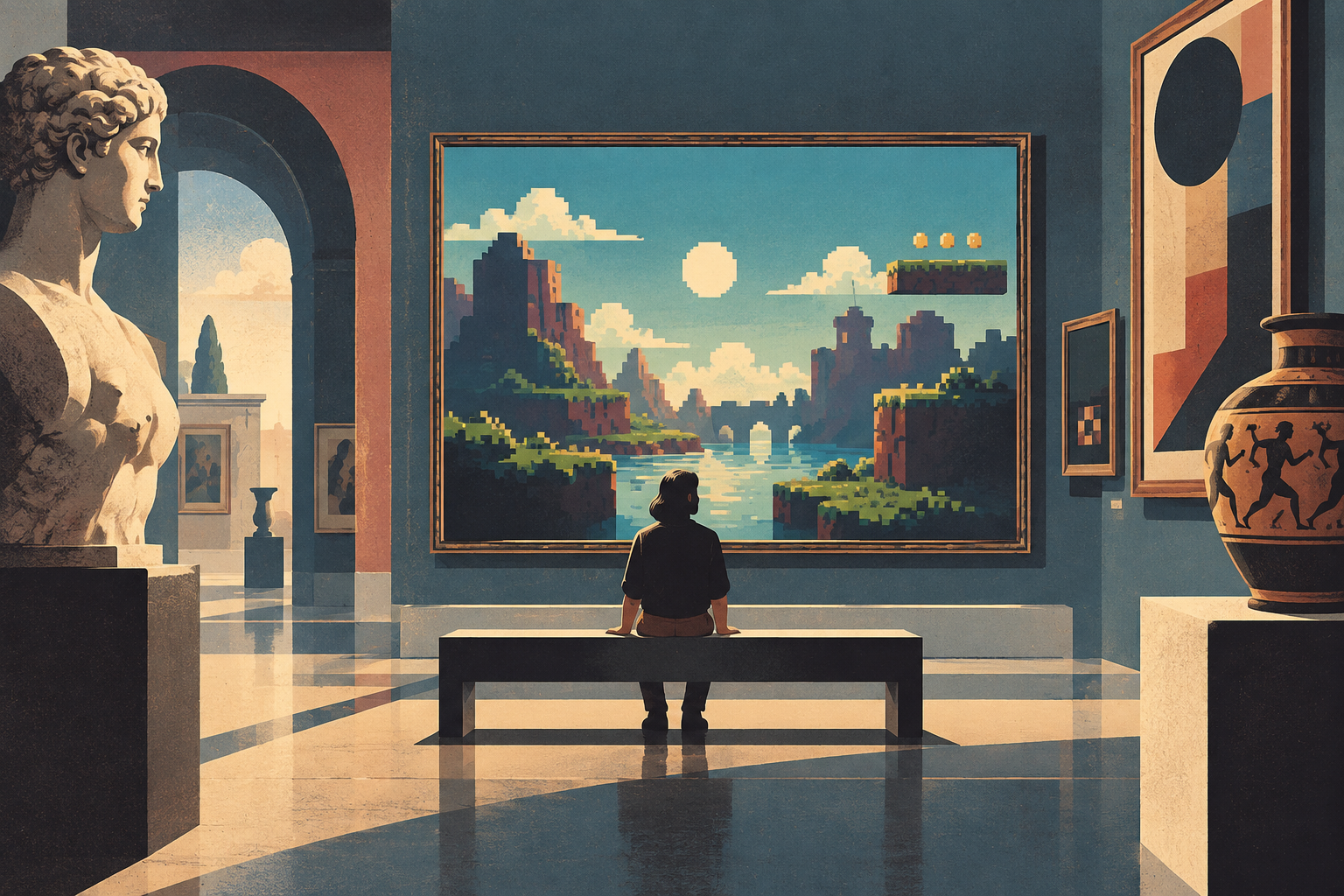
A 2021 academic book chapter presents video games as objects that have moved from everyday life into recognition as contemporary art. That framing offers a useful starting point for thinking about the retro-contemporary: the recent past does not become heritage simply by growing older. The way it is viewed, described and placed within cultural history also changes.
The available source does not identify a specific work or describe a particular exhibition. Its argument should therefore be understood as a broad cultural shift, not as proof that every video game has entered museums or received the same recognition.
The object does not tell the whole story
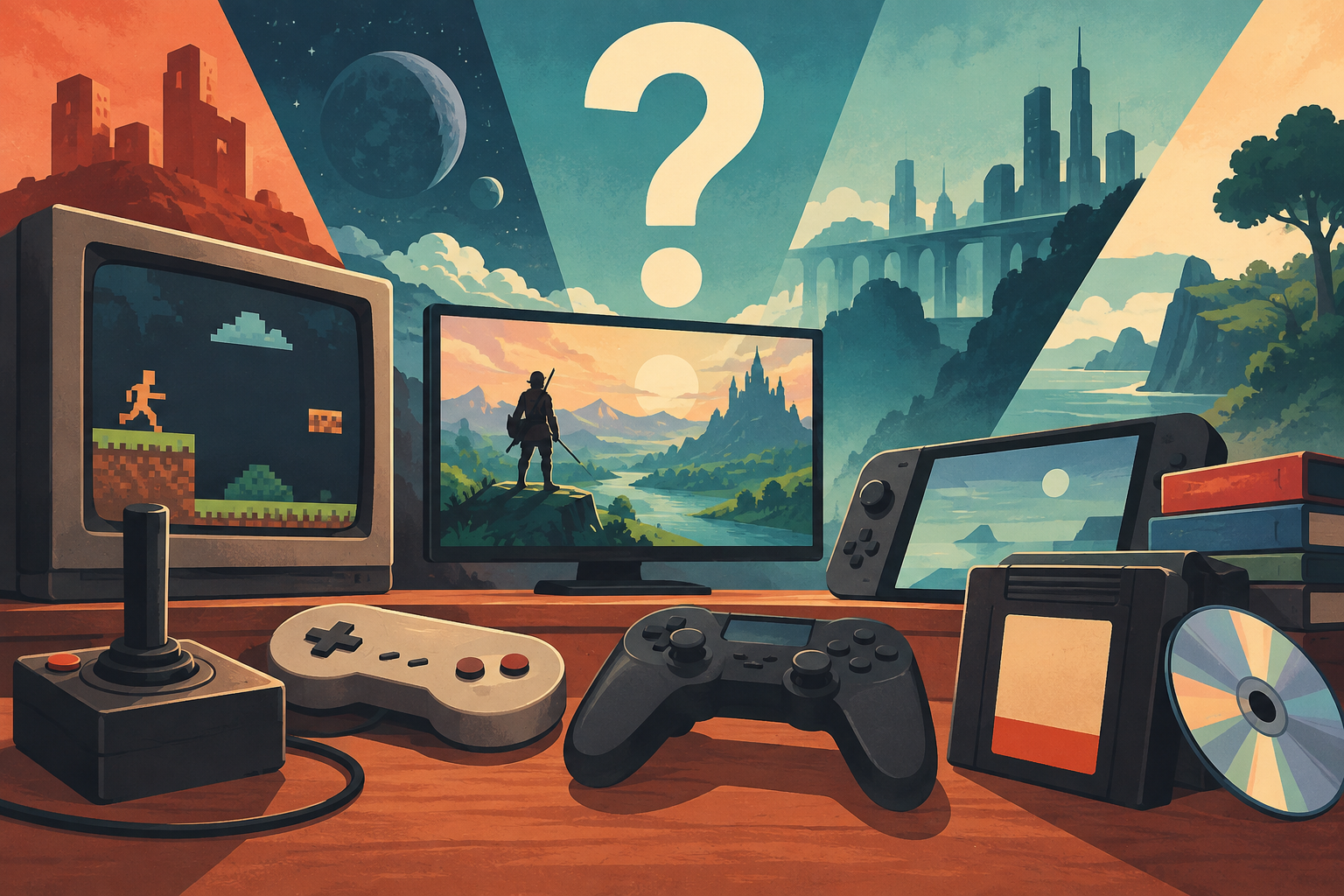
A video game can be understood as an object, but also as an experience involving moving images, sound, rules, programs and devices. This is an interpretation of the medium, not an inventory documented by the cited chapter. It nevertheless helps frame the problem: preserving a physical item, where one exists, does not necessarily preserve the conditions needed to understand it.
Archives of contemporary art show why documentation matters. The MUAC’s Arkheia Documentation Center describes itself as a place for preserving, studying and disseminating archives and material-culture testimony, including paper records, moving images, photography and electronic technologies. The source does not say that Arkheia preserves video games; here it serves as an institutional example of attention to varied documents and media.
Document before interpreting
ICCROM reports on a pilot study of contemporary-art collections in Argentine museums, carried out in 2017 with the participation of Argentina’s Ministry of Culture, and on professional meetings devoted to registration, documentation and conservation. This perspective draws attention to work that is less visible than an exhibition: identifying what is being preserved, recording its condition and gathering information that makes study possible.
For video games, it would be reasonable to ask what is needed to explain a work and what evidence exists about its use or presentation. The supplied sources do not answer those questions for a particular title, however. Nor do they establish a technical method for preserving video games. Keeping that boundary clear prevents an open question from being turned into a prescription.
Institutions leave traces too
A museum does not merely collect objects; it also creates records about collections, activities and decisions. The Reina Sofía Museum’s Central Archive holds administrative and technical documentation, including conservation reports and exhibition files. The National Archaeological Museum’s archive, in turn, describes itself as a written record of the museum’s life and the history of its collections.
These sources do not prove an institutional history of video games. They do illustrate a principle relevant to any heritage narrative: an institution’s documents can help explain how its holdings were organized, studied and communicated. When considering the cultural recognition of a medium, the conditions of that recognition are also worth examining.
What can be said—and what remains open
The 2021 chapter offers a limited thesis: video games have undergone a cultural shift from everyday artifacts to objects legitimized as contemporary art. The supplied institutional sources describe general practices of archival work, documentation and conservation in museums and the arts. They do not show that a particular institution acquired or exhibited a particular game, or provide a complete chronology of this process.
That caution does not make the subject less interesting. It helps us see the recent past as something formed through objects, documents and acts of interpretation. The retro-contemporary perspective begins there: asking what a video game was also means asking what evidence has survived and who can provide its context.
The history of video games as art cannot be settled by a declaration of legitimacy. It requires distinguishing between a broad academic argument, documented conservation practices and individual cases that still need research. That distinction is the beginning of a verifiable history, not an obstacle to telling one.
- Decade
- Contemporary
- Region
- Global
- Level
- Enthusiast
- Entities
- Centro de Documentación Arkheia, Museum, Museo Arqueológico Nacional
Sources and references
- El arte es un juego: El desplazamiento cultural de los videojuegos de artefactos cotidianos a objetos de arte contemporáneo legitimadosopenalex.org · 2026-09-26
- Censo-Guía de Archivos de España e Iberoaméricacensoarchivos.cultura.gob.es · 2026-09-26
- Conservación de Arte Contemporáneo | ICCROMwww.iccrom.org · 2026-09-26
- Archivo histórico - | Ministerio de Culturawww.man.es · 2026-09-26
- Archivo Centralwww.museoreinasofia.es · 2026-09-26
- Conservación - Museo Nacional de Artes Decorativas | Ministerio de Culturawww.cultura.gob.es · 2026-09-26