A video game is not fully explained by an exhibited machine or by the memory of someone who played it. The documentation available for this article brings together initiatives from museums, libraries and archives, alongside an academic article and a public event devoted to preservation. It does not, however, provide detailed case studies of specific games, manuals or identifiable player testimony. That distinction matters: it allows us to discuss the cultural framework of preservation without filling gaps in the record with imagined scenes.
Games as cultural heritage
The event titled “El videojuego un producto cultural a conservar” explicitly places the subject at the intersection of video games, libraries, museums and preservation. Its description names Daniel García Raso, María Jesús Morillo Calero, Santiago Bustamante and Álvaro Vázquez Guisado among those associated with the event. Its title and participants establish that a public discussion framed video games as cultural objects worth preserving; the supplied material does not include a transcript from which to attribute particular arguments to individual speakers.
A 2023 study published in the University of Málaga’s Boletín de Arte examines museums and video games. Its summary notes that cultural institutions have used video games as a way to communicate their collections. This is a useful starting point, but it is not a complete account of every museum project, nor does it demonstrate the results of each one. We should distinguish the general proposition—that video games can take part in cultural communication—from any specific conclusion requiring a full reading of the study.
More than a machine
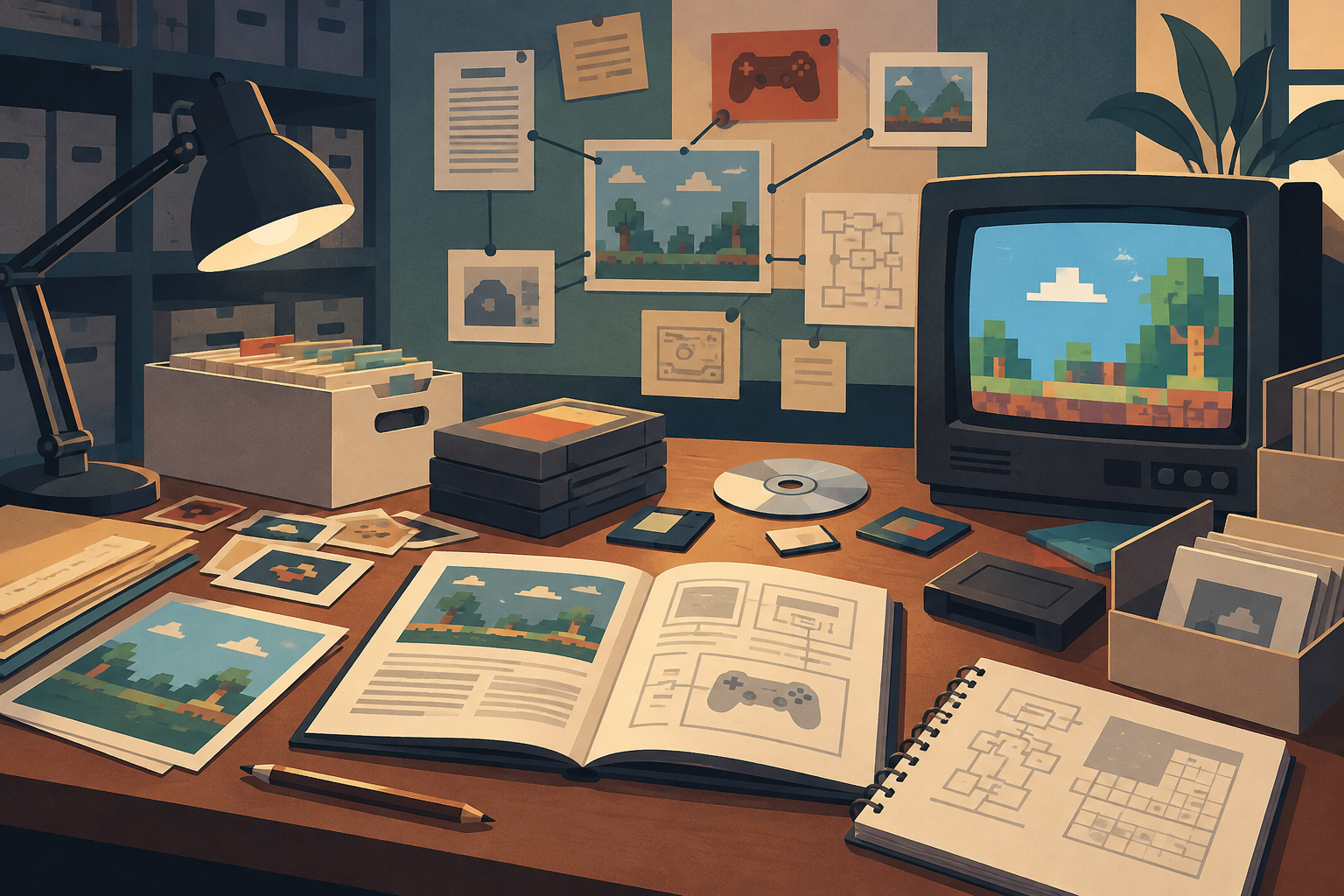
The Museo del Videojuego describes its Digital Archive as a collection of documentation, publications and audiovisual materials related to video game history. That description broadens the field of view: historical research can draw on documents and publications as well as equipment. The available extract does not identify the archive’s individual holdings or conditions of access, so it would be unsound to turn it into an imagined catalogue.
The Museu del Videojoc de Catalunya, MUVIC, describes itself as a cultural and museum project devoted to preserving, studying and sharing video game history through temporary and travelling exhibitions. Its stated mission combines three different activities: preservation, research and public communication. Their appearance together in the project description does not prove that every exhibition contains the same objects or content, nor does it tell us the technical condition of particular items. It does, however, suggest a useful editorial question: what must be preserved so that a work can be studied and communicated, as well as displayed?
Preservation also means context
A machine, a storage medium, a publication and an audiovisual record are not interchangeable. They may offer different kinds of information, but the supplied evidence does not set out a technical protocol explaining how the cited institutions preserve, catalogue or connect them. The careful approach is to describe these as categories appearing in the institutions’ own accounts, rather than assign them undocumented procedures.
Preservation also raises questions of interpretation. If a museum uses a video game to communicate its collections, the work becomes part of a cultural experience; if an archive gathers publications and audiovisual material, those documents may provide context for research. These are reasonable readings of the stated missions, not verified findings about a specific case. To demonstrate how particular documentation changes our understanding of a game, we would need identified examples, dates, provenance and analysis of the materials.
Initiatives are not evidence of every experience
A Microsiervos article presents the Embracer Games Archive as an ambitious initiative devoted to preserving video games’ cultural legacy. The description supports the claim that an initiative was presented with that purpose; the available extract supplies no collection figures, access policies or verifiable outcomes. It cannot therefore measure the scope or effectiveness of preservation as a whole.
Similarly, the ICOM reports on two projects developed in Argentina in which museums created video games based on their heritage. The item supports the observation that a video game can serve as a means of interpreting heritage collections. Its extract does not name the games, describe their mechanics or explain audience responses. Those gaps should not be filled with assumptions.
These limits matter to video game history. The supplied sources do not document differences between versions, the rules of a particular work, the conditions in which a machine was used or the memories of a specific community. Nor are they enough to reconstruct play in an arcade, home or classroom. Such questions require specific evidence—manuals, magazines, institutional records or attributable testimony, for example—but no concrete examples of those materials are included here.
A history built from relationships
The sources support a measured conclusion: different institutions describe preservation, study, communication and archiving as relevant parts of video game history. An initiative alone does not prove that a work has been preserved completely, but these projects show why the medium’s cultural memory cannot be reduced to displaying hardware.
For readers, the result is an invitation to distinguish three questions: what is preserved, what can be studied from what survives, and what experience is being communicated. Keeping them separate prevents an exhibition from being treated as proof of the original experience, or an institutional description from becoming a claim about every game. It also points towards better-documented research, where rules, presentation and playing context can be related without confusing evidence with nostalgia.
- Decade
- Contemporary
- Region
- Global
- Level
- Introduction
- Entities
- Salón recreativo, Museum, Museo del Videojuego
Sources and references
- Museos & videojuegos: dos proyectos desarrollados en ...icom.museum · 2026-10-04
- Jornada "El videojuego un producto cultural a conservar"www.youtube.com · 2026-10-04
- Vista de Museos y videojuegos. La renovación de los ...revistas.uma.es · 2026-10-04
- MUVIC – Museu del Videojoc de Catalunya | Castellanomuvic.cat · 2026-10-04
- La conservación de la historia de los videojuegos en el ...www.microsiervos.com · 2026-10-04
- Descargas - Museo del Videojuegowww.museodelvideojuego.com · 2026-10-04