Television was more than a collection of programmes
A schedule can list programmes and times, but it cannot by itself recover the experience of a channel. Raymond Williams described television as planned flow: programmes, advertisements, trailers and continuity segments formed a sequence whose actual shape did not necessarily match the published schedule. Preserving a single episode, then, is not the same as preserving the broadcast as viewers encountered it.
The distinction matters to the history of the medium. A recording may show a programme’s content; schedules, press listings and transmission records help place it alongside other material and within the timetable that organised domestic viewing. When those links are lost, an archive keeps an item, not the whole television experience.
From live broadcasting to reusable tape
In television’s early years, many broadcasts were live and unrecorded. Videotape changed production: it made it possible to record programmes for later transmission, but also to erase and reuse the tape. The technology made preservation possible without making it obligatory. Elina Adduci Spina’s study notes that much Argentine television material was lost and that broadcasters’ archives chiefly served operational needs, such as reruns or the reuse of excerpts in new productions.
Argentina’s television history shows how absence becomes part of the archive. The first official broadcast, on 17 October 1951, was live and, according to the study, left no known audiovisual record. Decades later, relocations, discards and storage conditions affected collections that had been recorded. The 1984 miniseries Los gringos illustrates why keeping a tape does not guarantee that its contents will remain playable: deterioration made some carriers inaccessible.
Reconstructing a broadcast from fragments
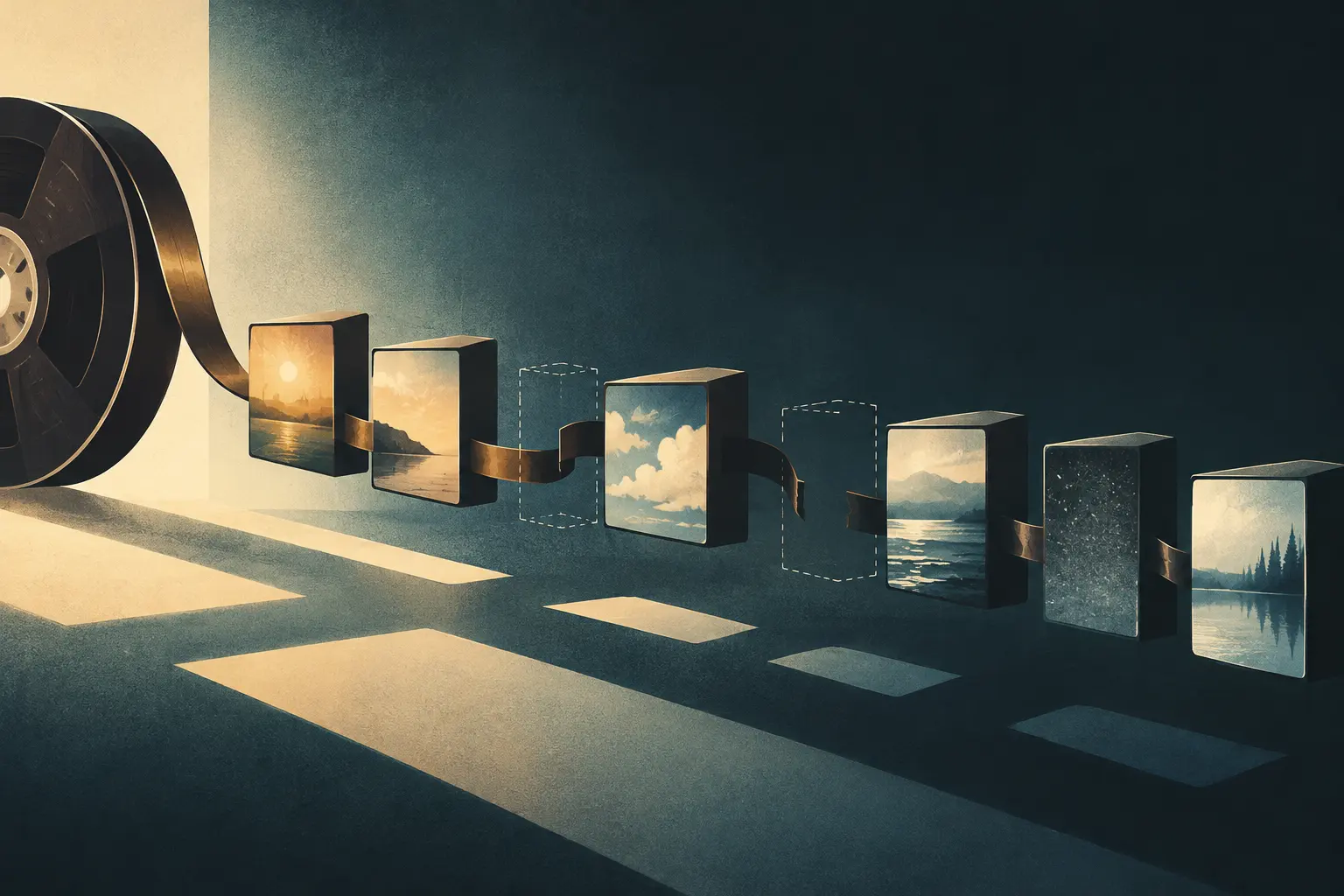
Television archives often separate elements that originally appeared together on screen. A programme may be kept without its advertising breaks; a news item detached from the bulletin in which it appeared; and advertisements or continuity segments catalogued as independent items. This arrangement helps thematic searches but makes it harder to study rhythm, editorial framing and the relationships between segments.
Reconstructing a schedule means bringing different kinds of evidence together. Audiovisual records show what survived; production documents and carrier notes may provide dates, titles and technical details; programme listings and press coverage help situate times and announced broadcasts. No single source necessarily restores the whole flow. The work is to identify what each source documents and connect them without presenting gaps as though they were a complete broadcast.
The official campaigns broadcast by ATC in 1979 show how a fragment can preserve information about its production. On-screen slates and accompanying voice-overs include technical details and references to recording and transmission dates. Detached from their original schedule, these items can also be studied as propaganda and as evidence of production practices at the time.
The archive is also a cultural decision
Preserving television is not neutral. Ideas about what deserves preservation change, and selection determines which images come to represent collective history. Television was long treated as ephemeral or subordinate to markets and politics. Recognising it as heritage means reconsidering popular programmes, advertising and state messages, including material that feels uncomfortable today.
The Historical Archive of Argentine Radio and Television, institutionalised in 2013, makes these tensions visible. Adducci Spina discusses, among other cases, audio recordings of Gente made by Augusto Bonardo and later incorporated into the archive: the words survived, but the television images did not. The case shows that preservation may have followed one criterion—the testimonial value of voices—rather than a commitment to preserving the programme as an audiovisual experience.
In Colombia, the work of Señal Memoria and the RTVC museum broadens the view to the equipment and carriers that made broadcasting possible. Studio cameras, outside-broadcast vehicles, telecine machines and tape formats help explain how public television was produced, transmitted and stored. They do not replace recordings; they are material traces of the technical conditions that shaped what could survive.
From schedules to recording habits
Understanding how recording changed viewing habits requires distinguishing technical possibility from everyday effects. The sources discussed here document changes in production and preservation, but do not by themselves establish how household routines changed. They do point to an important difference: live broadcasting organises reception around a shared timetable, while recording separates the moment of viewing from the moment of transmission. Reconstructing that historical shift requires audience testimony and reception studies considered alongside changes in formats and schedules.
The history of television archives makes one point clear: recording does not automatically mean preservation. Reusable tape made it possible to capture broadcasts and also made erasure easier; surviving collections were shaped by industrial, institutional and domestic decisions. Reading schedules, recordings, technical documents and material traces together brings us closer not only to what appeared on screen, but also to how it was organised, preserved and made accessible.
- Decade
- 2000s
- Region
- Global
- Level
- Enthusiast
- Entities
- Museum, Televisión, Elina Adduci Spina, Argentina
Sources and references
- Desarrollo y conservación del patrimonio cultural-natural en el contexto neoliberal y nuevas tecnologíasdoi.org · 2026-11-10
- Paradojas y desafíos del patrimonio audiovisual televisivo. ...www.scielo.org.ar · 2026-11-10
- Recuerdos en movimiento: Archivo Audiovisual de CMEFMwww.casamuseoeduardofrei.cl · 2026-11-10
- Tecnologías de la memoria: el museo y el archivo de RTVCwww.senalmemoria.co · 2026-11-10
- Patrimonio culturales.wikipedia.org · 2026-11-10