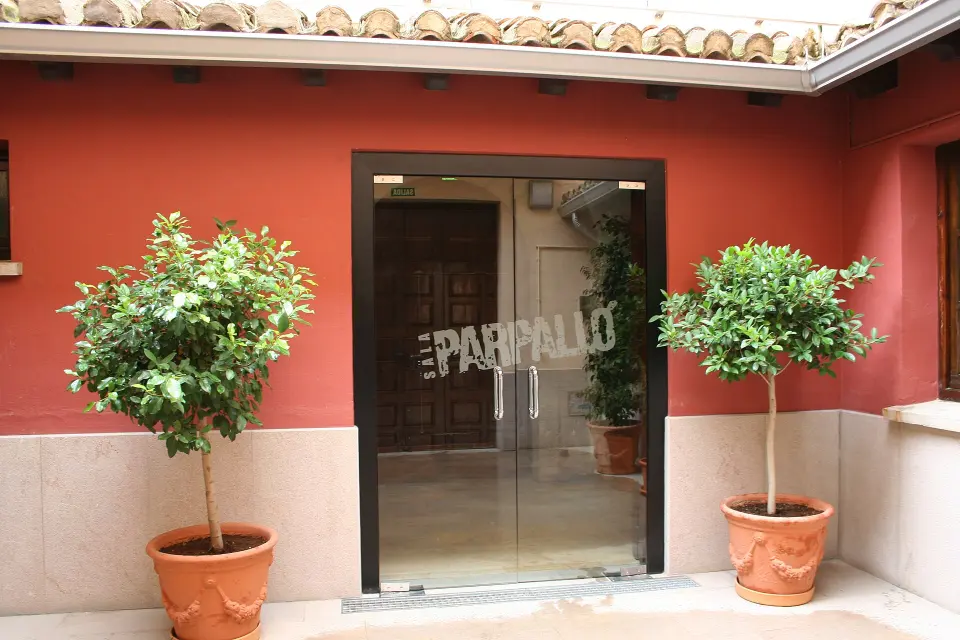
The title of an academic article identifies Sala Parpalló and its contribution to photography in Valencia between 1980 and 1995.
Selected excerpts from our archive offer more context on this subject. Each reading links to the original article and its sources.
An Image Cannot Explain How It Was Made
Another academic record addresses the Sala Parpalló’s contribution to photography in Valencia from 1980 to 1995. Its title identifies a specific institutional, geographical and temporal frame. Without consulting the full text, we cannot detail exhibitions, artists, decisions or effects; we can observe that photographic research may focus on particular spaces and their documented contribution. This local or institutional scale complements, rather than replaces, a wider history.
Rhythm and Support: Redefining the Still Image Against Analog Video
In Spain, the Sala Parpalló in Valencia became a key space for the contribution to photography in the transition to digital between 1980 and 1995. This space did not only exhibit works but facilitated dialogue between traditional photography and new technologies. The Sala Parpalló was a laboratory where how photography could dialogue with video and other audiovisual media was explored, blurring the boundaries between both. The contribution of this space was crucial for understanding photography not as an isolated medium, but as part of a broader visual ecosystem. The transition in Valencia was not just an adoption of new tools, but a reconfiguration of photographic practice in response to the presence of video.
It is important to note that the available evidence, while solid, has limitations. The cited academic studies, such as the Mosaic article on the temporal factor and rhythm, offer a theoretical perspective but do not always translate into a complete understanding of the artistic practice of the time. Additionally, documentation of video experimentation in Latin America and Europe is scarcer than that of US street photography, which may generate a biased view of the transition. The Sala Parpalló, while an important case study, does not represent the entirety of the Spanish photographic scene. Therefore, it is necessary to interpret these findings with caution, recognizing the gaps in documentation and the diversity of artistic practices of the time.
KEY FACTS
- Type
- Place
- Country or region
- Spain