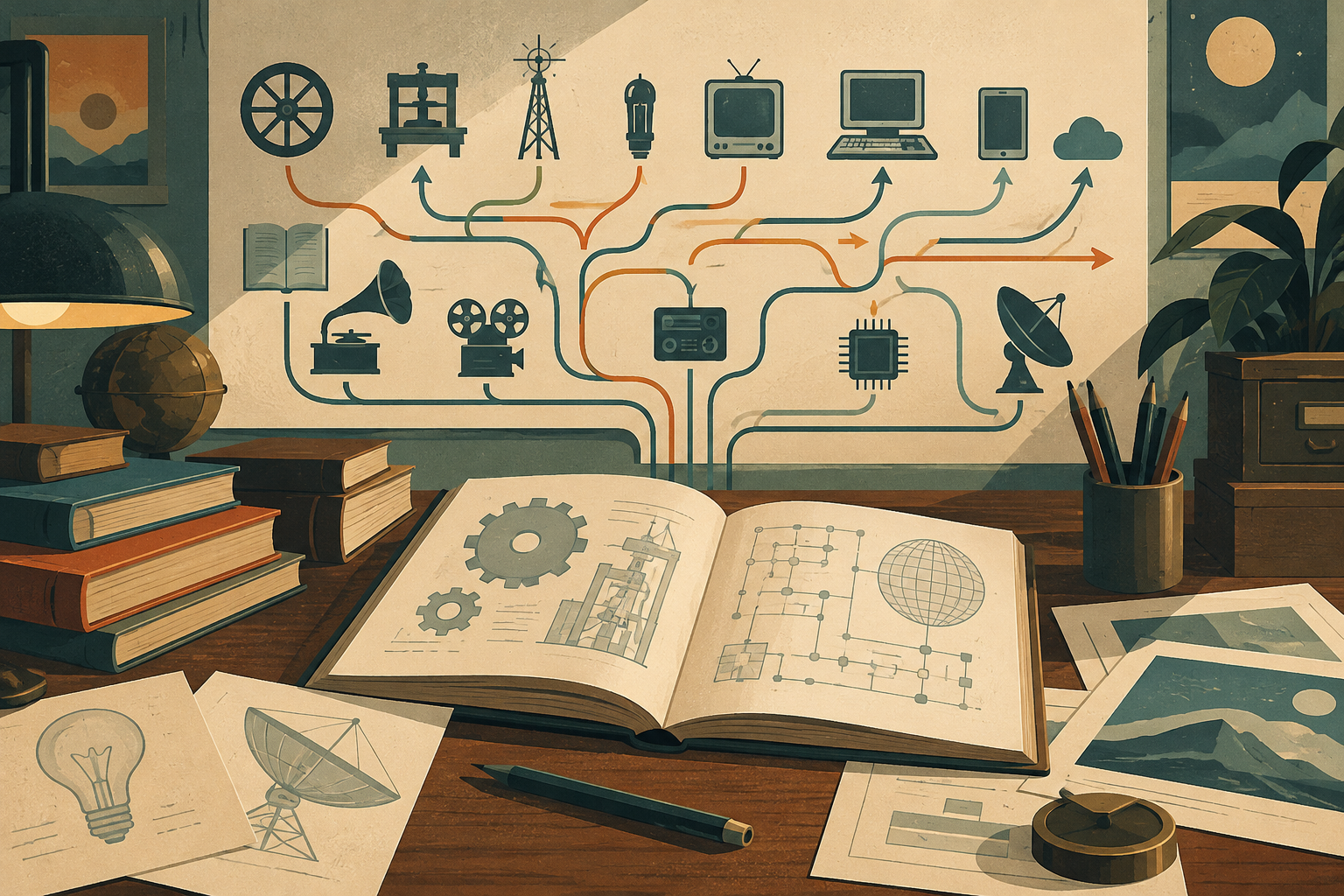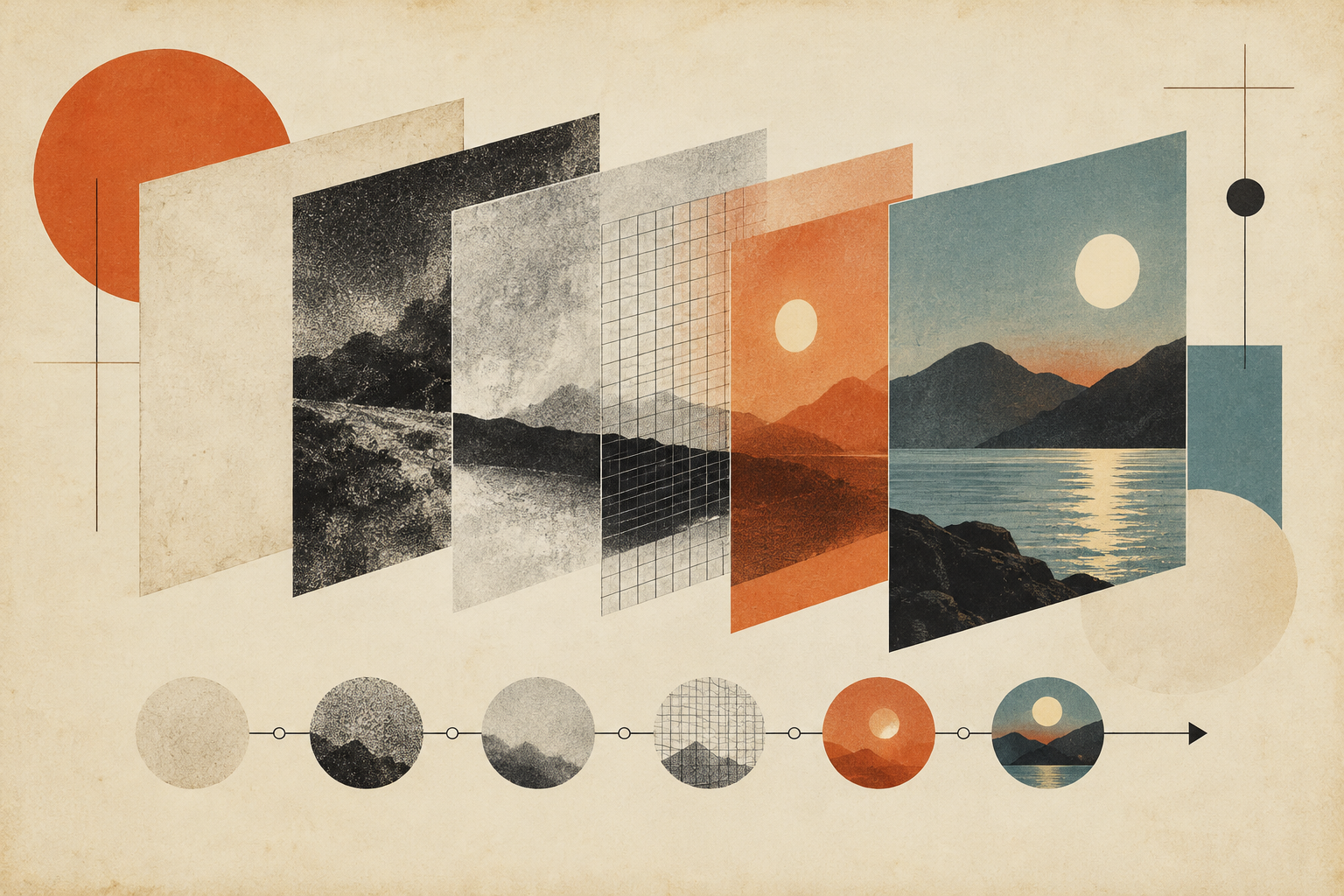
An image seems to offer an immediate answer: here is a scene, a person or a place. But looking at it is not enough to know how it was produced, what medium recorded it, or how it was used. The question matters especially when photography and video are treated as one continuous history of visual culture. The material available for this topic points toward a more careful reading: attend to professional practice, rhythm, regional histories and the documents that set limits on what can be claimed. This is not a matter of distrusting images. It is a matter of not asking them to prove what they do not show.
The visible image and the available evidence
A photograph can be examined as an image, but research into its production requires more than its appearance. An archive, caption, collection description or study may guide questions about provenance and use; each claim must nevertheless correspond to identifiable evidence. The RetroPause article framing the period 1970–2009 emphasizes, in its title and summary, the limits of what archives allow us to assert. That caution is an editorial starting point, not permission to fill gaps with a plausible story.
It helps to distinguish three levels. First, what can be observed in the image. Second, what a specific source documents about its making or circulation. Third, the interpretation offered by the researcher. Keeping these layers visible prevents a plausible reading from becoming a supposedly verified fact. It also enables another reader to return to the source and assess the reach of the claim.
Process is not a visible property
The medium and process are part of an image’s material history, but they cannot always be identified by looking at the image. Suitable records or documentation are needed. The evidence supplied here does not specify formats, emulsions, equipment or production techniques for particular images from the period. This article therefore assigns no process to an individual photograph and offers no technical chronology unsupported by the supplied sources.
The chapter titled “Photography as a Profession” offers a different route: it focuses on professional practice. Its title makes photographic work a subject of study, but the available record does not describe its arguments or provide detailed cases. The distinction matters: we can note the existence of research focused on the profession, but we cannot summarize conclusions absent from the material received. Practice can be investigated through documents about production, work and use; which documents those are and what they prove must be checked in the full source.
Photography and video: a difference in rhythm
The academic record “Time and Rhythm as Distinguishing Features between Photography and Video” proposes, in its title, that time and rhythm can distinguish the two media. This provides a specific way to organize a comparison: a still image and an audiovisual sequence do not necessarily present temporality in the same way. But the supplied record does not include the article itself, so it does not support attributing a precise definition or expanding on its conclusions.
The value of this lead is methodological. When approaching an item, the question should not only be “What does it depict?” but also “How does it organize time?” In photography, the image under examination may offer an instant; in video, the unit of analysis may involve duration or sequence. This is a framework for reading, not a description of a particular work or a universal claim about every use of either medium. A specific analysis would require knowledge of the item, its medium and the sources documenting it.
Regional contexts are not interchangeable
Photography’s history cannot be reduced to a general technological sequence. The chapter “A Separate Chapter in the History of Latin American Photography” indicates that the regional experience merits distinct treatment. The available record does not allow us to detail its cases or arguments, but it supports a caution: do not turn a broad narrative into an explanation that erases particular contexts.
Another academic record addresses the Sala Parpalló’s contribution to photography in Valencia from 1980 to 1995. Its title identifies a specific institutional, geographical and temporal frame. Without consulting the full text, we cannot detail exhibitions, artists, decisions or effects; we can observe that photographic research may focus on particular spaces and their documented contribution. This local or institutional scale complements, rather than replaces, a wider history.
A framework for investigating 1970–2009
The span 1970–2009 serves here as a field of inquiry, not as a closed chronology of advances. The material consulted includes a general reference to the period and studies with bounded timeframes, but does not by itself establish a complete sequence of changes. A sound investigation would build such a sequence from sources relevant to each subject: archival records, production documentation, publications or specialist studies. Links between an image and an entity, milestone or object should be made only where the evidence supports them.
The study on the genesis of video and its innovative debut in audiovisual creation offers another research perspective, but the supplied record gives only its title, author and publication year. It does not provide a verifiable technical chronology in this context. Its existence helps us recognize that video can also be studied through its beginnings and creative uses; it does not justify claims here about specific dates, devices or a universal trajectory.
What we can conclude—and what remains open
The available evidence supports a modest but useful conclusion: research on photographs and videos must relate image, medium, process, temporality and context without conflating them. The records identify lines of inquiry into professional practice, rhythm, Latin American photographic history, a Valencian institution and the genesis of video. They do not, however, provide enough detail to assign techniques or narrate individual cases.
That limit does not weaken the analysis; it makes its scope legible. A photograph does not tell us by itself how it was produced, and a bibliographic record cannot replace reading the study it describes. The question “What process and medium explain each image?” must be answered item by item, using sources that document it. Until then, interpretation can raise questions and propose frameworks, but it must make clear where the available facts end.
- Decade
- 1970s
- Region
- Global
- Level
- Introduction
- Entities
- Sala Parpalló
Sources and references
- Un capítulo aparte en la historia de la fotografía latinoamericanadoi.org · 2026-10-06
- El factor temporal y el ritmo como distintivo entre fotografía y vídeodoi.org · 2026-10-06
- La fotografía como oficiodoi.org · 2026-10-06
- La Sala Parpalló y su contribución a la fotografía en Valencia (1980-1995)openalex.org · 2026-10-06
- La génesis del vídeo y su debut innovador en la creación audiovisualopenalex.org · 2026-10-06
- Fotografía y vídeo entre 1970 y 2009: lo que permiten afirmar loswww.retropause.com · 2026-10-06