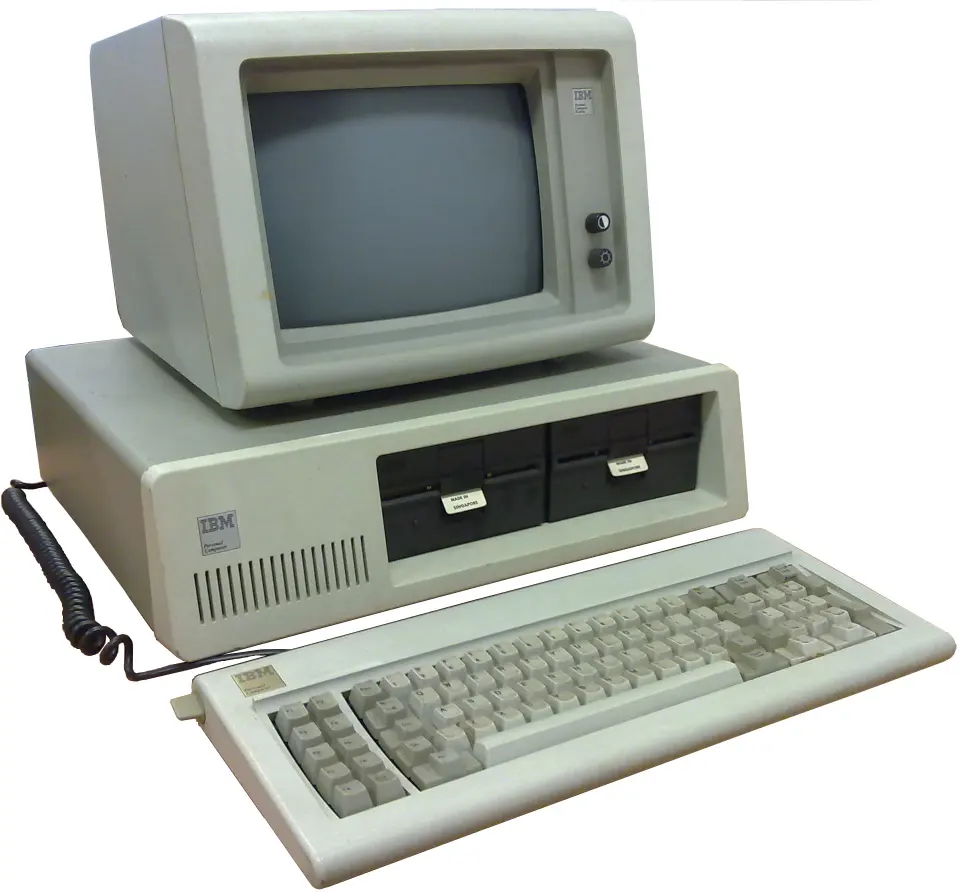
Personal computer launched by IBM in mid-August 1981. The sources place it in an already established personal-computing market and link its architecture to the later expansion of compatible-machine manufacturers.
Selected excerpts from our archive offer more context on this subject. Each reading links to the original article and its sources.
How the IBM PC 5150 Made Compatibility the Basis of an Ecosystem
The IBM PC, also identified as model 5150, was launched by IBM in mid-August 1981. Treating it as the absolute beginning of personal computing oversimplifies its context. The Computer Museum of the Universitat Politècnica de València places the emergence, growth and consolidation of the personal-computer market in the 1970s, using 1977 as a symbolic starting point because of the so-called “Trinity of 1977”: Apple, Commodore and Tandy began a new commercial phase. The 5150 therefore appeared when products, manufacturers and expectations for computers aimed at individual users already existed.
That qualification does not lessen its relevance. It makes that relevance clearer. According to Xataka, IBM launched the 5150 in response to the momentum that computers from smaller companies—including Commodore, Atari, Apple and Tandy—were giving the sector. The machine’s historical interest does not rest on assigning it absolute priority, but on seeing how a very large company entered a moving market and how its proposal became a later point of reference.
“Personal computer” is a broad historical category, not the exclusive property of one machine. The supplied sources recall different predecessors and candidates depending on the criterion used. Olivetti’s Programma 101, presented in 1964, has been described as an early desktop computer; another source qualifies it as a programmable calculator with a printer. The Kenbak-1 is often considered the world’s first personal computer by the Computer History Museum, according to the supplied Wikipedia summary, while Xataka states that its prototype was completed in 1971.
These differences show why questions must be separated. Asking about the first desktop machine, the first personal computer, the first microprocessor-based microcomputer, and the device with lasting industrial influence are not the same question. The available evidence is insufficient to settle every debate, nor is that necessary to study the 5150. The IBM PC matters especially because of its place in the standardisation of a way of making, buying and using compatibles.
IBM PC 5150: How an Open Design Accelerated the Compatible-PC Era
On 12 August 1981, IBM introduced the 5150 model, soon identified as the IBM PC. The date appears in a retrospective report by EL PAÍS, while Xataka places its release in the middle of that August. Both references locate the event in the summer of 1981, but that agreement should not be turned into a broader claim than the sources support: the 5150 was neither the first personal computer nor the only important machine of its time.
The context was already lively. The Universitat Politècnica de València’s Museum of Computing describes the 1970s as the period in which the personal-computer market emerged, grew and consolidated, placing 1977 at the beginning of a phase associated with Apple, Commodore and Tandy. Xataka likewise notes that IBM was responding to personal computers boosting companies such as Commodore, Atari, Apple and Tandy. The 5150’s historical interest, then, is not that it created personal computing from nothing, but that it changed the conditions of an existing market.
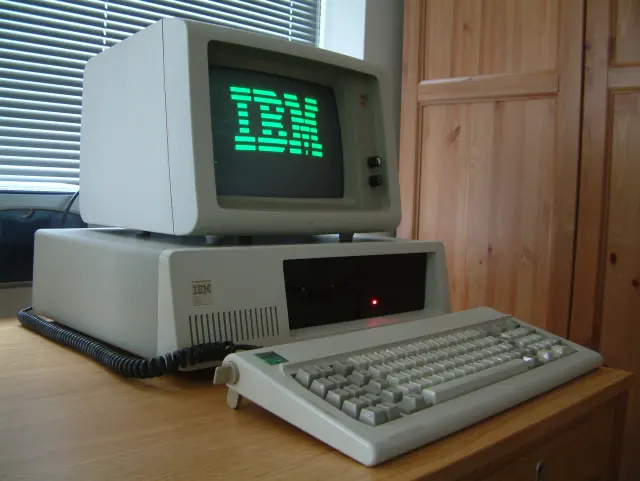
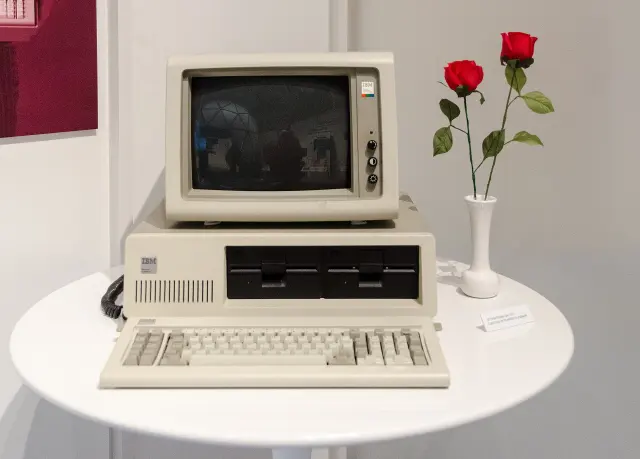
IBM’s presence gave the segment an industrial participant of enormous weight. According to EL PAÍS, a twelve-person team led by Philip Estridge carried out the project. The article also recalls features of the user experience that are revealing today: glowing green characters on screen, an optional floppy disk drive, and advertising that promised a manual simple enough to get users working within hours.
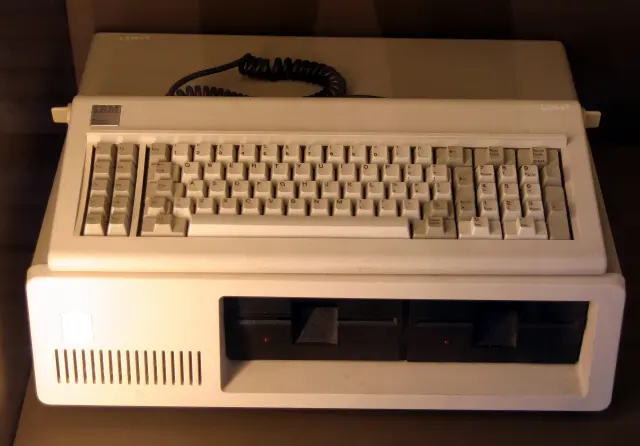
Those details do not describe every possible configuration, nor do they replace a complete technical specification. They do place the machine as a product for work and learning rather than solely as a laboratory object. The character display, floppy-based storage and documentation shaped a daily relationship with the machine: switch it on, enter commands, save data and learn its limits. From today’s perspective this environment looks spare; in 1981 it represented a concrete way of bringing computing to organisations and users beyond large centralised systems.
KEY FACTS
- Type
- Computer
- Year
- 1981