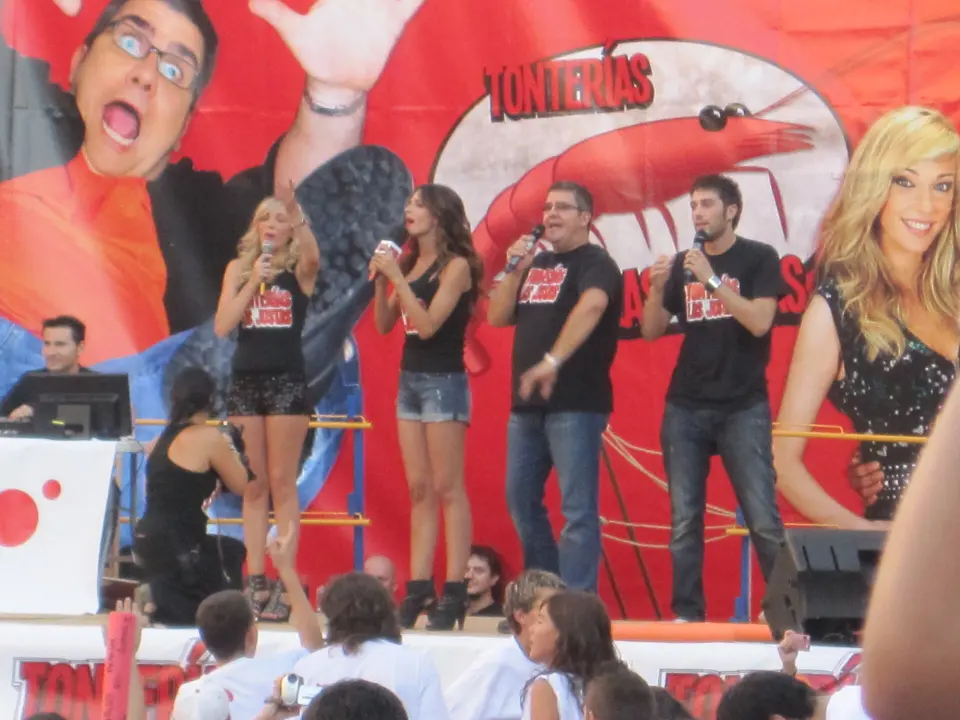
Spanish free-to-air channel whose official broadcasts began on 7 November 2005 at 20:44, according to the evidence.
Selected excerpts from our archive offer more context on this subject. Each reading links to the original article and its sources.
Four Decades Before the Screen: Spanish Television from the 1970s to the Digital Archive
The history of Spanish television cannot be reduced to the television set that occupied a place in the home. It is also a history of produced and transmitted images, of habits tied to scheduling, and, over time, of material that can be searched for again. The evidence assembled places the historical study of the medium within a broad frame, from 1956 to 2006, while a journalistic review proposes the 1970s, 1980s, 1990s, and 2000s as distinct decades. That arc helps organise the subject, although it cannot replace a complete chronology.
A methodological caution is necessary from the outset. The available documents do not allow every channel to be listed, audiences to be reconstructed, or the experiences of all households to be described equally. Nor do they justify a single national narrative as though access and use had been identical. They do, however, make it possible to identify three inseparable dimensions: television as cultural practice, the technical evolution of the image, and the later preservation of broadcasts.
El Mundo’s review describes 1970s television as something that changed life and remained in memory. That wording is not a universal measurement, but it points to a relevant cultural question: the screen could organise common content and common schedules. In an experience based on broadcast transmission, the time of viewing was part of the programme itself. Television was not merely a work or a piece of information; it was also its appearance at a particular time.
Speaking of shared memory nevertheless requires precision. It does not mean that everyone watched the same thing, or that every programme carried the same meaning for different audiences. It means that television offers a starting point for studying conversations, recollections, and repertoires of images associated with an era. Its cultural importance lies both in what it showed and in the possibility that broadcasts became embedded in everyday life.
From the Home Screen to the Archive: Four Decades of Spanish Television
Discussing Spanish television from the 1970s to the 2000s requires avoiding a convenient idea: that the past was uniform and can be summed up through a few programmes or one kind of set. The supplied sources support a narrower, and therefore more useful, claim. Across those decades television remained a highly continuous domestic presence, while its technology, production practices and the ways audiences could access broadcasts changed substantially.
El Mundo’s project on forty years of television in Spain structures its account around the 1970s, 1980s, 1990s and 2000s. That division does not prove that every decade had a sealed identity, but it does remind us that television viewing changed alongside social circumstances and available programming. Its approach places television within everyday shifts in consumption, public expectations and ways of watching. This is not the history of an isolated device; it is the history of a shared practice.
At home, television organised time and space. Watching a programme meant gathering around a screen and following a sequence fixed by broadcast scheduling. That linear condition matters because it helps explain television’s cultural force: the same programming could become a reference point for audiences receiving it at the same time, even when they did not interpret it in the same way.
This should not be turned into a universal statement about every Spanish household. The available sources provide neither audience figures nor receiver prices nor a detailed sociology of homes. They do, however, establish a framework: historical reconstructions present television as linked to Spanish social life and to the memory of several generations. RTVE’s current archive, also arranged by decades, preserves traces of that programming and makes its variety visible: news, fiction, variety shows, children’s programming and other forms.
KEY FACTS
- Type
- Television programme
- Year
- 2005
- Country or region
- Spain
References
- Cuatro (canal de televisión)es.wikipedia.org