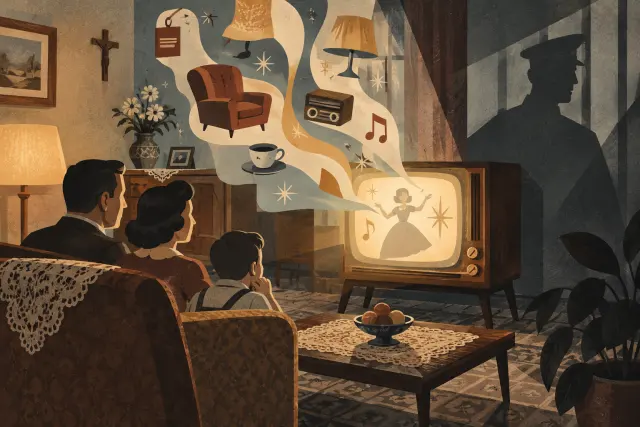
Editorial team illustration · RetroPause
Animation made on old X-rays, catchy songs and food advertising helped shape Spain’s first television commercials. Their images also reveal how consumer culture, social stereotypes and censorship framed everyday life under Franco’s dictatorship.
Read article ↗
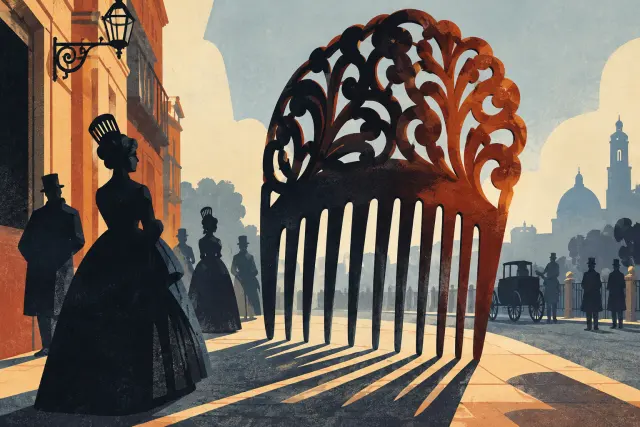
Editorial team illustration · RetroPause
In the 1820s and 1830s, the peinetón turned an ornamental comb into an unmistakable presence in city streets. Images and accounts from the period open a window onto fashion, craft labour, and disputes over class, gender and public space in the Río de la Plata.
Read article ↗

Editorial team illustration · RetroPause
Columbia’s 1948 LP and RCA Victor’s 45 rpm single, introduced the following year, established two complementary ways to listen to recorded music. The microgroove extended playing time per side, while turntables, radio and DJ practices made the record a versatile part of everyday life.
Read article ↗

Editorial team illustration · RetroPause
A reissue can revive a silhouette, mechanic, or ritual without reproducing the original experience in full. Consumer research and the different versions of Tamagotchi show how nostalgia, recognition, and adaptation to the present interact.
Read article ↗

Editorial team illustration · RetroPause
A TV schedule does more than list programmes: it preserves the time structure through which broadcasters organised their offer and addressed different audiences. Comparing printed listings with recordings helps distinguish what was planned from what actually reached the screen.
Read article ↗

Editorial team illustration · RetroPause
A retro product can evoke memories without faithfully reproducing the original object. Research on consumers in Valencia and the Tamagotchi case help distinguish nostalgia and recognition from changes in how a product is used.
Read article ↗
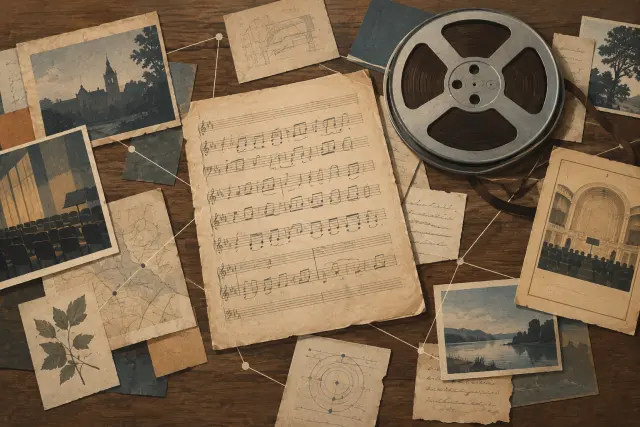
Editorial team illustration · RetroPause
Scores, recordings, programmes and personal papers tell different but connected stories. The INAH sound archive, Colombian composer Luis Antonio Escobar’s score collection and El Museo Canario’s holdings show how context turns archival materials into evidence of music-making and its circulation.
Read article ↗
This is the preserved newsletter snapshot. Linked articles may receive subsequent corrections.