A relationship with the past, not a guarantee of fidelity
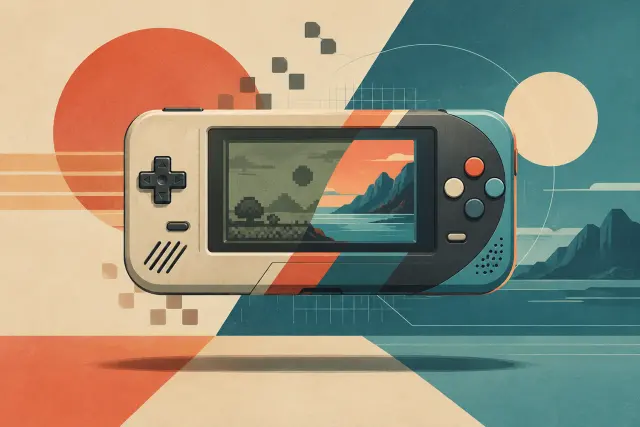
A contemporary product inspired by the past can recall a familiar object without being that object. A reissue, a new design that draws on older visual cues and an original item have different histories. To understand what “retro” means, it helps to look at both what remains and what has changed.
Research by José S. Clemente Ricolfe, Juan M. Buitrago Vera and Eva Sendra Emper on consumers of retro products in Valencia uses a broad definition: products from an earlier period that return to the market, whether or not they are updated to contemporary standards. Their survey was conducted in May and June 2008 among 349 adult residents of the city. The authors grouped purchase motivations into three dimensions: product characteristics—such as quality, authenticity and recognition—present-day feelings of differentiation, and feelings connected with the past.
The study offers a situated perspective: it describes a local sample and stated purchase intentions in that context. It cannot establish that all audiences value retro products in the same way. It does, however, help explain why nostalgia, though important, is not enough to account for their appeal. Familiarity, appearance or curiosity about an object someone never owned may also matter. A reference can be a memory for someone who lived through its era and a discovery for someone who encountered it later.
What is preserved, and what changes
Comparing a product with its historical reference means looking beyond its silhouette. A few useful questions are:
- Form and visual identity: Are the features that make the reference recognisable retained?
- Materials and manufacture: Is the earlier materiality reproduced, or are contemporary solutions used?
- Interaction: Is the familiar way of using the object preserved, or does the central experience change?
- Function and setting: Does it serve the same purpose and operate in similar conditions?
- Framing: Is it presented as a reissue, a new version or a creation inspired by a legacy?
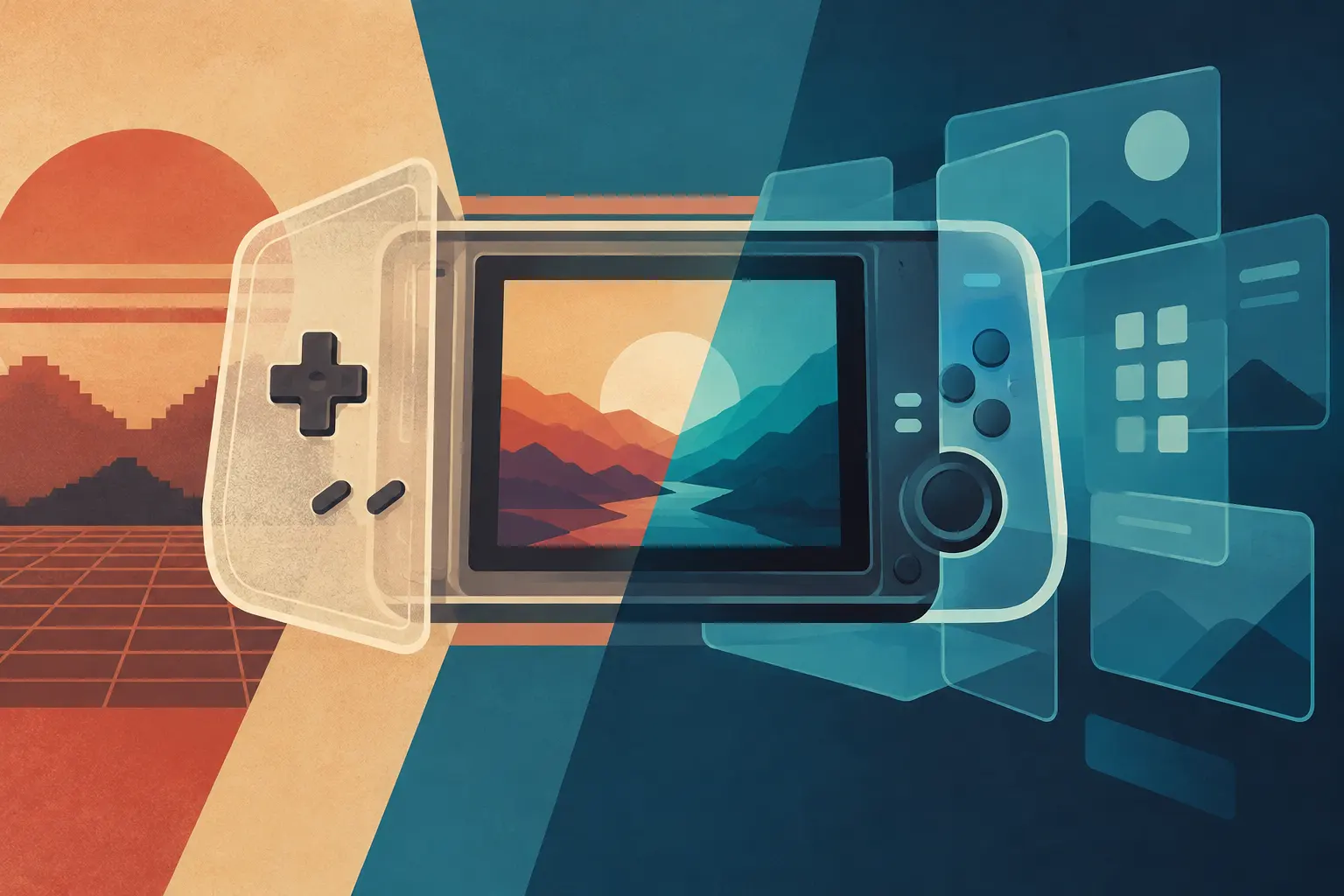
These dimensions do not all need to remain intact. A product may keep a recognisable form while changing how it works; another may retain a familiar mechanic despite changes in materials or scale. “Retro” describes a relationship with the past, but it does not in itself certify historical fidelity.
Tamagotchi: a recognisable idea, different ways to play
Tamagotchi makes that distance visible in a specific object. Bandai launched the original model in 1996 as a portable virtual-pet toy. The player cared for a creature on a small screen, fed it and tended to its space. Its compact casing, screen and buttons made it easy to carry around: interaction could accompany the day rather than being confined to play in front of a household device.
Later versions do not necessarily offer the same experience. The Oshi Lab distinguishes between wanting to revisit the original model’s gameplay and the appeal of versions with new mechanics or communication features. Its article notes that Tamagotchi Paradise, released in 2025, includes a dial for changing the area being observed. The idea of caring for a creature remains recognisable, but the interaction changes.
The comparison clarifies what reinterpretation can mean: attention to a character and portability may remain, while controls, functions or forms of participation change. An external resemblance alone does not show that two versions offer the same game.
From memory to present-day use
A reissue can bring back childhood memories, but it can also appeal to people who never knew the original product. In the Valencia survey, motivations were not limited to nostalgia: alongside feelings from the past were perceived product characteristics and personal differentiation. The past can therefore function both as an emotional reference and as a set of qualities consumers associate with an object.
It is useful to distinguish memory from evidence. A design’s evocation of an era does not prove that it reproduces that era’s materials, conditions of use or technical characteristics. Likewise, sharing a name or silhouette with an earlier version does not mean that every function has been retained. Describing what continues and what changes makes it possible to recognise the historical connection without mistaking it for faithful reproduction.
A retro reinterpretation can begin with memory while responding to present-day expectations. It does not return the past intact: it selects some of its elements, rearranges them and gives them new meaning.
- Decade
- Contemporary
- Region
- Global
- Level
- Enthusiast
- Entities
- Tamagotchi Paradise, Tamagotchi
Sources and references 5
- Estudio de los factores de compra de productos retro y segmentación del ...www.elsevier.es · 2026-11-18
- Estudio de los factores de compra de productos retro y segmentación ...www.scielo.org.mx · 2026-11-18
- LTP #105: La nostalgia como productovanacco.com · 2026-11-18
- Marketing de nostalgia: ejemplos, claves y cómo aplicarlowww.ceupe.com · 2026-11-18
- Por qué el estilo retro Heisei renació como actividad fan en 2026oshifuturelab.com · 2026-11-18