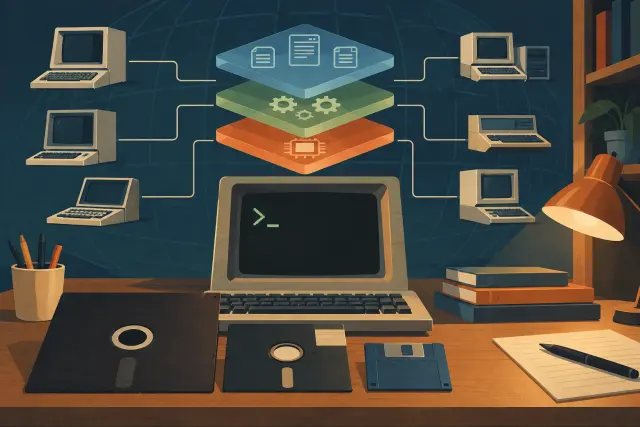
Editorial team illustration · RetroPause
CP/M let software from different vendors run on many 8080- and Z80-based microcomputers, but portability depended on adapting hardware, terminals and floppy disks. Its architecture and programming tools show both the reach and the practical conditions of that shared platform.
Read article ↗
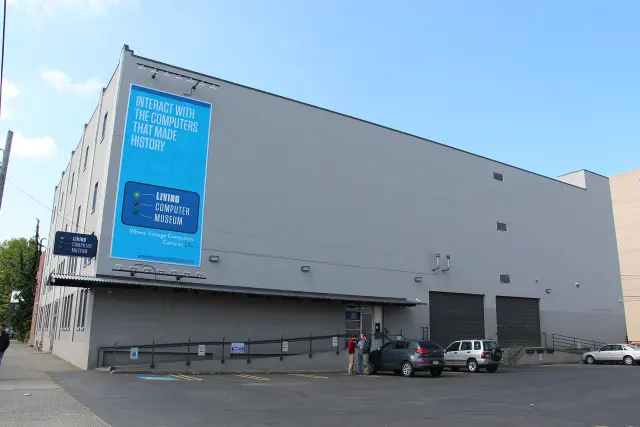
Jllm06 · Wikimedia Commons · CC BY-SA 4.0 · CC BY-SA 4.0
Living Computers: Museum + Labs made computing history a hands-on experience, letting visitors use vintage machines and connect to historical systems. After its permanent closure, part of the collection was auctioned in 2024 and the rest went to two museums.
Read article ↗
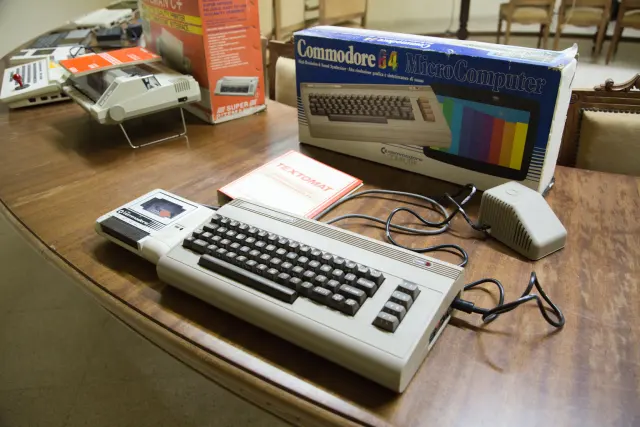
"Commodore 64 computer and casette tape recorder (2)" by Ismael Olea is licensed under CC BY-SA 2.0. To view a copy of this license, visit https://creativecommons.org/licenses/by-sa/2.0/. · CC BY-SA 2.0
An analysis of VirtualC64 as an emulation tool for macOS and the web, exploring its technical accuracy, the legal status of ROMs, supported file formats, and the role of communities in preserving 1980s software.
Read article ↗
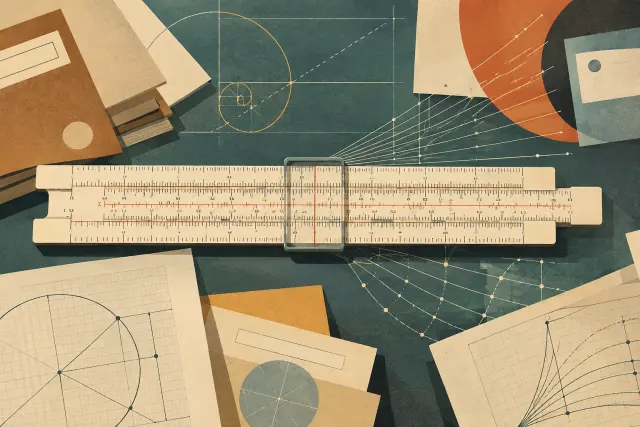
Editorial team illustration · RetroPause
A practical guide to understanding how slide rules work, recognizing their scales and designs, researching makers, and documenting an example without mistaking clues for certainties. It also covers care and the historical value of manuals.
Read article ↗

Editorial team illustration · RetroPause
Spain’s Internet connection grew out of academic networks already exchanging email and news. IRIS, RedIRIS and SIDERAL linked research institutions before commercial providers and dial-up access brought the network to a broader public.
Read article ↗
This is the preserved newsletter snapshot. Linked articles may receive subsequent corrections.