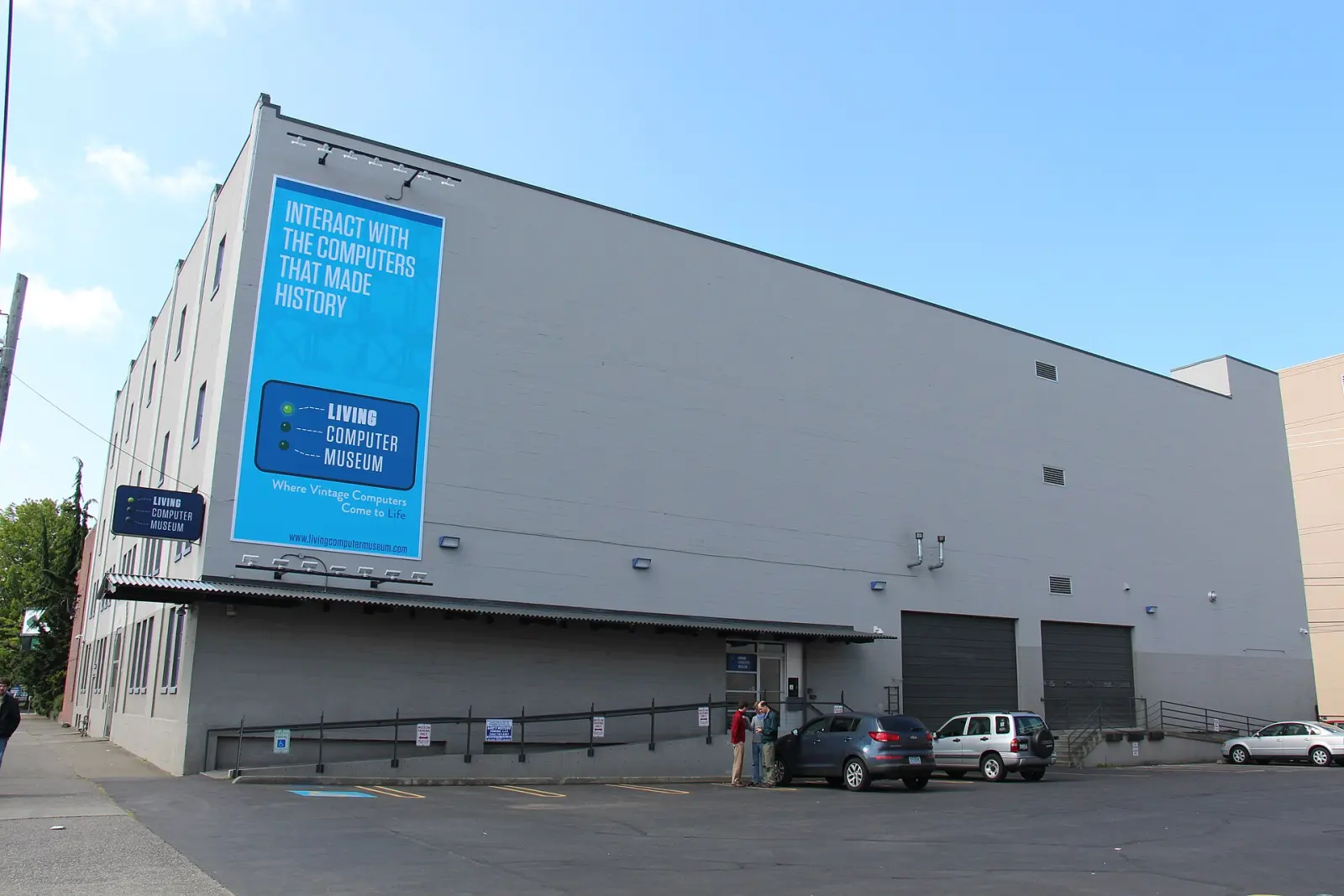
In Seattle’s SoDo neighborhood, Living Computers: Museum + Labs offered an unusual way to encounter computing history: visitors were invited not merely to look at machines, but to use them. Founded by Microsoft co-founder Paul Allen, the museum brought together working historical computers and spaces devoted to contemporary technology. It closed during the pandemic in 2020 and never reopened; in June 2024, Allen’s estate announced that it would close permanently.
History you could put to work
Living Computers’ defining feature was its commitment to interaction. The institution described its aim as bringing machines back to life so the public could see, hear, and interact with them. Its collection included one supercomputer, seven mainframes, ten minicomputers, and more than three dozen microcomputers. Many were available for public use, though not all: some large systems could be reached remotely over Telnet, while others were displayed without direct interaction.
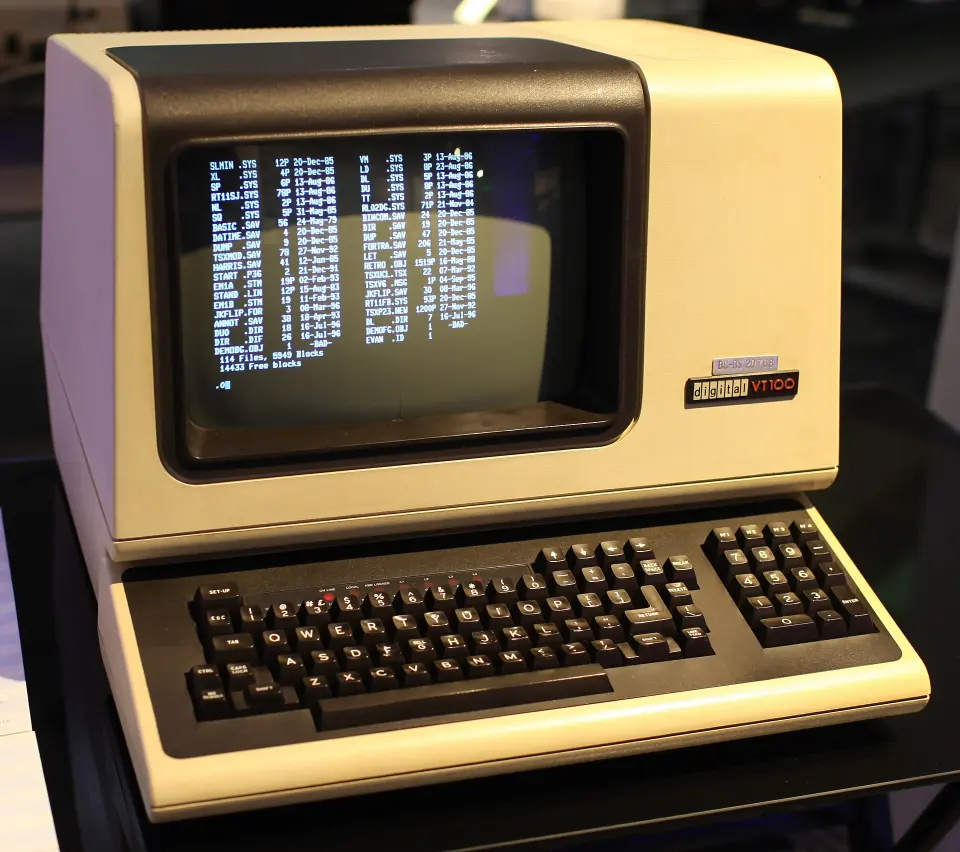
At the museum, computing’s past was not reduced to objects behind glass. Visitors could try vintage personal computers, write and run BASIC on machines such as the Apple II, and encounter systems designed for shared computing. The large-machine room, known as the Conditioned Room, presented equipment such as the DEC PDP-10 and components of the IBM System/360 in operation. Temperature control was part of the environment these machines required; the room made that technical necessity visible as part of the exhibit.
The layout connected different technological generations. Public areas included exhibits on virtual reality, robotics, and the Internet of Things, alongside workshops and lab spaces. In the historical section, a recreated 1980s living room and arcade games placed computers within familiar settings of everyday use. Nearby, visitors could encounter computers and peripherals whose operation depended on practices that have become less familiar, from loading programs to working at terminals.
From PDPplanet to museum
The project began in 2006 as PDPplanet.com, an initiative that let users connect by Telnet to vintage DEC and XKL equipment. Remote access later extended to systems from other companies, including IBM, Xerox, and Control Data. That early phase anticipated the museum’s central idea: preserve not only the machines, but also the possibility of experiencing how people interacted with them.
The museum opened to the public on October 25, 2012. In 2013, Seattle Weekly named it “Best Geeky Museum,” noting its connection to Seattle’s technology history and Microsoft’s role in the local industry. In November 2016, it adopted the name Living Computers: Museum + Labs, reflecting an expansion into contemporary technologies and lab activities.
The combination of operational historical equipment and spaces for experimentation gave the museum a particular approach. Rather than separating technology’s past from its present, the visit placed them in relation: vintage computers showed how certain practices had developed, while contemporary installations invited visitors to try emerging tools.
Closure and the collection’s dispersal
Living Computers closed in February 2020 because of the COVID-19 pandemic and remained shut after restrictions were lifted. In June 2024, Paul Allen’s estate confirmed that it would not reopen. Most of the objects belonged to Allen’s personal collection or estate, rather than to the museum as an organization.
Some items were sold through Christie’s Gen One: Innovations from the Paul G. Allen Collection auction series. The online sale, held from August 23 to September 12, 2024, raised $3,635,982. The rest of the collection was divided between the Interim Computer Museum in Tukwila, Washington, and the Mimms Museum of Technology and Art in Roswell, Georgia.
The dispersal ended the shared experience Living Computers had created. The machines and objects may continue to be preserved elsewhere, but they are no longer part of a single visit in which working historical computers, recreated settings, and newer technologies came together under one roof.
A museum built around practices
Living Computers’ legacy lay not only in the machines it assembled, but also in the chance to use them. Starting a computer, writing a few lines of BASIC, or interacting with a time-sharing system made computing visible as a material practice: it depended on interfaces, spaces, procedures, and people, as well as circuits and software.
Some of the museum’s objects also travelled beyond its walls. Artifacts from the collection were lent to television productions such as Mad Men and Halt and Catch Fire, which recreated technological settings from earlier decades. Those loans extended the machines’ presence in visual culture, though in a different way from the experience of operating them.
The Computer History Museum in Silicon Valley offers another way to explore computing history, with exhibits, artifacts, and accounts of the people and ideas that shaped the digital world. Living Computers stood out for its emphasis on operational equipment and direct contact: interaction was not an add-on, but its way of telling the story.
Documentary gallery
- Decade
- 2000s
- Region
- North America
- Level
- Enthusiast
- Entities
- Museum, MAD, Internet, Computadora, Apple II
Sources and references 5
- Museos de ciencia y tecnología en Seattle - Whichmuseumwhichmuseum.com · 2026-11-19
- Computadoras vivientes: Museo + Laboratoriostranslate.google.com · 2026-11-19
- Museo de Historia de la Computacióncomputerhistory.org · 2026-11-19
- Living Computers: Museum + Labs, Seattle, Estados Unidoswanderlog.com · 2026-11-19
- El museo tecno e innovador de Seattle, Estados Unidoswww.infoviajera.com · 2026-11-19