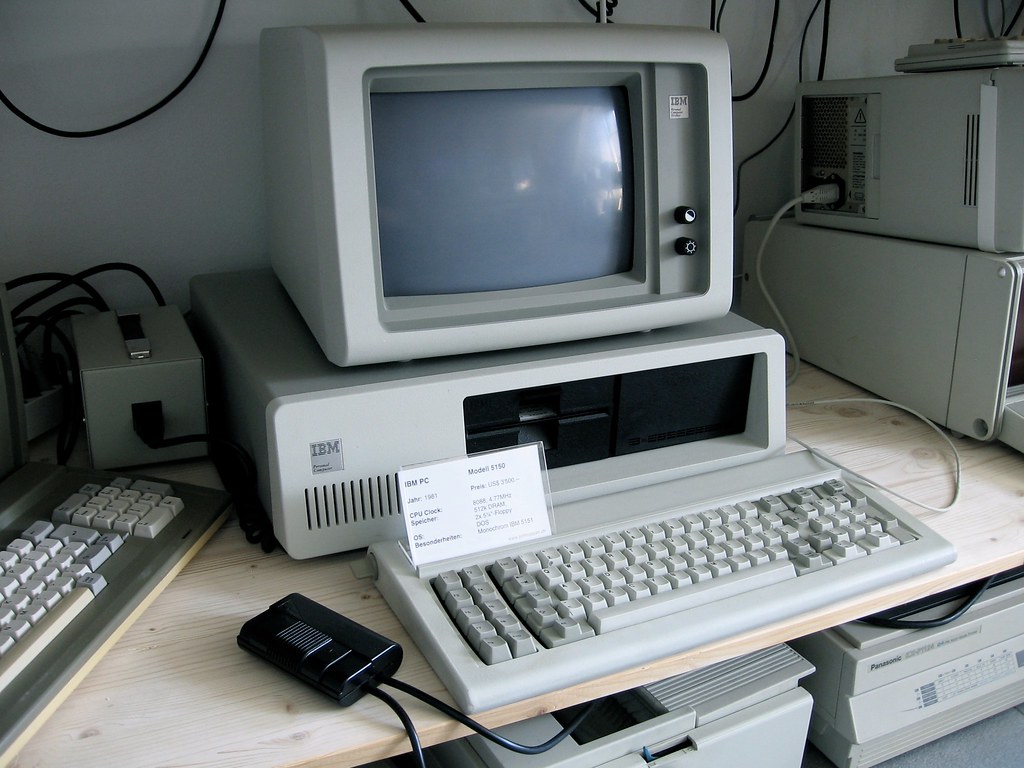
Microsoft presented Windows in 1985 as an extension of MS-DOS that provided a graphical environment. That description locates its beginnings more precisely than the retrospective image of Windows as a complete, standalone operating system from the outset. The initial proposal was to change how people interacted with a personal computer that still depended on DOS. The difference was not simply a new appearance: it offered another way to approach computer work.
The available evidence supports this broad framing and the year of presentation, but it cannot reconstruct the specific features of each early release or the everyday experience of the people who used them. This history is best understood as a gradual change in the relationship between people and computers, not as an instantaneous transformation.
A graphical layer over DOS
In its early phase, Windows functioned as a graphical extension of MS-DOS. That distinction matters because it prevents us from projecting onto the first releases the independence that the name would later suggest to many users. DOS remained the foundation on which the computer depended; Windows provided a visual environment for interacting with it.
The material consulted does not detail the tasks available in each release, how its windows were arranged, or what technical limits followed from this dependence. It does support the central point: Windows began as a graphical layer associated with DOS, not as the independent system that later became familiar.
From command line to windows
The transition raises a cultural question about learning at home: what changes when a user can work in a graphical environment rather than relying exclusively on a command line? An interface changes the point of contact between a person and a machine. It does not, by itself, remove the need to understand the computer, but it alters how that use is presented and accessed.
Without original manuals or contemporary testimony, it is not possible to say how different users learned, how much windows eased everyday tasks, or which obstacles remained. The question helps interpret the potential significance of the change, but cannot replace the missing evidence.
An evolution, not a single moment
The account supported by the available sources describes a gradual shift: from a graphical interface dependent on DOS to Windows understood as an operating system in its own right. This broad formulation distinguishes two phases without pretending that every change happened at once. It also reminds us that a computer product’s evolution cannot be explained solely by the interface visible to its user.
There is not enough documentation here to date each intermediate step, compare specific releases, or establish how their capabilities changed. Nor would it be rigorous to credit Windows alone with popularizing the personal computer. The available context supports a discussion of changing access, not a single cause or a measurement of its social reach.
What can be established—and what remains open
The sources agree on the essential fact: Microsoft presented Windows in 1985 as an extension of MS-DOS with a graphical environment. This description is consistent with the contrast between its initial role and the later image of Windows as a standalone system. That is the verifiable core of the story.
By contrast, the memory requirements, features of each release, bundled manuals, and differences in users’ experiences are not documented here. Examining those subjects would require original manuals and contemporary documentation for specific releases. Without them, turning a broad description into a detailed reconstruction would go beyond the evidence.
The legacy of a changed point of access
The historical interest of early Windows lies in its intermediate status: a new graphical interface that still relied on DOS. Seen from the present, this phase is a reminder that systems that appear natural or indivisible are often formed through layers and transitions. Windows’ later familiarity should not erase its beginnings as an extension.
The concrete conclusion is also the most cautious one: Windows was presented in 1985 as a graphical way to work with a computer that still depended on MS-DOS. The sources trace the general direction of the change, but do not reconstruct in detail how it was experienced in individual homes. More specific documents than those available here would be needed to tell that story precisely.
- Decade
- 1980s
- Region
- North America
- Level
- Introduction
- Entities
- No linked entities
Sources and references
- Microsoft Windows | Historia, versiones y datostranslate.google.com · 2026-10-15
- Momentos destacados en la historia de Microsoftnews.microsoft.com · 2026-10-15
- Microsoft Windows: 30 años de historia en imágeneswww.infordisa.com · 2026-10-15
- Microsoft Windowsdbpedia.org · 2026-10-15
- Microsoft Windowses.wikipedia.org · 2026-10-15