The film is not the only source
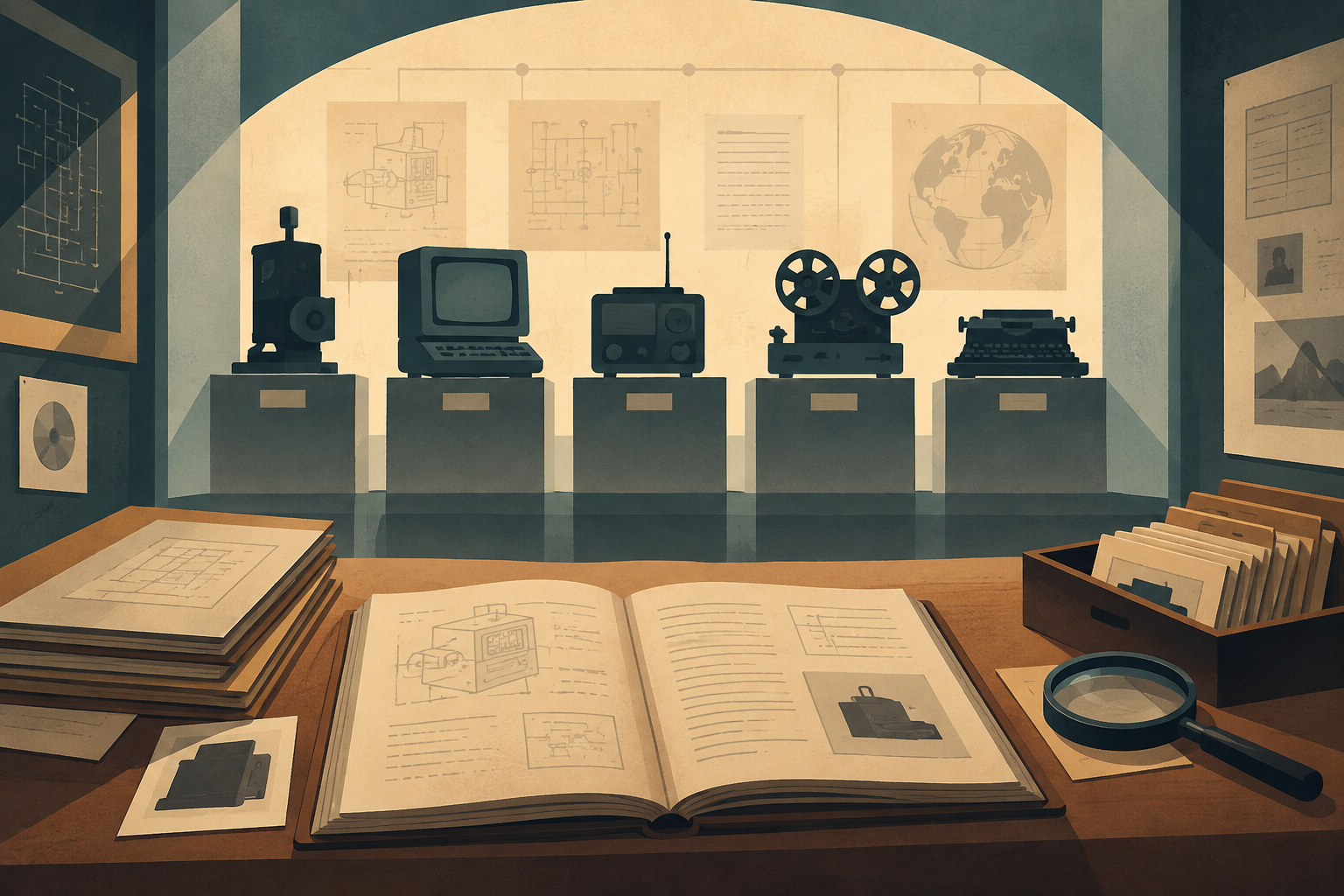
Researching a film means more than watching it. The work on screen remains central, but studying it also depends on documents that help locate, describe and contextualize it. Research on film documentation presents the archive, cinematheque and cinema museum as part of the historical framework for preservation and consultation. They do not replace the film: they offer other kinds of evidence and raise different questions.
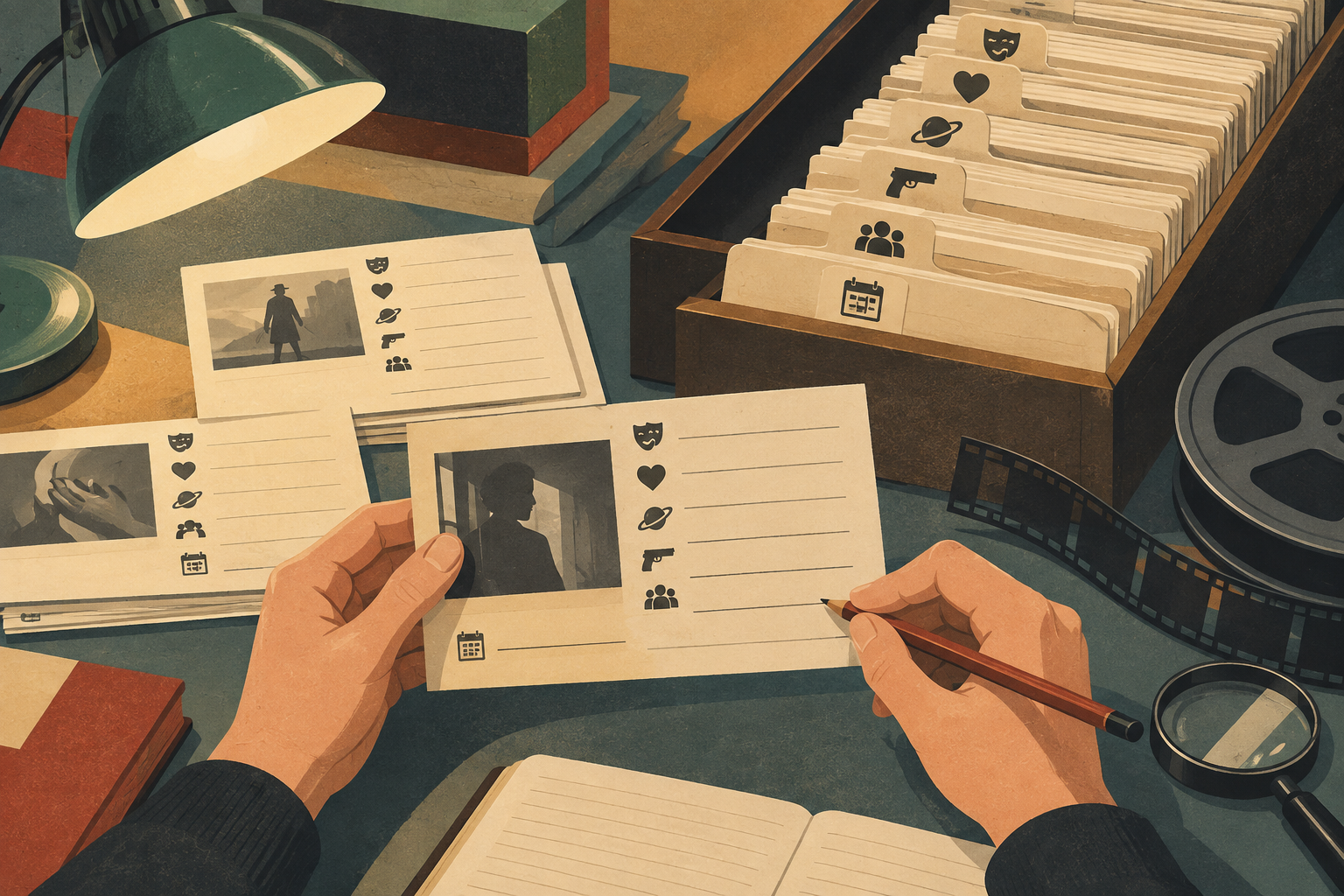
That distinction matters because a catalogue and a copy do not say the same thing. A record may include a title, filmmakers, genre or shooting dates—items listed in Domínguez-Delgado’s description of the entry data used by a film archive. Such information helps identify and organize materials; on its own, it does not describe every formal choice or the work’s reception. The record is best read as a documentary tool, not as a complete account of the film.
What documentation contributes
Documentation gives access to a history of classification: which data are considered useful for finding a film and how they are organized. The 2016 article on film documentation offers a starting point for thinking about this work within the history of audiovisual archives. The point is not to attribute conclusions to the article that are absent from the supplied excerpt, but to attend to the problem it raises: preservation and description require documentary decisions.
A record can enable comparisons between titles, names or categories, provided its criteria and limits are understood. A record is not neutral in the sense that it selects fields and vocabulary; however, the available evidence does not show how those criteria were applied in each archive. For a specific investigation, one would need to consult the full document, the responsible institution and, where it exists, the corresponding film material.
The archive is not the whole history
Writing on cinema museums and archives, and on the musealization of film heritage, invites us to consider what materials are preserved and how documentary value is assigned to them. The heritage study notes that this value has often been attributed especially to nonfiction cinema, connecting the tendency with the treatment of documentary as a genre. This observation opens a methodological question: what is lost when fiction is treated as mere entertainment rather than as a possible source?
That question does not justify assuming that every preserved film has been catalogued in the same way, or that missing films can be reconstructed from indirect references. Archives and museums make preservation and study possible; they do not guarantee that surviving collections represent everything produced, shown or watched. A collection’s silence may point to limits of access or preservation, but it does not by itself explain why an item is absent.
Reproduction and context
Cuarterolo’s text on the archive in the age of technical reproducibility proposes attending to the relationship between a document and its historical context, and describes searches by genre, direction and year among the options available in the archive it examines. This is a useful caution for any catalogue reading: the ability to search by categories does not make those categories a complete explanation.
A film circulates across formats and viewing situations, but the supplied evidence does not document a particular case of reception changing between cinema and video. It therefore cannot support a claim here that a specific film gained or lost viewers, changed meaning or was rediscovered through video rental. We can, however, ask how such a question might be researched: compare the work with exhibition and distribution documents, archive records and dated critical sources, where these are available and relevant. A single catalogue record would not prove a transformation in reception.
Reading without filling gaps with nostalgia
Film historiography, the search for documentary sources and studies of archives share one caution: each source answers a different question. A publication on documentary sources for Spanish film history points to the breadth of the bibliography generated around cinema; that suggests a wide field of inquiry, not that a general reference can support any claim. Progress requires identifying which document backs each assertion and what lies beyond its reach.
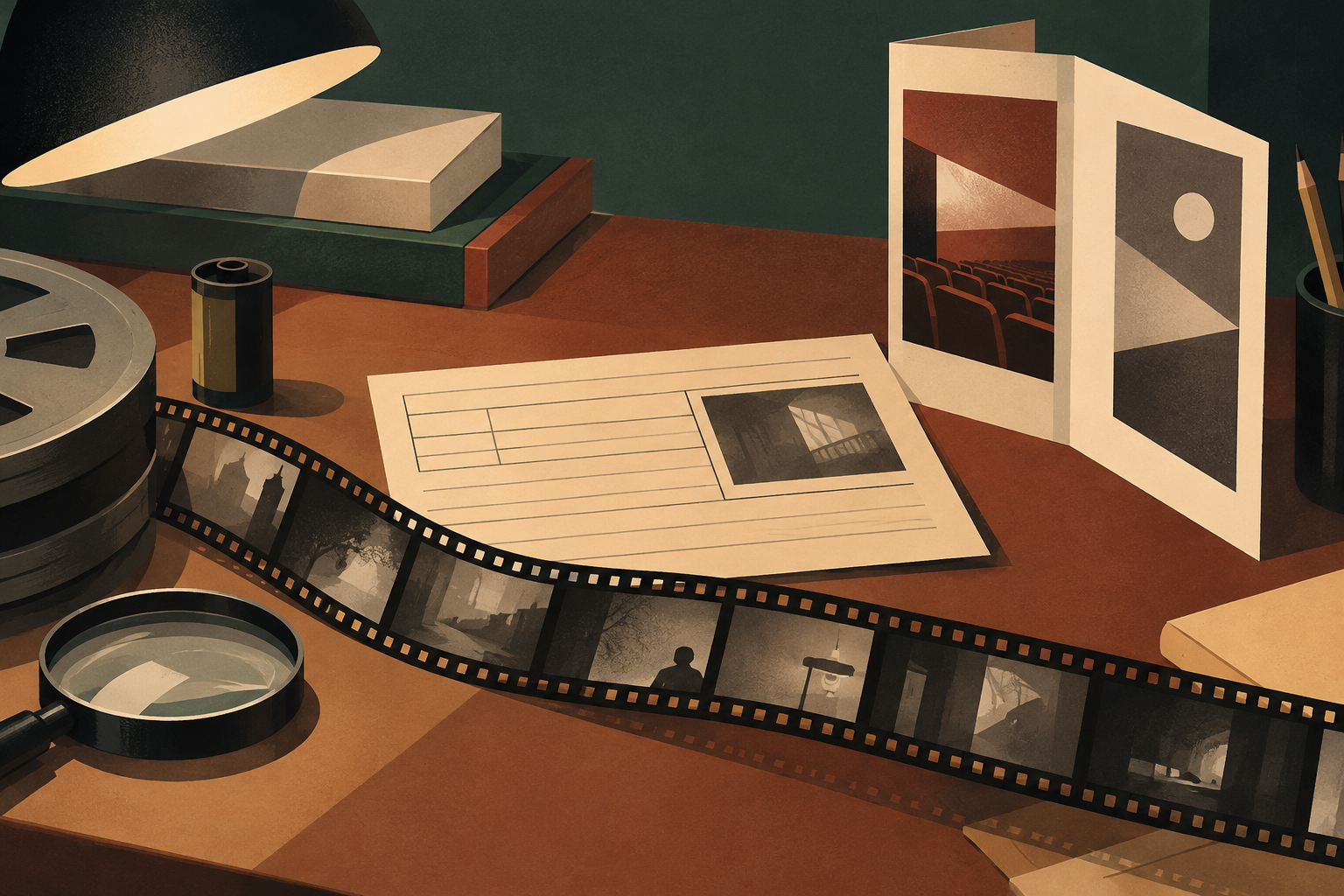
Posters, programmes, records and film copies can be read as documents with different functions, if they have survived and can be located. None should be used to invent collective memories or replace the experience of a film with a nostalgic image of its era. Interpretation begins with comparing evidence; it must also stop where the sources cannot take us further.
A provisional conclusion
Looking beyond the screen broadens film study by opening questions about preservation, classification and the traces that accompany a work. But broadening the field does not mean confusing its components. A record helps locate; an archive organizes; a critical source argues; a film poses its own formal and narrative problems. The relationship between these materials must be demonstrated, not assumed.
The documentation available here supports a methodological approach, not a reception history of a particular film or a full chronology of video-rental experience. That limit is productive: it reminds us that cinematic pasts are not recovered through one image or a repeated memory, but through identifiable sources, compared and read cautiously. The film remains central, but it is not alone.
- Decade
- Contemporary
- Region
- Global
- Level
- Enthusiast
- Entities
- Museum
Sources and references
- Imágenes de archivo en cine de ficción: cine basado en una historia realopenalex.org · 2026-10-02
- Historia y cine. La construcción del pasado a través de ...ifc.dpz.es · 2026-10-02
- La Documentación Fílmica: marco contextual históricorevistas.ucm.es · 2026-10-02
- Museos y archivos del cineunesdoc.unesco.org · 2026-10-02
- musealización y puesta en valor del patrimonio cinematográficodigibug.ugr.es · 2026-10-02
- El archivo en la época de su reproductibilidad técnicawww.vivomatografias.com · 2026-10-02