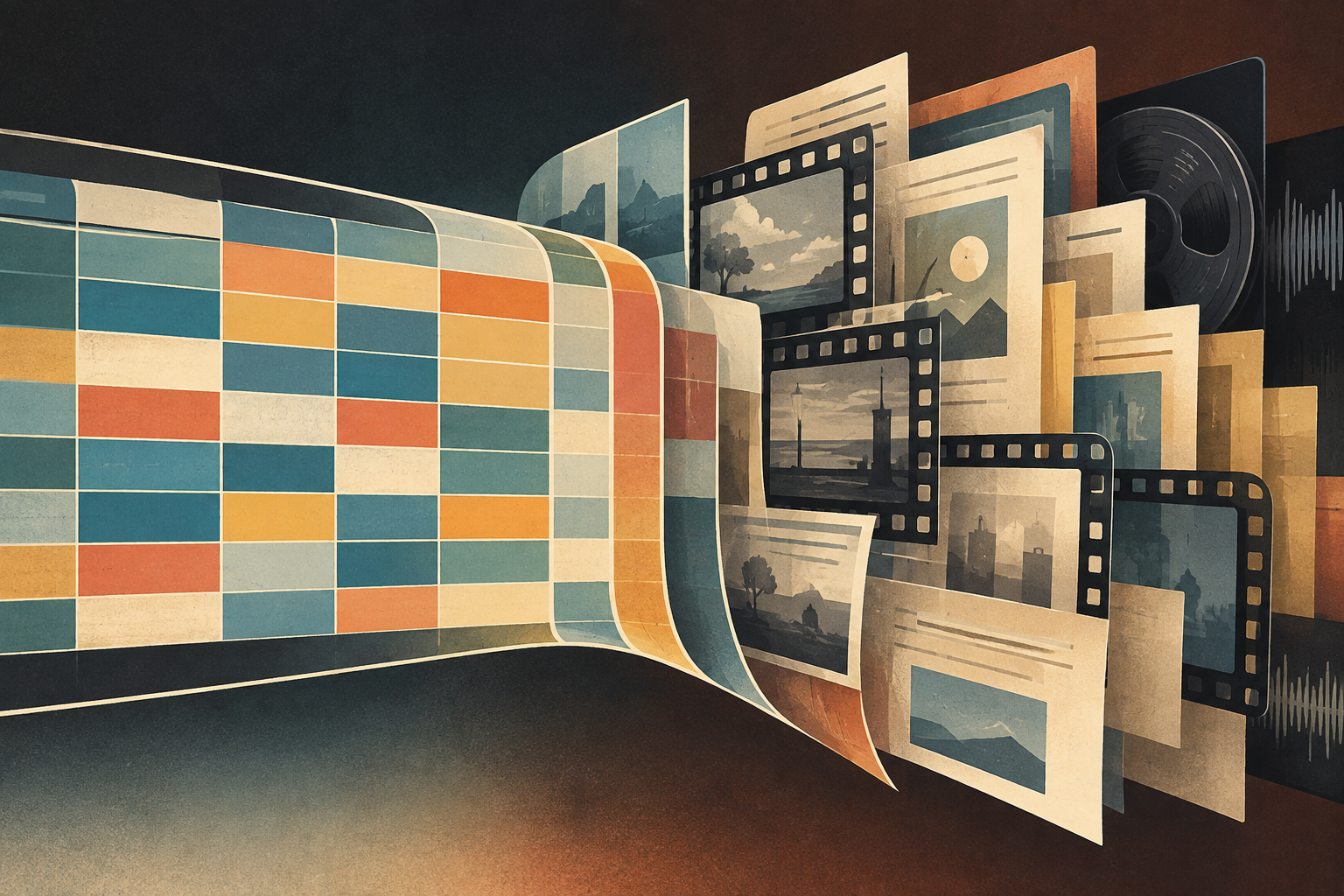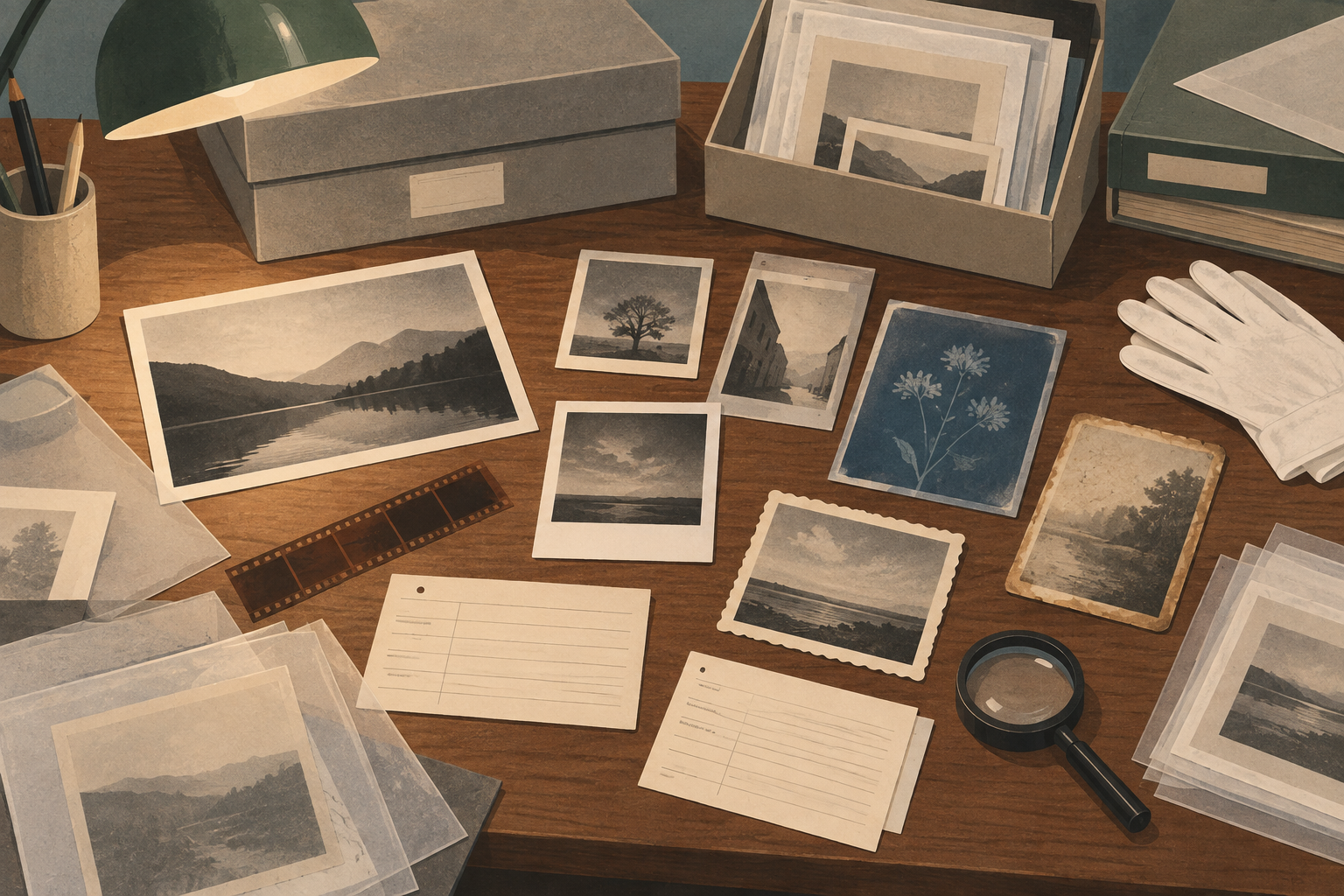
A photograph kept by a museum seems to offer an immediate answer: it shows something that stood before a camera. Yet the visible image is not enough to identify its support, process, date or original purpose. In an archive, a photograph is not only a scene: it is also a material object, a documented item and sometimes part of a group whose history remains incomplete. The useful question is not simply what we see, but what evidence supports each claim about the image.
The image and the object are not the same
A digital reproduction makes consultation and comparison easier, but flattens material differences. It allows us to inspect what that reproduction captures; by itself, it does not necessarily identify the original’s photographic process or describe its condition. It helps to distinguish three levels: the content shown, the physical object preserved, and the digital file used for consultation. Confusing them can make a plausible guess sound like a verified fact.
The Museo de Zaragoza describes a photographic archive generated over the institution’s history, with images of varied origins, subjects and techniques. That diversity makes it impossible to treat “museum photography” as one material category. The Museo Arqueológico Nacional, meanwhile, says its photographic holdings include material produced since the museum’s foundation in 1867, alongside donations and purchases. These institutional descriptions support claims about varied holdings and provenance; they do not establish the technique of an individual image without its record or examination.
What a support can tell us
The support matters because it is part of the evidence. It can help characterise an object and guide its documentation, but a reproduced image’s appearance does not always reveal the material it is made from. A reliable identification requires suitable evidence: examination of the object, a technical record or trustworthy information linked to that particular item. If that evidence is unavailable, the responsible conclusion is to acknowledge uncertainty.
The visual documentation protocol published by Ibermuseos describes photographs of heritage objects as indispensable to museum inventory, registration and documentation. The formulation matters: photography documents objects, but it also needs documentation. A photograph can record an aspect at a particular moment; it does not automatically replace a description of the object, identification of its maker or an account of the circumstances in which it was made. Nor does one view make a partial record comprehensive.
Context does not necessarily appear in the frame
A photograph shows a composition limited by its frame. Its production context—who made it, when, for what purpose and for whom—may depend on annotations, inventories, provenance records and links to other documents. Without that evidence, even a persuasive reading remains interpretation rather than demonstrated fact.
The Fototeca of Spain’s Institute for Cultural Heritage says it preserves nearly half a million images dating from 1844 to the present. Castilla-La Mancha’s Archivo de la Imagen y de la Palabra allows searches by title, subject, collection or fonds. These examples show how institutions make images retrievable through contextual and organisational information. They do not prove that every record contains the same fields or that a public description resolves questions about production and use.
Cataloguing also sets limits
A catalogue record can make an image findable and connect it to a collection. But an empty field, an uncertain attribution and confirmed information are not the same thing. A detail missing from the record consulted does not prove that it never existed; it may simply not have been found in the source, or may not appear in the public description. Likewise, a date associated with a collection need not be the date of every photograph within it.
The title of Isabel Argerich’s study, “Photography and Archive,” signals the relevance of considering the two together, but the bibliographic entry available here does not justify attributing specific arguments to the author. That caution matters: citing a paper by title is not the same as verifying its contents. The same rule applies when looking at a photograph: resemblance, subject matter or a broad date assigned to a collection does not automatically prove a process or history of use.
Reading photographs without asking them to prove too much
A useful reading can begin by recording what is visible separately from what is documented. First, describe the image without assigning an identity, date or intention. Then consult the record and distinguish information about the object from information about the collection or digital reproduction. Finally, state what remains unresolved and what further evidence could help. This simple method prevents visual description from quietly turning into a historical claim.
This approach does not diminish a photograph’s value. It makes that value clearer: in the image, in its support when identified, in decisions about preservation and registration, and in archival relationships that make interpretation possible. The institutional pages cited document collections and documentation practices, but not every item in those holdings. The strongest answer to “what process and support explain this image?” may therefore be provisional. A photograph cannot tell its own story alone; an archive provides tools for reconstructing it while showing the limits of what can still be claimed.
- Decade
- Contemporary
- Region
- Spain
- Level
- Enthusiast
- Entities
- Museum, Museo Arqueológico Nacional
Sources and references
- Fotografía y archivodoi.org · 2026-10-06
- Archivo fotográfico del Museo Arqueológico Nacionalportalvirtualfotografico.es · 2026-10-06
- La conservación de la fotografía en el Museo de Zaragozawww.museodezaragoza.es · 2026-10-06
- protocolo-documentacion-visual.pdfwww.ibermuseos.org · 2026-10-06
- Fototeca - Instituto del Patrimonio Cultural de Españaipce.cultura.gob.es · 2026-10-06
- Archivo de la imagen y de la palabracultura.castillalamancha.es · 2026-10-06
- Archivo fotográfico - | Ministerio de Culturawww.man.es · 2026-10-06