Sound is not the only document
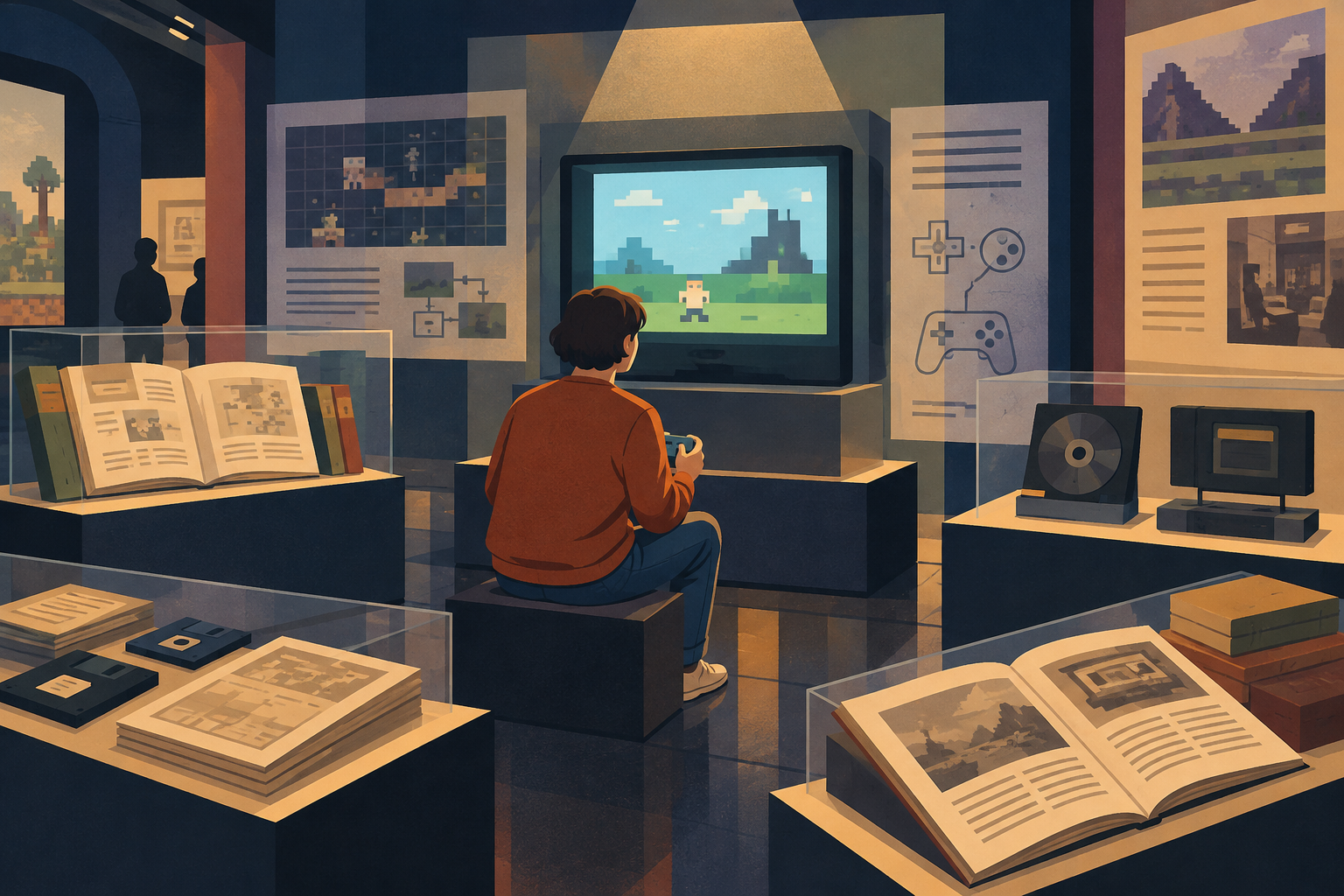
A history of music often begins with listening, but it does not end there. A work may leave scores, recordings, photographs, records of institutional activity and other traces; each grants access to different aspects and has its own limits. The sources gathered here show that variety without establishing that any particular archive holds all these materials for the same work. El Museo Canario describes a guided visit centred on musical holdings in its archive, with written music—especially scores—as its point of departure. The Museu de la Música in Barcelona describes a multimedia archive of more than 60,000 items documenting the museum’s collections and activities, including photographs related to identification and restoration. These are different examples of documentation, not equivalent inventories.
The distinction matters because listening to a recording, reading a score and examining a photograph do not produce the same kind of knowledge. Listening makes it possible to attend to recorded sound; notation offers a written representation; an image may document an object or an activity. None of these sources, on its own, necessarily proves how a particular performance sounded, which edition circulated or who had access to it. Such claims would require evidence specific to the question.
A work, an edition and a medium are not the same thing
A work is a musical category; an edition identifies a particular publication; a medium is the material or technical means by which information is fixed or circulated. Distinguishing these levels prevents us from treating as identical phenomena that the available sources do not document in the same way. A preserved score can provide access to written music, but its presence alone does not establish which recordings existed or how people listened to them. An archival record may describe a collection or an institution’s activities without being equivalent to a commercial edition. And the word “recording” is not enough to identify a format, version or listening context.
The Museo Nacional de Artes Escénicas states that most of its musical heritage comes from the Museo-Archivo del Teatro Real, created by its director, Luis París, in 1919. This provides institutional context for the holdings’ origins, but it does not authorize assigning a creation, publication or recording date to every item. The provenance of a collection and the history of an individual object are related, but distinct, questions. A catalogue can guide research; describing a particular variant or edition requires evidence connected to that specific copy.
Archives document their own activity too
The Museu de la Música describes its multimedia archive as documenting both the collections and the museum’s activities. That description is useful because it shifts attention from an isolated object to the circumstances in which objects are identified, described or restored. The photographs mentioned by the institution are not necessarily listening images or substitutes for objects: they may provide visual documentation of identification and conservation processes. The supplied excerpt does not say which items are linked, so that relationship would need to be checked in the archive’s records.
This distinction also helps us read archives as institutional constructions. A collection is not a complete reproduction of musical life: it is material that has been preserved and arranged according to particular criteria. A 2005 article on organizing music archives frames the adequate preservation of musical heritage, in its abstract, as an organizational problem. That reference points to a practical and cultural question: how documents are gathered, described and made accessible. The fact that something once existed does not guarantee that it survives, can be found or can be connected to other evidence.
Format shapes what can be consulted
Asking how a medium conditioned listening requires evidence about formats and practices of use. The material available here does not identify playback-device models, the physical properties of records or tapes, or the listening habits of a particular audience. It would therefore be irresponsible to turn a general reflection into a detailed reconstruction of domestic or commercial listening. A narrower conclusion is supportable: when archives preserve different kinds of documents, research depends on which survive and how they are described.
The supplied encyclopedic summary of electronic music notes that, from the late 1960s, the greater availability of affordable music technology contributed to the growing popularity of music produced electronically. It also distinguishes electromechanical and electronic means, which may be combined. This is a broad framework, not a record of specific releases or devices. It helps frame the role of technology in production and performance, but it does not demonstrate how a distribution medium changed the experience of a particular song.
From the archive to the digital present
A 2024 article in Revista PH presents the challenge of music archives in the streaming era and mentions a joint initiative by Subterfuge Records and the National Library of Spain. The supplied excerpt does not explain the initiative’s scope, materials or results. It does, however, make a contemporary question relevant: what is archived when music circulates through digital services, and what information later allows its context to be reconstructed? Answering that requires the full article and project documentation, rather than technical assumptions drawn from a title.
The editorial conclusion is straightforward: a recording, a score, a publication and an institutional record can all speak to the same sound culture, but they are not interchangeable evidence. Separating work, edition and medium does not needlessly complicate the story; it lets us say what we know, which document supports it and what remains unresolved. The sources gathered here offer institutional and scholarly starting points, not an exhaustive history of formats or listening habits. A reliable account should preserve precisely that boundary between what is documented and what still needs to be researched.
- Decade
- Contemporary
- Region
- Spain
- Level
- Enthusiast
- Entities
- Museum, Museo Nacional de Artes Escénicas, El Museo Canario
Sources and references
- la organización de archivos musicales marco conceptual ...agora.edu.es · 2026-10-06
- “Los Sonidos del Archivo”, una visita para conocer el ...www.elmuseocanario.com · 2026-10-06
- Archivo Musical - Museo Nacional de Artes Escénicasmuseodeartesescenicas.inaem.gob.es · 2026-10-06
- EDR | Museu de la Música - L'Ajuntamentajuntament.barcelona.cat · 2026-10-06
- ¿Dónde están las canciones? El reto del archivo musical en la ...www.iaph.es · 2026-10-06
- Música electrónicaes.wikipedia.org · 2026-10-06