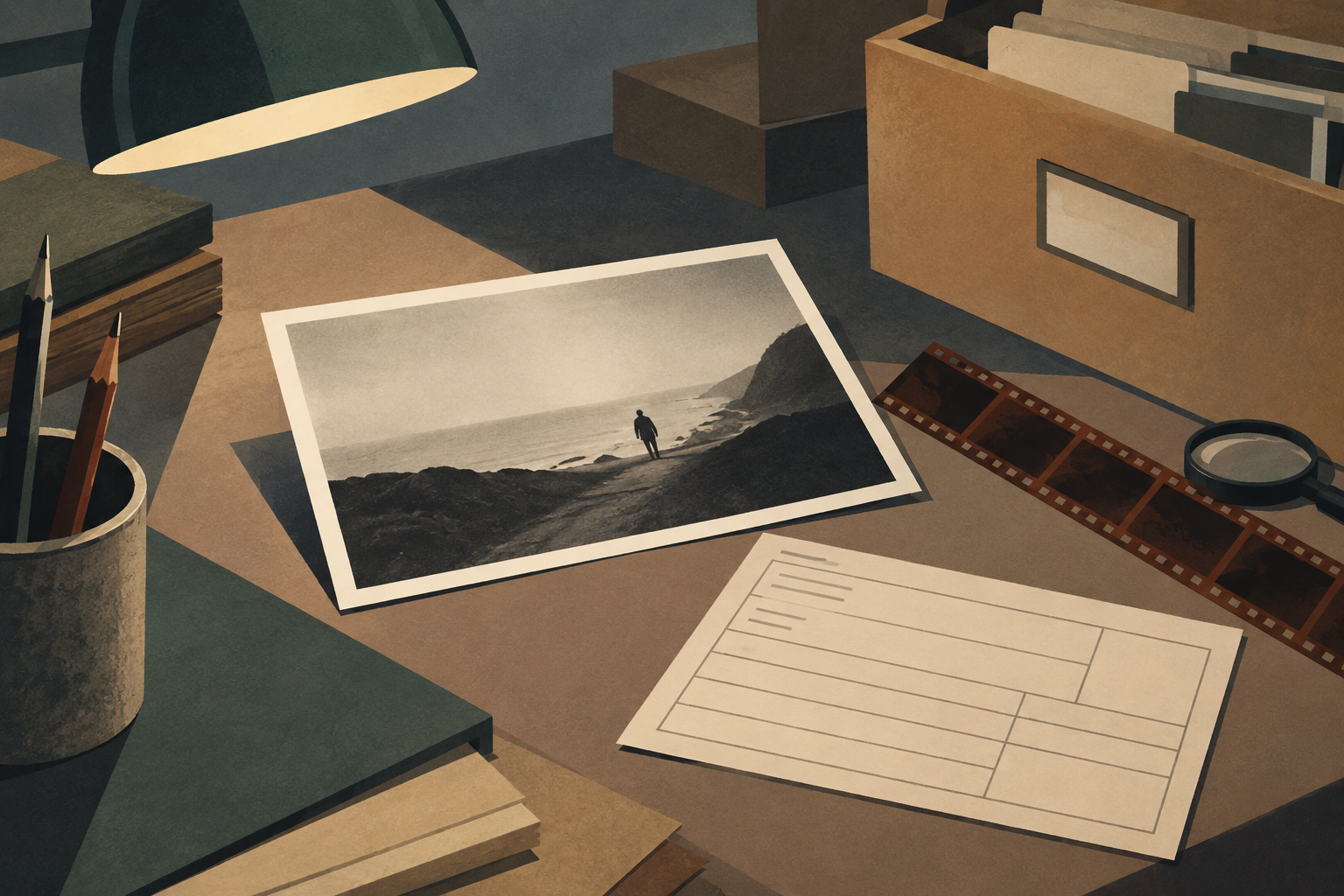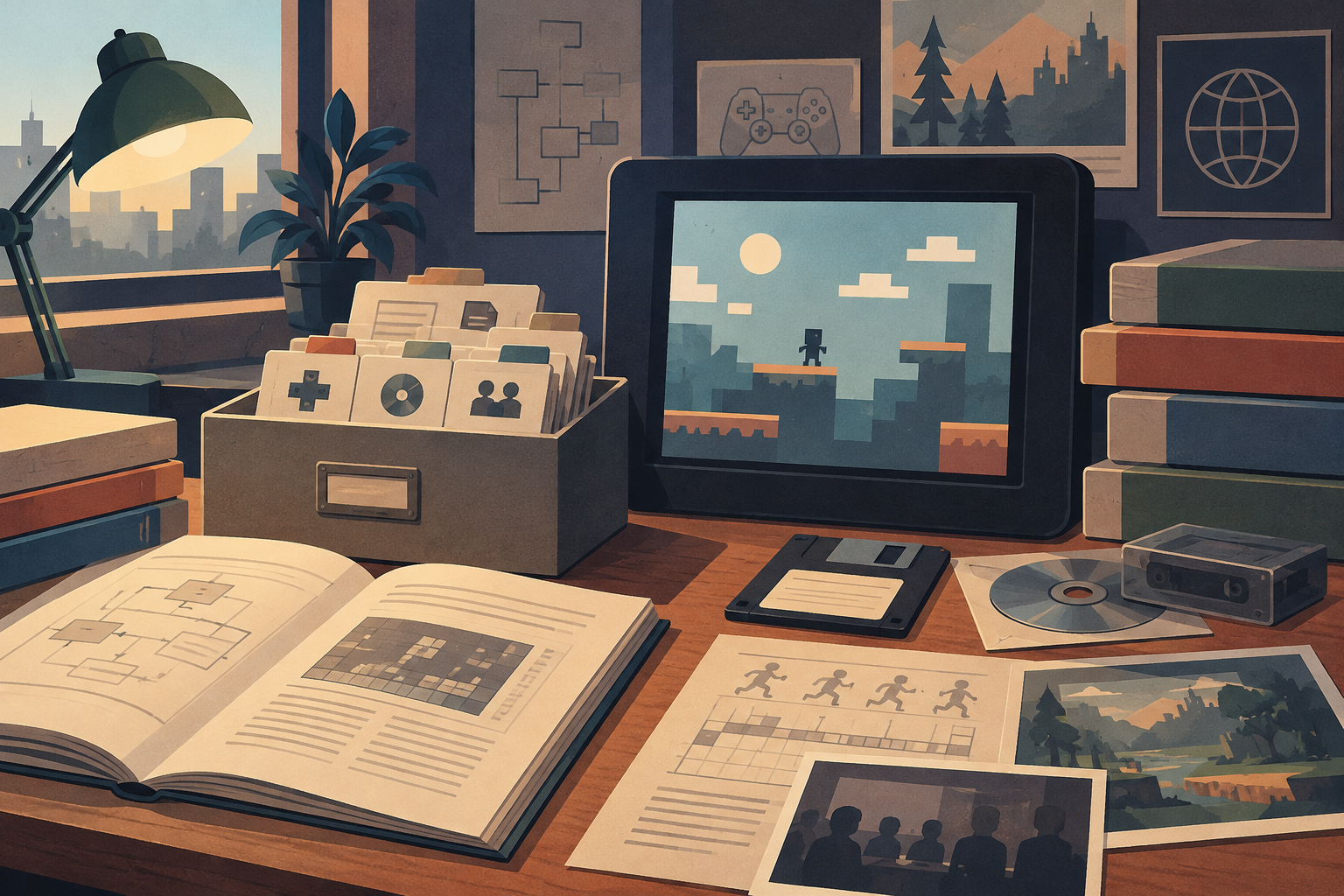
A video game may be remembered as a screen, a melody or a sequence of movements. Yet the object studied by historians does not end there. A study published in Boletín de Arte places the relationship between museums and video games within a broader institutional renewal and notes that a permanently dedicated video game museum can be traced back to an opening in 1997. In Spain, the Video Game Museum says it has worked since 2000 to locate, document and preserve materials related to video game and computing history. These are different indications of the same question: a game is not only what appears during play.
The work and its traces
A playable experience depends on rules and presentation, but the record that makes it possible to reconstruct that experience can include other kinds of material. The Video Game Museum describes its work with three concrete verbs: locate, document and preserve materials related to video game history. The wording matters because it distinguishes tasks that are often conflated. To locate is to find; to document is to record and provide context; to preserve is to work towards keeping materials available for consultation. None of these actions, on its own, proves that a historical experience can be recovered in full.
The academic article on museums and video games provides a framework for considering the medium within cultural institutions. The evidence available here does not justify attributing to it a preservation recipe or describing its cases in detail. It does, however, support the view that video games have entered a distinct museological debate, one in which the object of interest cannot be reduced to an exhibited item. The work, its supports and its documentary traces can each provide different information.
A museum is more than a display case
The Museu del Videojoc de Catalunya describes itself as a cultural and museum project devoted to preserving, studying and sharing video game history through temporary and travelling exhibitions. This description brings together three functions that are not interchangeable. Preservation concerns the continuity of materials; study turns them into sources for asking questions; public outreach makes them accessible to different audiences.
That combination also helps challenge an overly simple image of a museum: a place where recognisable objects are lined up and left to speak for themselves. An exhibition can propose relationships and provide context, but it cannot replace documentation. Nor does an object’s appearance alone prove how a work was played, who had access to it, or what it meant to all its users. Such claims require suitable sources, and the material supplied here contains no detailed player testimony or documentation of particular titles.
Preserving heritage and creating with it
The ICOM account of two projects developed in Argentina offers another perspective: the Archivo-Museo Carmen Funes, in Neuquén, is associated with the creation of two video games based on its heritage. This is not the same activity as preserving an existing video game. The example makes it possible to distinguish between video games as cultural heritage to be preserved and video games as a medium used to interpret or communicate other heritage.
That distinction is editorially useful. A museum can treat games as objects of cultural history while also using interactive language to develop new forms of interpretation. These projects should not be presented as proof of a universal practice, nor should details absent from the source be attributed to them. The verifiable claim in the available information is narrower: ICOM reports two games produced from the heritage of the Archivo-Museo Carmen Funes.
Communities and shared memory
Preservation is not limited to institutions. A Microsiervos article about the Embracer Games Archive describes the initiative as dedicated to conserving the cultural legacy of video games, understood there as artistic works that have influenced generations. An academic article indexed in OpenAlex, meanwhile, addresses the abandonware movement as a tool for preserving video games’ cultural heritage.
These references show that the discussion includes initiatives and practices that are not identical. They are not enough, however, to conclude that every distribution of abandoned software is legal, complete or equivalent to a museum collection. Nor do the supplied extracts establish the holdings, methods or outcomes of each archive. The word “preservation” can encompass different efforts; careful reading asks what is kept, who documents it, what can be consulted and what remains outside the record.
Remembered play is not the record
Players’ memories are valuable for understanding habits, expectations and personal meaning, but they should not be mistaken for a neutral description of a work. This section’s editorial scope calls for connecting rules, presentation and playing environments with magazines, manuals and testimony, distinguishing what a work offered from what memory reconstructs. The supplied sources support that general approach, although they do not include specific manuals or testimony with which to illustrate it through an individual game.
That limitation prevents us from recounting a particular play experience or comparing versions of a game here. It also points to a useful direction for further research: gather attributable documentation, compare it, and make clear what comes from the object and what comes from users’ memories. Without that care, a convincing recollection can end up standing in for evidence.
A history made of layers
The available examples sketch a varied field: research on museums, institutions devoted to video games, archival initiatives, projects that turn heritage into games, and debates about abandonware. They do not form a complete chronology or establish a single technical solution. Their value lies in showing that video game history can be studied through several kinds of trace, each suited to different questions.
Preservation does not mean promising that nothing will change or that every game can be reproduced forever. It means sustaining conditions for locating, documenting, studying and transmitting materials, while explaining honestly where the evidence ends. Looking beyond the screen, video games appear less as isolated memories and more as works connected to documents, institutions, practices and forms of interpretation. That is where a history begins that can be investigated, not merely remembered.
- Decade
- Contemporary
- Region
- Global
- Level
- Enthusiast
- Entities
- Museum, Museo del Videojuego
Sources and references
- Museos & videojuegos: dos proyectos desarrollados en ...icom.museum · 2026-10-11
- Contra las arenas del tiempo, el movimiento abandonware como herramienta de preservación del patrimonio cultural de los videojuegosopenalex.org · 2026-10-11
- Vista de Museos y videojuegos. La renovación de los ...revistas.uma.es · 2026-10-11
- Qué hacemos | Museo del Videojuegowww.museodelvideojuego.com · 2026-10-11
- MUVIC – Museu del Videojoc de Catalunya | Castellanomuvic.cat · 2026-10-11
- La conservación de la historia de los videojuegos en el ...www.microsiervos.com · 2026-10-11