An object does not speak for itself
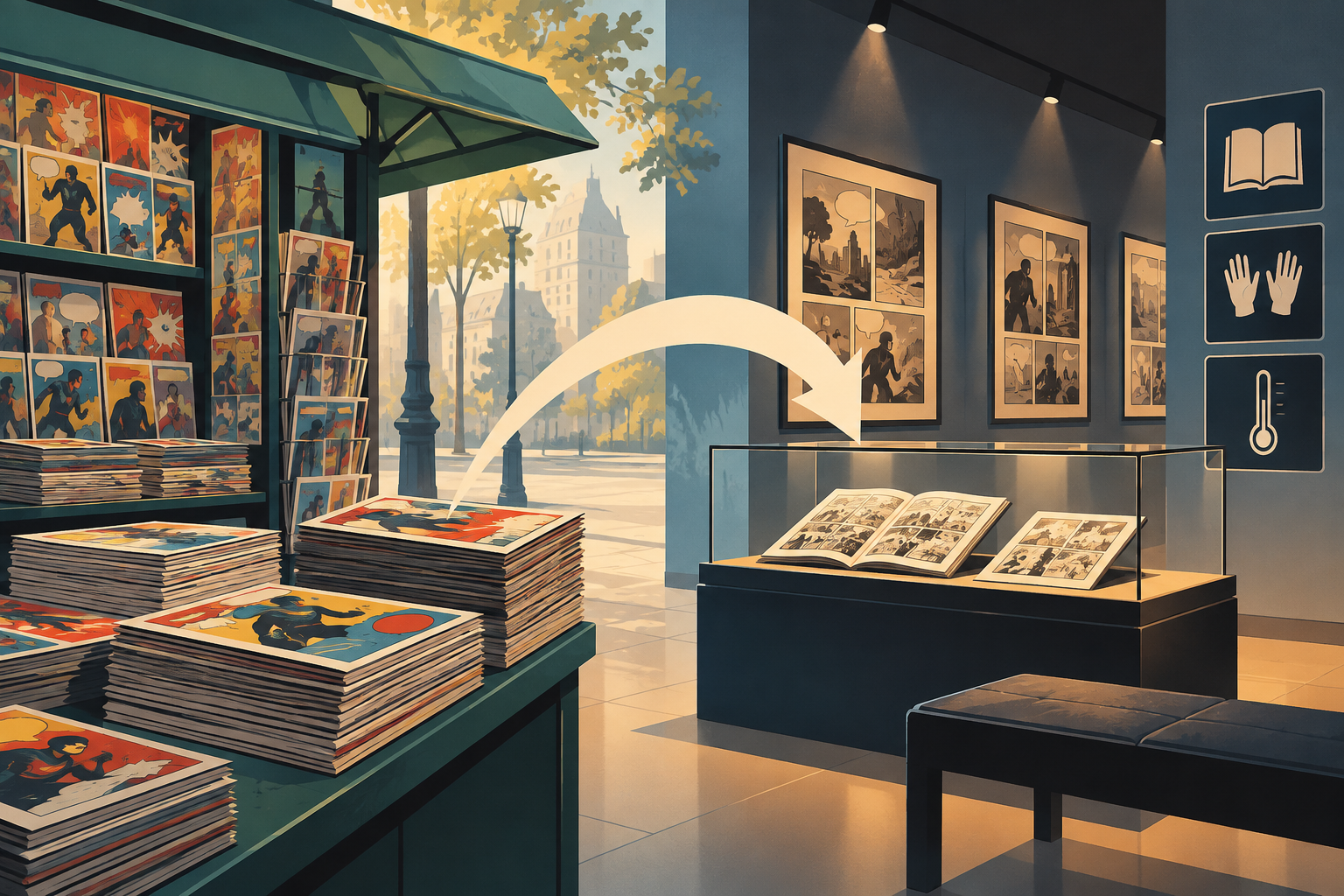
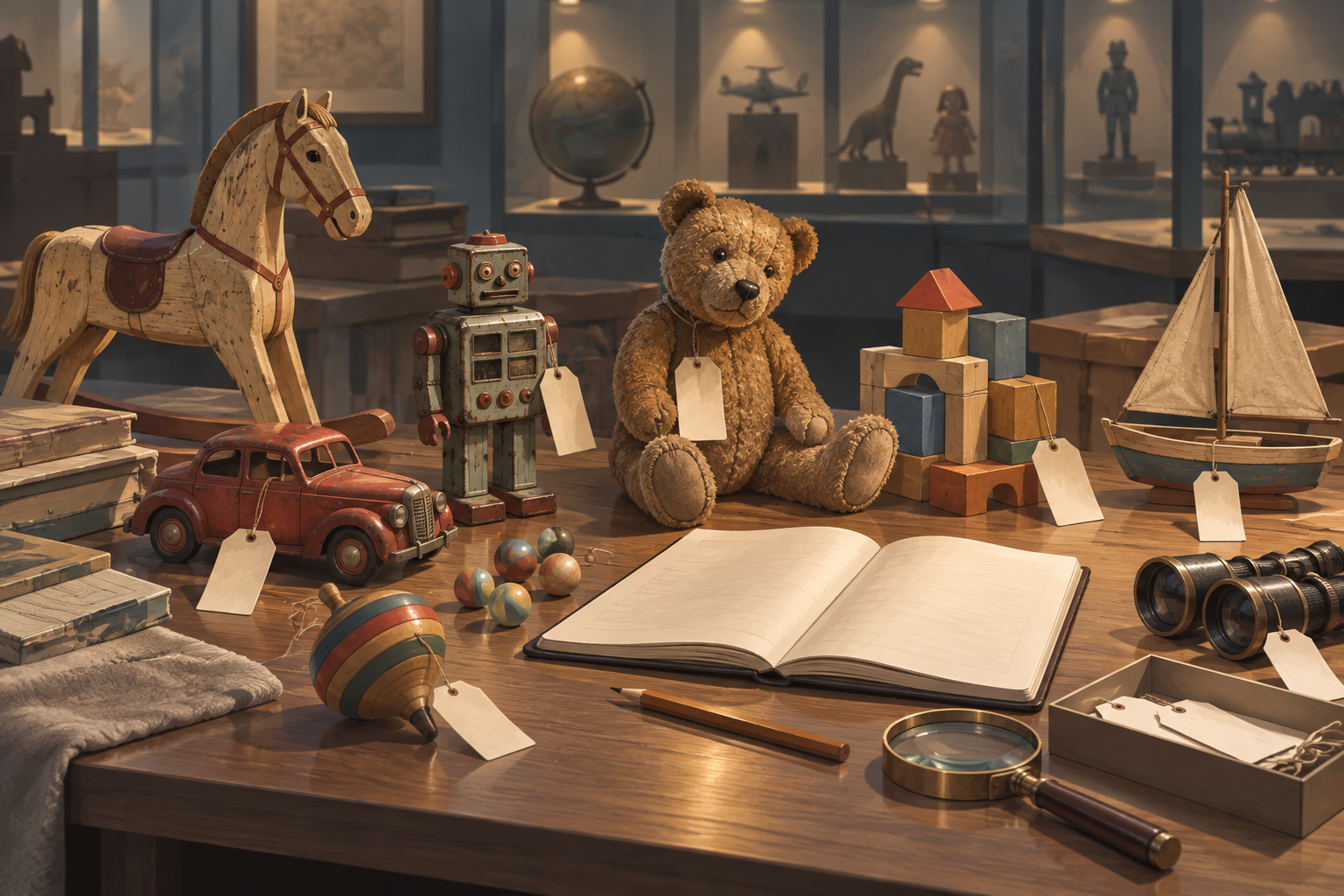
A preserved toy can seem to invite an immediate return to childhood. A museum collection poses a different question: what can we say about an object when, for a moment, we set individual memory aside? The answer depends on the object and its accompanying documentation. Its shape, materials and condition can be observed; who made it, when it circulated, or how it entered a collection require further evidence.
This distinction matters because toys move between two worlds. They are everyday objects designed for play, and they can also become material documents. Displaying one does not, by itself, explain its history. Gathering information, preserving it and making its limits visible are part of what a museum can communicate.
A collection is not a complete chronology
The Toy Museum in Figueres provides a concrete reference point. Its institutional history states that it opened on 18 June 1982 in the former Hotel París, on one of the city’s main thoroughfares. This places the institution’s opening; on its own, it does not describe every item in its collection or reconstruct the general history of toys.
Caution also matters when reading figures and date ranges. AFEDE’s information about the Museum of Toy History mentions a collection of more than 6,500 toys, most of them dating from 1870 to 1985. This is a specific description of that museum, not an inventory of every toy made during those years. A collection allows researchers to study what it contains and how it was assembled; it does not automatically represent everything that existed.
From object to archive
A catalogue can change how an object is seen. When an item is accompanied by verifiable information about its materials, provenance or entry into a collection, visitors have more ways to distinguish observation from conjecture. The Valencian Toy Museum page presenting a work about toy companies in Ibi describes the volume as deriving from a hard-to-find original catalogue and says it lists companies, founding years and founders. This illustrates the potential value of production records, although the available summary does not allow us to verify each entry in the book here.
Editorially, it is useful to treat a label as an entry point rather than the end of research. A name or date can begin questions about manufacture, distribution and use. But if documents are unavailable or disagree, the answer must remain open. Missing information is not permission to fill the story with a plausible anecdote.
Play is heritage too
An academic article indexed on Dialnet highlights the importance of planning the aims and purpose of a museum of games and toys as part of cultural heritage. The available abstract is brief: it supports the importance of considering these institutions’ function, but it is not enough to attribute more specific conclusions about a particular museum.
This idea helps broaden the perspective. A museum can be more than a room full of old objects: it can frame questions about what is preserved, what is described and whose voices appear in interpretation. The heritage dimension does not erase the playful character of the objects. It makes it possible to observe how something designed for play takes on other uses when collected, catalogued and presented to the public.
The visit is part of the story
The sources consulted show institutions and projects in different contexts. A video introducing Museo El Juguetero states that it is in Montevideo, at 230 25 de Mayo Street, and provides visitor information. The history page for the Toy Museum in Figueres documents its opening in 1982. These are different kinds of facts: one describes a museum’s location and invitation to visit; the other records an institutional event. They should not be merged into one story, nor should we assume the two spaces share a collection, model or history.
It is also worth asking who can encounter these objects and in what setting. The supplied sources do not document exhibition architecture, access policies or the experiences of particular audiences in sufficient detail. A responsible account therefore does not invent visitor routes or reactions. It can instead note that interpretation, contextual information and preservation are part of the experience an institution chooses to provide.
What is known, and what remains open
The institutional pages and summaries available here establish some facts: the opening date of the Figueres museum, the predominant period stated for the Museum of Toy History collection, and the documentary purpose attributed to the catalogue about companies in Ibi. The academic record provides a general rationale for considering toy museums part of cultural heritage. No complete catalogue, item-by-item provenance study or attributable testimony from manufacturers or visitors has been supplied here.
That limit does not make the subject unworthy of study; it defines the work still to be done. Each toy needs a careful identification and a history supported by documents. A collection, in turn, should be understood as a selection: it preserves objects while also revealing what could be gathered, described and made publicly accessible. Looking at a museum toy means looking at both the object and the decisions that brought it there. Memory may start the conversation, but the archive is what allows us to check and extend it.
Sources consulted: Toy Museum in Figueres, collection history; Valencian Toy Museum, work on toy companies in Ibi; AFEDE, toy museums in Spain; Dialnet, ATHLOS 27; Museo El Juguetero, introductory video.
- Decade
- 1980s
- Region
- Spain
- Level
- Introduction
- Entities
- Museum, Museo Valenciano del Juguete
Sources and references
- Museo El Juguetero abre sus puertas para toda la familiawww.youtube.com · 2026-09-29
- Presentación de “Historia de las empresas jugueteras de Ibi ...www.museojuguete.com · 2026-09-29
- los museos de juguetes en españaafede.com · 2026-09-29
- Historia de la colecciónwww.mjc.cat · 2026-09-29
- ATHLOS 27dialnet.unirioja.es · 2026-09-29