A vehicle does not tell its whole story
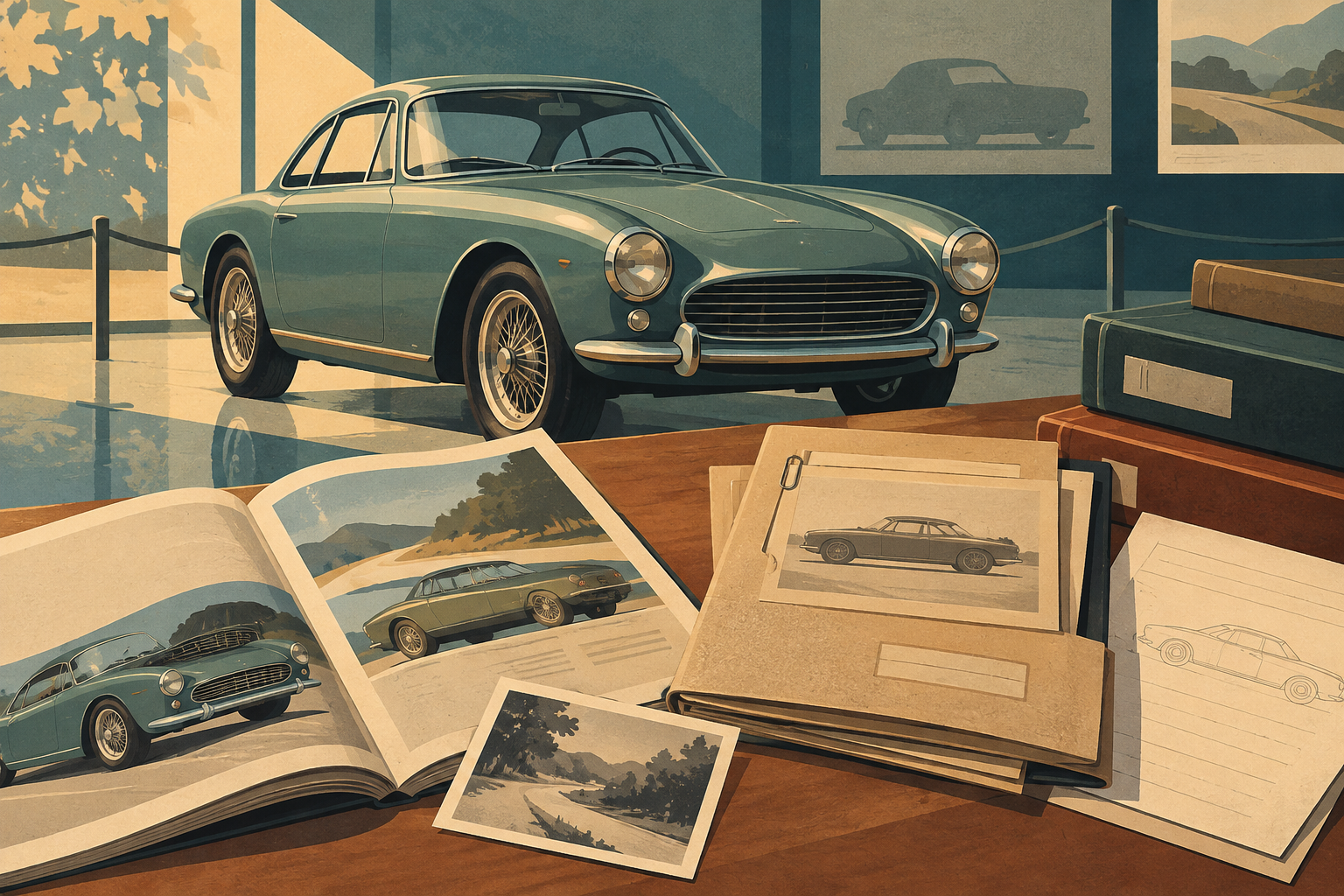
An exhibited car or motorcycle lets visitors look at an object; it does not, by itself, explain how it was described, what uses were presented for it, or what information accompanied its circulation. Those questions require documents. In Salamanca, the Museum of Automotive History (MHAS) has a documentation centre and an archive associated with motoring history. The available sources establish that infrastructure, but do not describe the contents of a specific file or provide technical facts about an individual vehicle.
What the sources say about MHAS
The Documentation Centre’s page states that its holdings include more than 8,000 magazine issues and nearly 400 titles. This identifies periodicals as part of the museum’s documentary resources. Without a detailed catalogue, however, the figure does not establish which publications or issues are held, or which models appear in them.
Castilla y León’s tourism information says that the museum was created to preserve and show the public Spain’s automotive heritage, and links its holdings to the Gómez Planche collection. The Archives Guide and Census, meanwhile, lists the Gómez Planche Foundation Archive and identifies it as the MHAS archive. These institutional descriptions help locate the stated purpose and custody; they are not substitutes for an item inventory or a provenance record.
Catalogues, magazines and archives are not interchangeable
Each kind of document answers different questions. A catalogue can help verify the characteristics or uses a publication claims for a vehicle, provided the relevant edition is consulted. A magazine may offer broader editorial context, but its presence in a collection does not, by itself, prove that the museum holds a particular issue or that it covers a specific model.
An institutional archive may document the history of a collection or organisation. The Archives Guide entry supports the existence of an archive associated with MHAS; the available summary does not detail its record series. It would therefore be unwise to infer from it that specific contracts, photographs, manuals or vehicle files are held there.
Stated specifications and inherited reputations
The editorial distinction is straightforward: a claim about a vehicle’s specifications should be tied to identifiable documentation, while a repeated reputation needs attribution and context. The supplied sources contain no manufacturer manuals or model-specific technical sheets. They cannot support comparisons of figures, versions or operating conditions, or confirm familiar claims about reliability or performance.
The academic article in Tábula discusses records management in science and technology museums and describes its relationship to cultural activities and exhibitions. Its framing supports looking beyond the displayed object, but the available abstract does not justify attributing detailed conclusions about MHAS to the article. A general point about museum documentation must remain distinct from a verifiable claim about a particular vehicle.
What still needs to be checked
Moving from an institutional overview to research on a particular model would require searchable catalogue records, complete publication references, and object files documenting provenance and cited sources. The material gathered here cannot establish manufacturing dates, specifications, actual uses, or a direct link between a particular magazine and an exhibited car.
The Museo del Motor on the Costa Blanca presents itself as a space about motoring and automotive history, with classic cars and an educational dimension. That description offers an example of how another museum presents itself to the public; it supplies no facts that should be transferred to MHAS’s holdings or archive. Keeping institutions separate prevents a shared subject from being mistaken for a documentary connection.
Reading the object alongside its documents
An exhibited vehicle and the material used to study it have different but complementary roles. The sources consulted establish that MHAS describes a documentation centre with a substantial magazine collection and that an archive associated with the Gómez Planche Foundation exists. They also show why documentary work is part of museum interpretation. They do not reveal the detailed contents of each holding or the specifications of a particular car. That boundary does not diminish the research: it clarifies what can be supported now and what requires further consultation.
- Decade
- Contemporary
- Region
- Spain
- Level
- Enthusiast
- Entities
- Museum, Museo de Historia de la Automoción
Sources and references
- archivo de la fundación gómez planche (salamanca, españa)censoarchivos.cultura.gob.es · 2026-10-09
- El archivo en los museos de ciencias y tecnologías | Tábulapublicaciones.acal.es · 2026-10-09
- Museo del Motor - Costa Blancawww.museodelmotor.com · 2026-10-09
- Museo de Historia de la Automociónwww.turismocastillayleon.com · 2026-10-09
- Centro de documentaciónmuseoautomocion.com · 2026-10-09