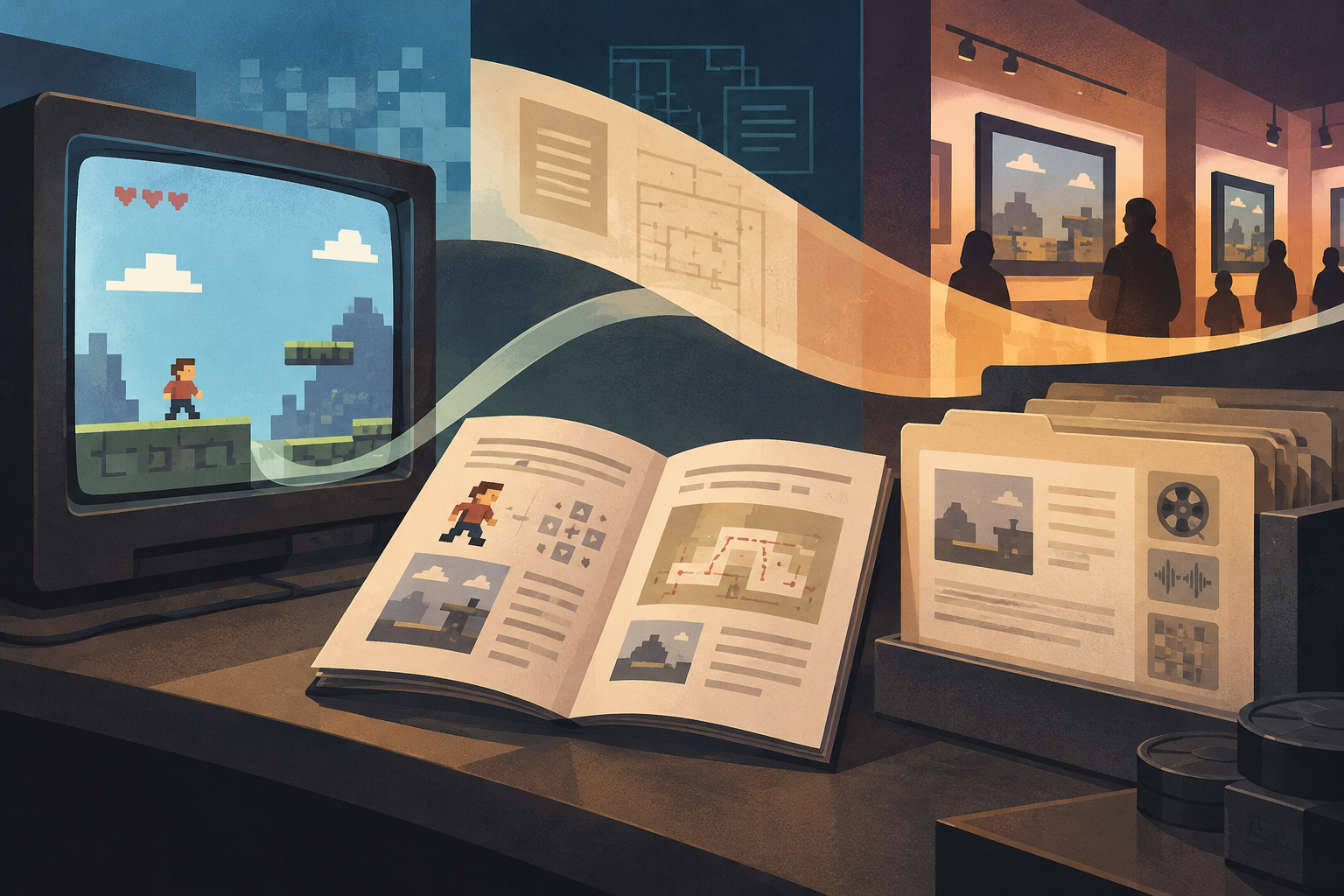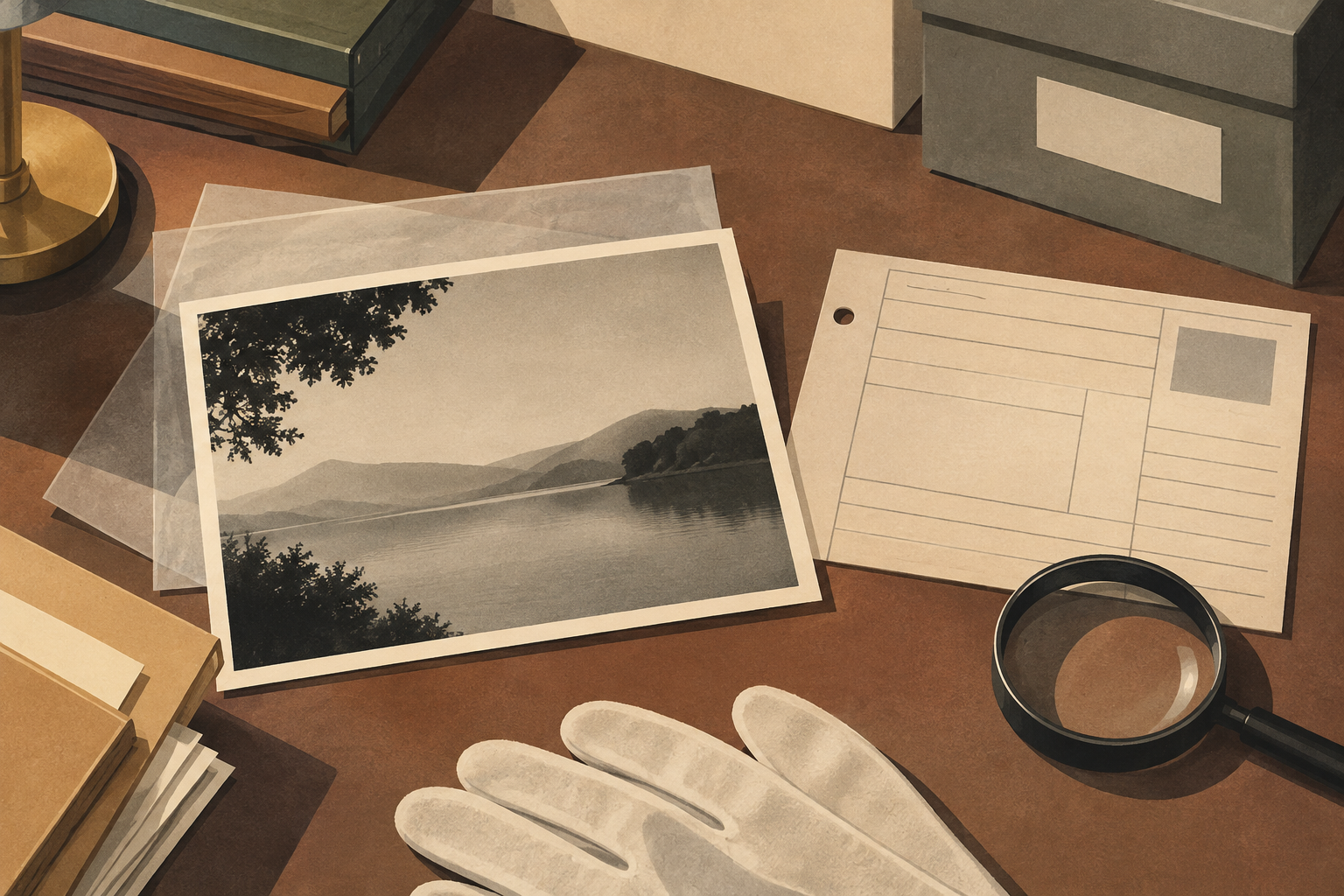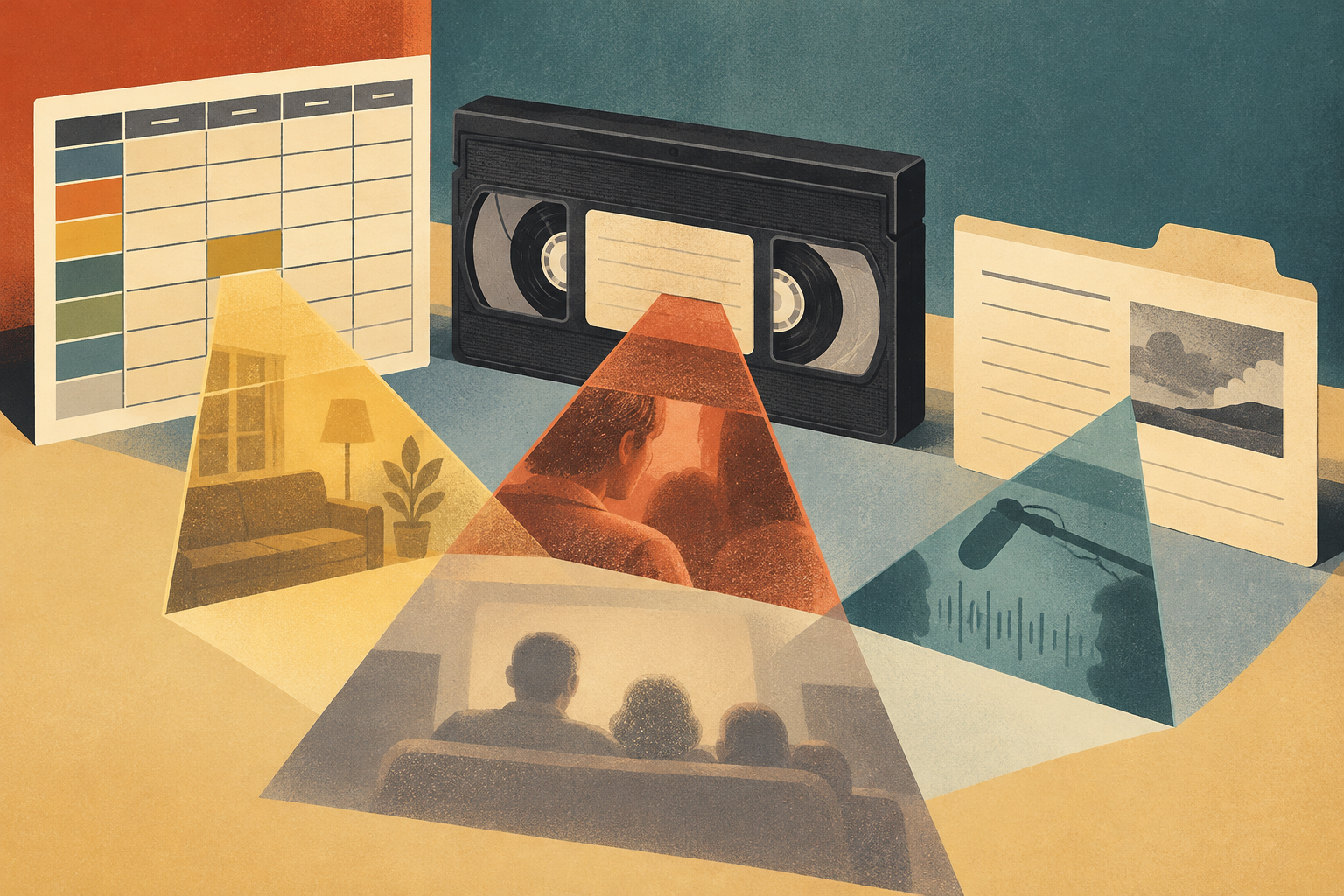
A catalogue record can look like a direct route into a film: title, filmmakers, genre, shooting dates. But those fields are not the film, nor an account of how it was received. They are a selection of data serving a particular purpose: identifying, ordering and locating materials. Studying cinema means reading a record alongside other traces, while recognising what none of them can prove on its own.
The record organises before it explains
Research on film documentation describes cataloguing within the historical framework of film archives and museums. A record may include an accession number, title, filmmakers, genre and shooting dates. That list is useful because it shows that cataloguing involves choices: deciding which details help distinguish an item and make it accessible for consultation.
Genre, for instance, can help organise a collection or frame a research question. But a label alone cannot explain how a film was made, the variations within it, or what it meant to different audiences. It is safer to treat genre as a documentary datum, not an exhaustive definition. The available source describes record fields; it does not enable us to reconstruct the reception of each film from those fields.
When production documents enter the picture
A proposal for a film museum in Spain mentions production stills, advertisements and documents related to sets and post-production. These materials extend the view beyond a basic catalogue record: they can prompt questions about decisions and stages in filmmaking. Yet the survival of a document does not automatically make it a complete account of what happened.
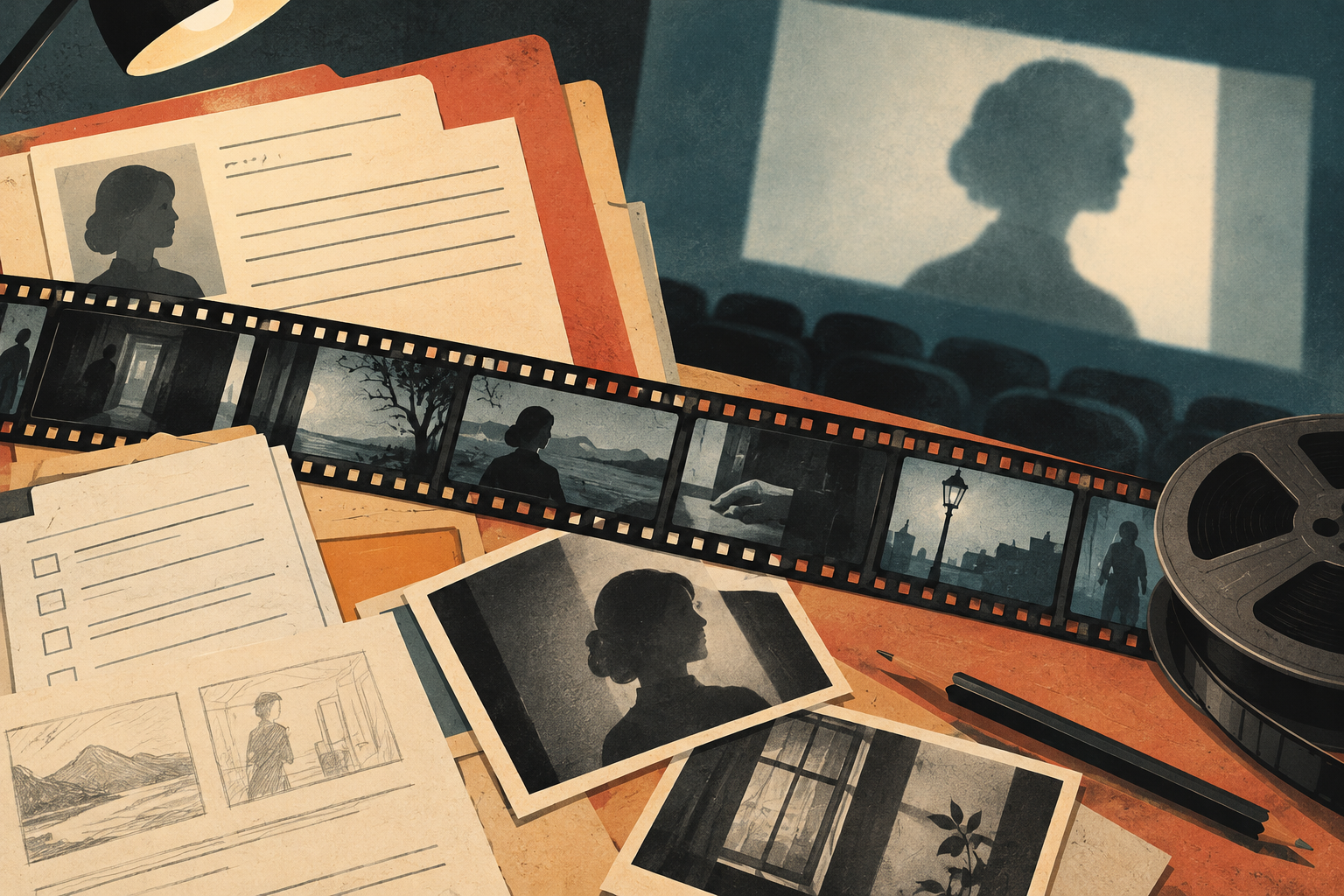
Information about the public availability of filmmaker José Luis Sáenz de Heredia’s personal archive lists literary, technical and shooting scripts, handwritten notes, production stills and filming photographs. The variety matters: each kind of material has a different purpose and scope. A script is not the finished film; a still photograph cannot, by itself, show the sequence before or after the image. Together, such materials can support a richer reading, but conclusions must remain proportionate to what each item actually shows.
A preserved image is not the whole context
Visual materials can seem especially persuasive because they show something concrete. Even so, a production photograph is an image made in a production context, not a substitute for the edit or automatic proof of the intentions of those involved. Research on title sequences as film heritage also notes that drawings may survive for works that were never filmed. That example makes it necessary to distinguish a trace of a project from a completed film.
The practical lesson for researchers is to identify the kind of object before using it as evidence. An image connected with a film might be a frame, a still photograph, a drawing or a production document. These do not have the same status. Documentation can support questions and proposed connections; it does not justify erasing the differences between those forms.
From archive to film history
The filmographic survey of Madrid published by the regional government works at another scale: placing films, premieres and shoots within a local history. Its reference to a film shown at the Real Cinema in January 1931 and to locations in several cities illustrates how exhibition and production data can be brought together. But a premiere date is not a complete history of a film’s circulation, and a list of locations does not, by itself, describe the entire shooting process.
At a different scale, the Reina Sofía Museum’s material on On Africa states that the material history of the shoot contributes to explaining aspects of the work’s form. This is a useful formulation because it proposes a relationship between process and form without reducing one to the other. The point is not to assume that production history settles a film’s meaning, but to consider material evidence where it helps interpret specific formal features.
What documentation cannot establish
The editorial question guiding this reading is what can be learned from surviving traces and what remains beyond them. The sources gathered here support an account of records, production documents, photographs and graphic materials. Taken together, they do not document how the reception of the same film changed between cinema and video. That would require specific evidence about exhibition, circulation and audiences; it would be a mistake to fill the gap with assumed memories or with the mere presence of a copy in an archive.
This caution does not diminish the value of documentation. It helps us use it well. A catalogue record gives direction; a script or note offers another kind of clue; a still records an image in its context; a study may connect these materials with formal decisions. The task is to keep those differences visible and explain when we move from fact to interpretation.
A film is not exhausted by its catalogue record, archive or production process. Yet these traces make it possible to study how it was identified, described and preserved, and can open routes to more precise analysis. Critical reading avoids two shortcuts: treating a label as a complete explanation and turning any document into a transparent window on the past. Documentation does not replace the work; it helps us ask better questions about it.
- Decade
- Contemporary
- Region
- Spain
- Level
- Enthusiast
- Entities
- Museum, Museo Reina Sofía
Sources and references
- La Documentación Fílmica: marco contextual históricorevistas.ucm.es · 2026-10-10
- PROYECTO DE CREACIÓN DE UN MUSEO DE CINE EN ...eldocumentalistaudiovisual.com · 2026-10-10
- BVCM01017 Madrid y el cine. Panorama filmográfico de ...www.madrid.org · 2026-10-10
- Cine, arte y políticawww.museoreinasofia.es · 2026-10-10
- Filmoteca Española pone a disposición del público el ...www.audiovisual451.com · 2026-10-10
- View of Title sequences as film heritage. From informative ...revistas.uma.es · 2026-10-10